

What is Gemini 3.1 Flash-Lite?
Gemini 3.1 Flash-Lite is the budget model of Google's Gemini 3 series, built on Gemini 3 Pro and tuned for speed and price. It reads text, images, video, audio and PDFs across a 1M-token context, writes text, and supports function calling, structured JSON output, Search grounding and adjustable thinking, which defaults to minimal.
It is a stable model on the Gemini API and Google Cloud, but Google has already set a shutdown date and names Gemini 3.5 Flash-Lite as its replacement. That newer model costs $0.30 / $2.50 per million tokens and scores far higher on Google's coding and agent tests.
Is Gemini 3.1 Flash-Lite still available?
Yes, it is a stable model on the Gemini API, but Google has announced a shutdown date and names Gemini 3.5 Flash-Lite as its replacement.
- Status
- Generally available and stable, and listed with a shutdown date on Google's deprecation page.
- Replacement
- Gemini 3.5 Flash-Lite, at $0.30 / $2.50 per million tokens, with computer use in preview.
- Preview version
- The earlier gemini-3.1-flash-lite-preview endpoint is already shut down.
- What to do
- Test 3.5 Flash-Lite on your own prompts now, since moving means a price change as well as a model change.
Who is Gemini 3.1 Flash-Lite best for?
Gemini 3.1 Flash-Lite is best for developers running high-volume, cost-sensitive jobs on the Gemini API, such as translation, transcription, tagging, data extraction and routing requests to bigger models.
Bulk translation
Google built it for translating chat messages, reviews and support tickets in large volumes, where the price per token matters most.
Transcripts without a separate speech service
It takes audio files directly and returns a text transcript, at $0.50 per million audio input tokens.
Tagging and data extraction
Structured JSON output and function calling suit pipelines that classify, sort or pull fields out of text, images and PDFs.
Routing requests to bigger models
Google's own Gemini CLI uses Flash-Lite to judge how hard a task is and send it to Flash or Pro.
What's included with Gemini 3.1 Flash-Lite?
Adjustable thinking, text, image, video, audio and PDF input, structured JSON output, Search grounding, context caching, and half-price Batch and Flex requests.
- Thinking levels
- Minimal, low, medium and high settings trade speed for reasoning; minimal is the default and keeps answers fast.
- Multimodal input
- Text, images, video, audio and PDFs can go into one request, up to 1M tokens.
- Structured output and function calling
- It can return JSON that matches your schema and call your own tools, which suits extraction and classification pipelines.
- Search and Maps grounding
- On the paid tier it can check Google Search or Google Maps, with 5,000 free requests a month for each, shared across Gemini 3 models, then $14 per 1,000.
- Batch, Flex and Priority
- Batch and Flex cost half the Standard rate for work that can wait; Priority costs $0.45 / $2.70 per million tokens.
- Context caching
- Cached input costs $0.025 per million tokens plus $1.00 per million tokens per hour of storage, on the paid tier only.
How much does Gemini 3.1 Flash-Lite cost?
Gemini 3.1 Flash-Lite is free on the Gemini API's rate-limited free tier, and on the paid tier it costs $0.25 per million input tokens and $1.50 per million output tokens, or half that through Batch or Flex.
- Free input and output tokens at lower rate limits
- Prompts and responses are used to improve Google's products
- No context caching or Search grounding
- Half the Standard rate, for work that can wait
- Audio input $0.25
- Cached text, image and video input $0.0125
- Audio input $0.50; output price includes thinking tokens
- Cached text, image and video input $0.025, plus $1.00 per million tokens per hour of storage
- 5,000 Google Search grounding requests a month free, then $14 per 1,000
- Audio input $0.90
- Cached text, image and video input $0.045
Prices are for the Gemini API in US dollars, and output prices include thinking tokens. The paid tier needs a linked billing account and at least $5 of prepaid credit, which expires after a year, and paid prompts are not used to improve Google's products. Grounding with Google Maps also gives 5,000 free prompts a month, shared across Gemini 3 models, then $14 per 1,000. Companies can buy it through Google Cloud's Gemini Enterprise Agent Platform, priced through Google's sales team. Full pricing on ai.google.dev. We checked these prices on .
What changed from Gemini 2.5 Flash-Lite?
Much better test scores at about the same speed, for more than twice the price.
- Price
- $0.25 / $1.50 per million tokens, up from $0.10 / $0.40.
- Quality
- 86.9% against 66.7% on GPQA Diamond, and 76.8% against 51.0% on MMMU-Pro, by Google's model card.
- Speed
- About the same: 363 against 366 output tokens per second in the same model card.
- Thinking
- Set with four named levels, from minimal to high; higher levels add thinking tokens to the bill.
How do readers rate Gemini 3.1 Flash-Lite?
No one has rated Gemini 3.1 Flash-Lite yet. Be the first.
Sign in to rate. One rating per account.
Gemini 3.1 Flash-Lite pros and cons
It is fast, multimodal and free to start, but it costs more than the older 2.5 Flash-Lite, struggles with complex tasks, and Google is already retiring it.
Pros
- Fast: Google's model card puts it at 363 output tokens per second, and users running summaries, tool calls and bulk jobs say speed is why they pick it.
- Reads video, audio, images and PDFs as well as text at this price, and users single it out for image work such as bounding boxes and for keeping its speed on video and audio input.
- Free to start on a rate-limited API tier that Reddit users call generous, which few major labs offer.
- Scores well above its price on Google's tests: 86.9% on GPQA Diamond and 76.8% on MMMU-Pro, ahead of the larger Gemini 2.5 Flash.
Cons
- Costs far more than the Flash-Lite before it: $0.25 / $1.50 per million tokens against $0.10 / $0.40 for Gemini 2.5 Flash-Lite, the most common complaint on Hacker News and Reddit.
- Weak on anything complex: users trust it only with simple retrieval and extraction, and some say it adds details that are not in the source text.
- High thinking gets expensive: output prices include thinking tokens, and testers found it thinks many times longer at high than the older Flash-Lite.
- It is on its way out: Google has set a shutdown date, it has no computer use, and its knowledge stops at January 2025.
What are the best Gemini 3.1 Flash-Lite alternatives?
Three tools on Recaply do Gemini 3.1 Flash-Lite's job. DeepSeek V4.1 Flash is open source, so you can run it on your own server.
 Gemini 3.8 FlashFree
Choose it when the job needs real coding, multi-step agents or computer use; it costs $1.50 / $7.50 per million tokens, six times the input price, with the same 1M context.
 GPT-5.4 mini & nanoPaid
Choose it when your inputs are only text and images and you want a slightly lower price and newer knowledge: $0.20 / $1.25 per million tokens, a 400K context, and knowledge up to August 2025.
 DeepSeek V4.1 FlashOpen Source
Choose it when you want MIT-licensed open weights or cheaper output; DeepSeek's API charges $1.20 per million output tokens at peak and $0.60 off-peak, but it takes only text and images.
Questions about Gemini 3.1 Flash-Lite
What is Gemini 3.1 Flash-Lite?
Gemini 3.1 Flash-Lite is Google's lowest-priced Gemini 3 text model, built for developers running high-volume translation, transcription, tagging and data extraction at $0.25 in and $1.50 out per million tokens.
Who is Gemini 3.1 Flash-Lite for?
Gemini 3.1 Flash-Lite is best for developers running high-volume, cost-sensitive jobs on the Gemini API, such as translation, transcription, tagging, data extraction and routing requests to bigger models.
Is Gemini 3.1 Flash-Lite free?
Yes, within limits. The Gemini API's free tier charges nothing for Gemini 3.1 Flash-Lite input and output tokens, at lower rate limits and with your prompts used to improve Google's products. Paid use costs $0.25 per million input tokens and $1.50 per million output tokens.
How much does Gemini 3.1 Flash-Lite cost?
Gemini 3.1 Flash-Lite's paid plans are Batch or Flex at $0.125 / $0.75 per million input / output tokens, Standard at $0.25 / $1.50 per million input / output tokens and Priority at $0.45 / $2.70 per million input / output tokens.
Is there an open source alternative to Gemini 3.1 Flash-Lite?
Yes. DeepSeek V4.1 Flash is an open source tool that does the same job, so you can run your own.
What are the best Gemini 3.1 Flash-Lite alternatives?
The closest alternatives on Recaply are Gemini 3.8 Flash, GPT-5.4 mini & nano and DeepSeek V4.1 Flash.
Where can I try Gemini 3.1 Flash-Lite?
On its official website, blog.google.
Gemini 3.1 Flash-Lite vs 3.5 Flash-Lite: which should I use?
Use 3.5 Flash-Lite for new work. It costs $0.30 in and $2.50 out per million tokens against $0.25 and $1.50, but Google's own tests show large gains, such as 54.2% against 38.3% on SWE-Bench Pro, and it is the named replacement.
Can Gemini 3.1 Flash-Lite transcribe audio?
Yes. It accepts audio files directly and returns a transcript, so you do not need a separate speech-to-text service. Audio input costs $0.50 per million tokens on the paid tier, twice the text rate, and the free tier covers it at lower limits.
Does Gemini 3.1 Flash-Lite support thinking?
Yes. It has minimal, low, medium and high thinking levels and defaults to minimal, which keeps answers fast. Output prices include thinking tokens, so a higher level raises the cost of each request as well as the wait.
Our verdict
Gemini 3.1 Flash-Lite still works well for cheap, fast bulk jobs, but it is not the Flash-Lite to build on now.
It is quick, multimodal and free to start, yet Google has set its shutdown date, and 3.5 Flash-Lite scores far higher on Google's coding and agent tests for $0.05 more per million input tokens.
- Skip it for
- Coding, multi-step agents or computer use, where 3.5 Flash-Lite or 3.8 Flash do much better.
- Check first
- Run your own job at the thinking level you plan to use, since output prices include thinking tokens.

 Gemini 3.5 Flash-Lite
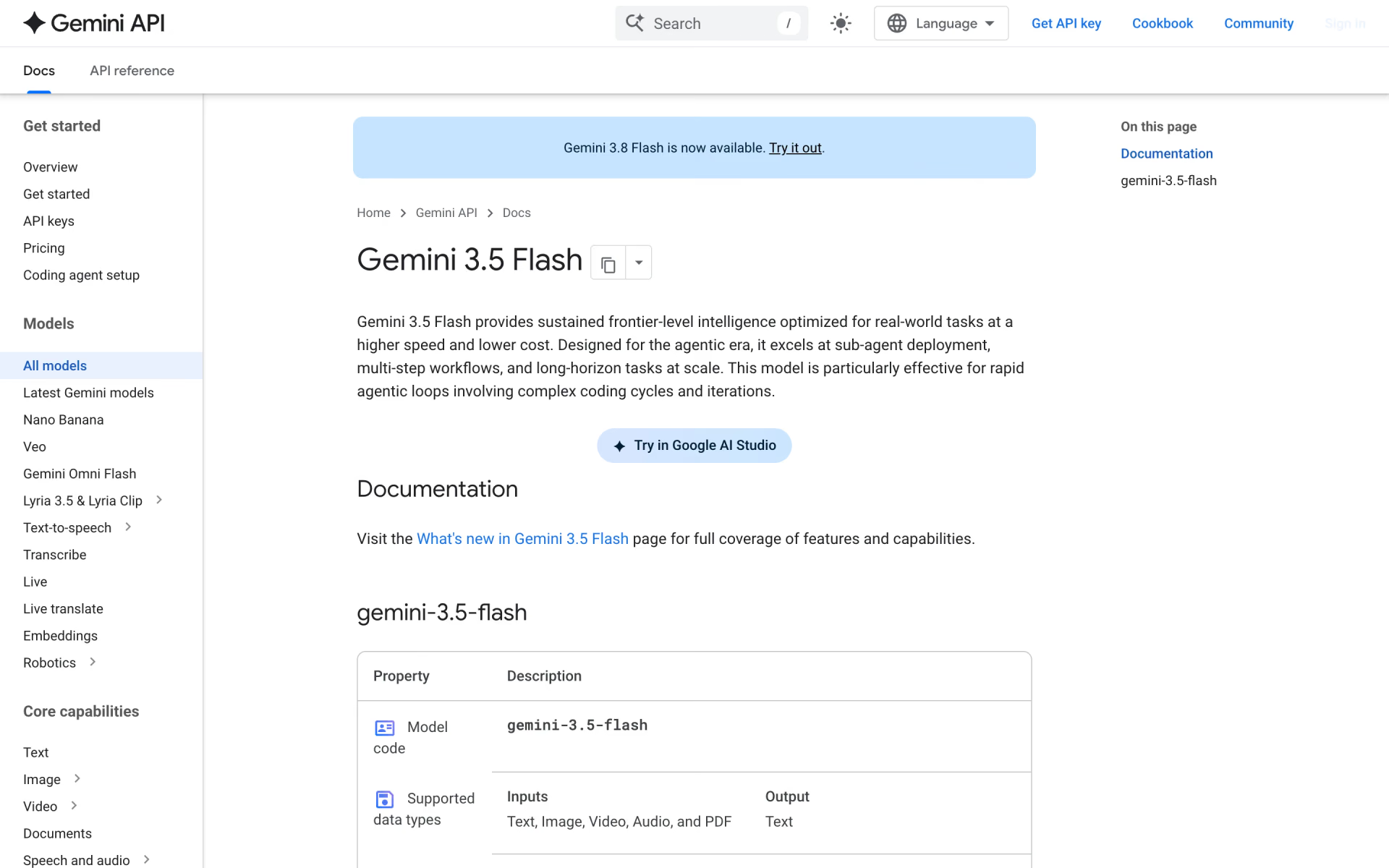
 Gemini 3.5 Flash
 Gemini 3.7 Flash
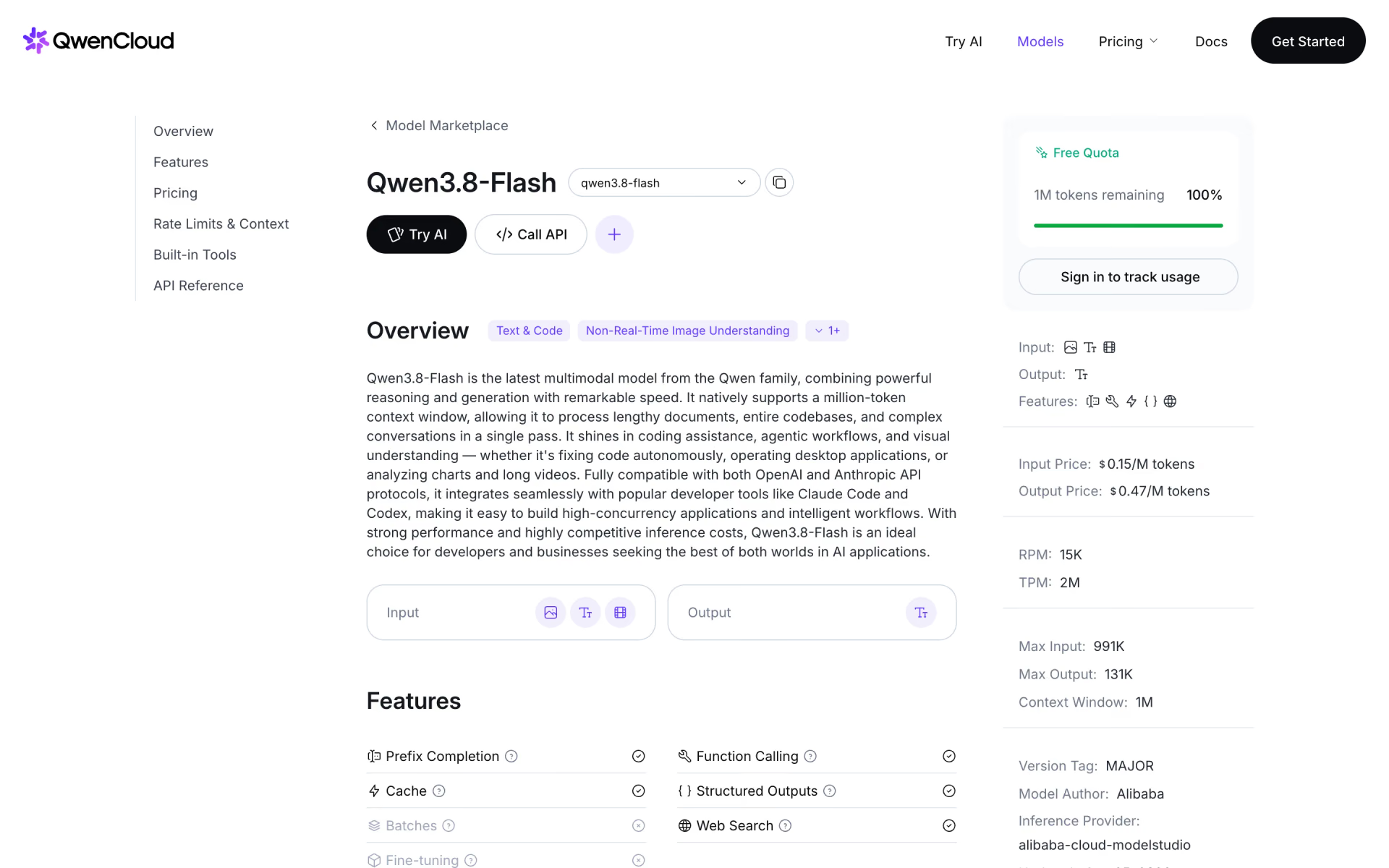
 Qwen3.8-Flash
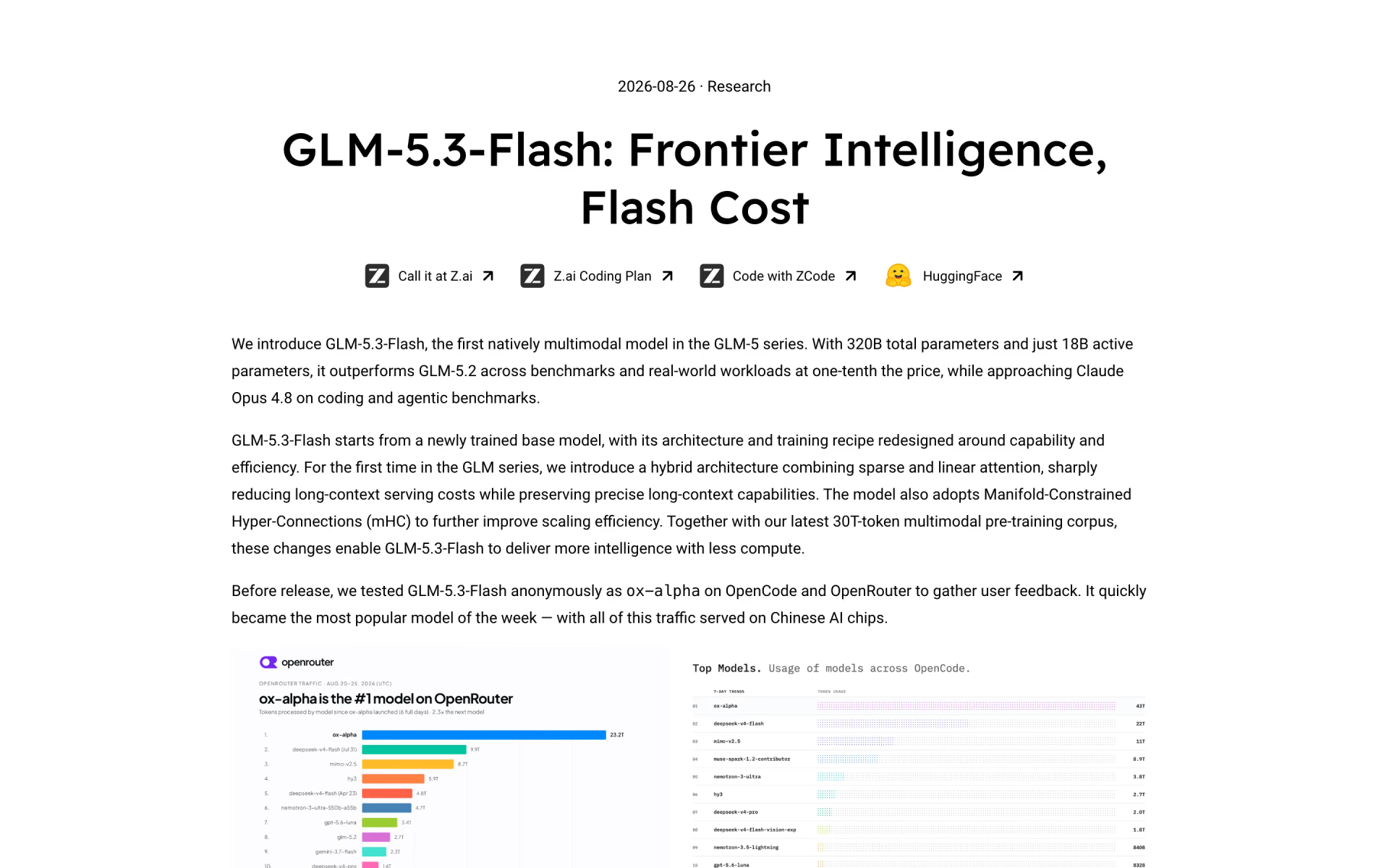
 GLM-5.3-Flash
 Gemini 4 Argon