What is Gemini 3.7 Flash?
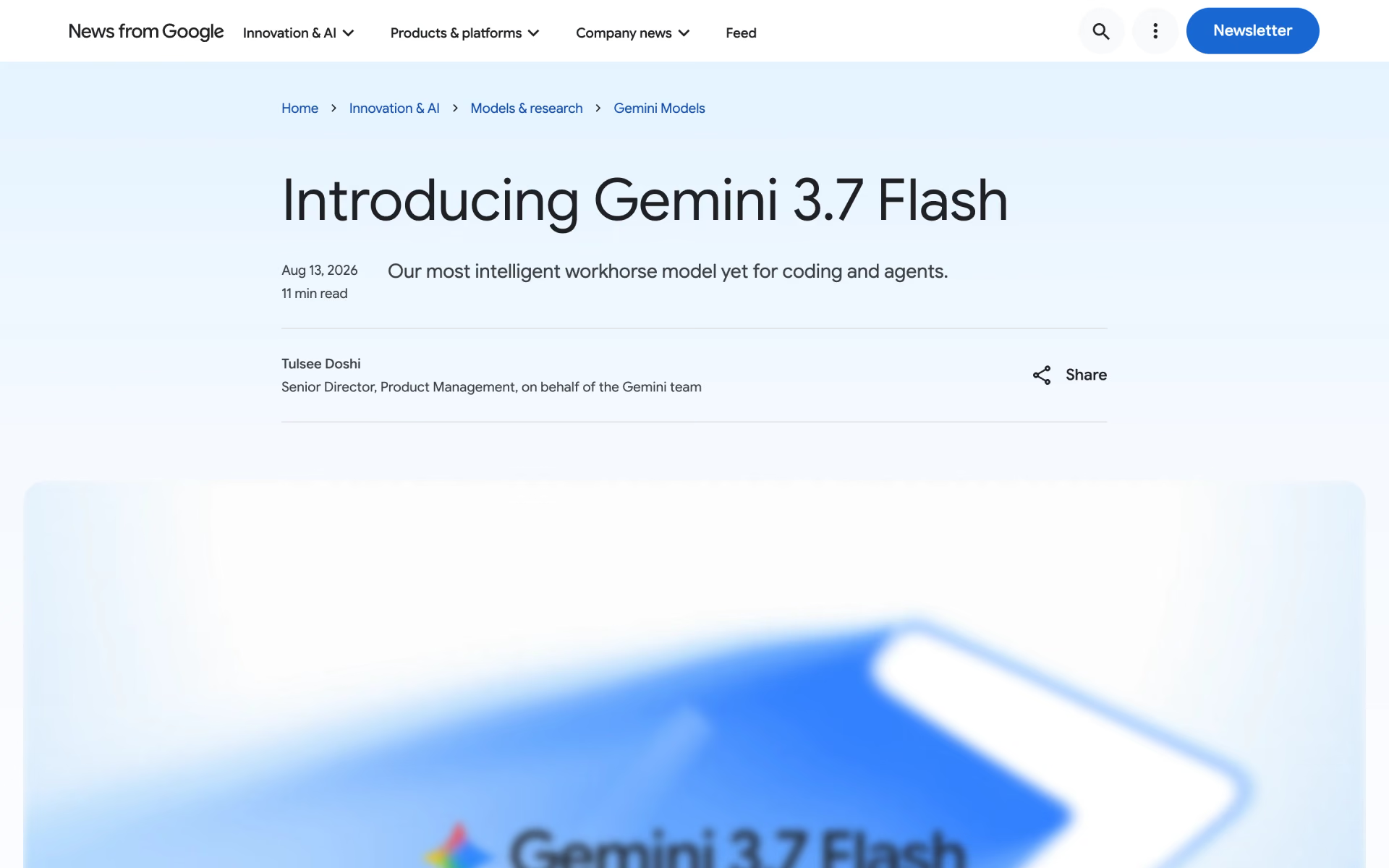
Gemini 3.7 Flash is a closed Google model built on Gemini 3.6 Flash. It reads text, images, video, audio and PDFs across a 1M-token context, writes up to 65,536 tokens of text, and thinks at a low, medium or high level. Developers use it through the Gemini API, Google AI Studio, Android Studio and Google Antigravity; companies through Gemini Enterprise Agent Platform.
Google released Gemini 3.8 Flash three weeks later at the same list price. 3.7 Flash stays fully supported with no shutdown date, and Google points to it for efficiency-first work, since 3.8 Flash can spend more tokens on hard tasks.
What changed from Gemini 3.6 Flash?
Mostly coding and document quality: 3.7 Flash scores higher on Google's software, web and PDF tests at the same list price.
- Coding
- 43.6% on FrontierCode 1.1 Main, up from 34.4%, with better debugging and issue fixing.
- Web builds
- 1588 Elo on Arena's web development board, up from 1538.
- Documents and workflows
- 34.0% on GDP.pdf, up from 22.0%, and 30.4% on AutomationBench, up from 17.0%.
- Price
- Unchanged: both models list at $1.50 / $7.50 per million tokens.
Who is Gemini 3.7 Flash best for?
Gemini 3.7 Flash is best for developers who want a fast, low-cost model for coding agents, web builds and long documents or video, and for teams that care more about compute cost than peak quality.
Coding agents on a budget
It scores 65.3% on DeepSWE v1.1 in Google's model card, ahead of Claude Sonnet 5 at 53.8%, for a lower price per token.
Web and UI builds
It turns a screenshot, an image or a design system into working layouts, and rates 1588 Elo on Arena's web development board against 1538 for 3.6 Flash.
Dense documents and long video
It scores 34.0% on Google's GDP.pdf test of finance, legal and science documents, against 22.0% for 3.6 Flash, and 85.4% on LVBench for long video.
Efficiency-first workloads
Google itself points teams that care most about compute cost to 3.7 Flash rather than 3.8 Flash, which uses more tokens at higher effort.
What's included with Gemini 3.7 Flash?
Three thinking levels, agentic video understanding, half-price Batch and Flex jobs, context caching and Google's built-in tools.
- Thinking levels
- Low, medium and high settings trade answer depth against speed and cost; the minimal level returns an error.
- Agentic video understanding
- It pulls a video's transcript, frames or audio on demand, which Google says can cut input tokens by up to 88% on long videos.
- Batch and Flex
- Half-price input and output for jobs that can wait.
- Context caching
- Cached input costs $0.15 per million tokens, a tenth of the normal input price, plus $1.00 per million tokens per hour of storage.
- Built-in tools
- Google Search and Maps grounding, code execution, URL context, file search, function calling and structured outputs; computer use is in preview.
- Paid prompts stay out of training
- On the paid tier, Google does not use your prompts and responses to improve its products.
How much does Gemini 3.7 Flash cost?
Gemini 3.7 Flash is free on the Gemini API's rate-limited free tier; paid use costs $1.50 per million input tokens and $7.50 per million output tokens, with Batch and Flex at half that.
- Free input and output tokens at lower rate limits
- Prompts and responses are used to improve Google's products
- No Search or Maps grounding
- Half the Standard rate, for work that can wait
- Cached input $0.075
- Output price includes thinking tokens
- Cached input $0.15, plus $1.00 per million tokens per hour of storage
- 5,000 Google Search grounding requests a month free, then $14 per 1,000
- Cached input $0.27
- Its own rate limits, 0.3x the Standard limits by default
Prices are Google's US dollar list prices for the Gemini Developer API. The paid tier needs a linked billing account and at least $5 of prepaid credit, and you can set monthly spend caps. Gemini 3.8 Flash and 3.6 Flash have the same list prices. Companies can also run it on Gemini Enterprise Agent Platform, where prices can differ. Full pricing on ai.google.dev. We checked these prices on .
Is Gemini 3.7 Flash still available?
Yes. Google lists no shutdown date for gemini-3.7-flash and calls it fully supported, even though Gemini 3.8 Flash is now its newest Flash model.
- Successor
- Gemini 3.8 Flash, Google's most capable Flash model, at the same list price.
- When to stay
- Google suggests 3.7 Flash for efficiency-first work, since 3.8 Flash works harder and can use more tokens.
- In the Gemini app
- Google AI Pro and Ultra subscribers get 3.8 Flash across the Gemini app; 3.7 Flash launched there inside the Gemini Spark agent.
How do readers rate Gemini 3.7 Flash?
No one has rated Gemini 3.7 Flash yet. Be the first.
Sign in to rate. One rating per account.
Gemini 3.7 Flash pros and cons
It is fast and beats Claude Sonnet 5 on most of Google's tests for less, but cheaper rivals come close and it can burn through tokens.
Pros
- Fast: Hacker News and Reddit users single out its response time, and several run it in customer-facing apps where waiting on a slower model is not an option.
- Costs less than Claude Sonnet 5 ($1.50 / $7.50 against $2 / $10 per million tokens) and beats it on most coding and document tests in Google's model card, including DeepSWE v1.1 at 65.3% against 53.8%.
- Strong with images, video and PDFs: users rate its screenshot-to-HTML builds and visual understanding, and Google's table puts it at 85.4% on LVBench long video against 68.5% for Sonnet 5.
Cons
- Cheaper rivals come close: many Hacker News and Reddit users say DeepSeek's Flash models and OpenAI's smallest GPT-5.6 model give similar quality for a fraction of the price.
- Token hungry: users comparing runs say it can spend more than twice as many tokens per task as some rivals, which eats into its speed and price advantage.
- Weaker on long, messy jobs: some users say it hallucinates or loses the thread in complex agent workflows, and they hand heavy refactors to a bigger model.
- Paying is harder than it should be: many Hacker News users describe Google Cloud billing and API key setup as confusing, and the paid tier needs $5 of prepaid credit before the first call.
What are the best Gemini 3.7 Flash alternatives?
Three tools on Recaply do Gemini 3.7 Flash's job. DeepSeek V4.1 Flash is open source, so you can run it on your own server.
 Gemini 3.8 FlashFree
Choose it when you want Google's strongest Flash model for long coding and agent jobs; it has the same $1.50 / $7.50 list price, but can use more tokens at higher effort.
 Claude Sonnet 5Free
Choose it when knowledge work and desktop agent tasks matter more than cost; Google's own table has it ahead on GDPval-AA and Agent's Last Exam, at $2 / $10 per million tokens.
 DeepSeek V4.1 FlashOpen Source
Choose it when token price matters most; DeepSeek's API charges $0.30 / $1.20 per million tokens at peak, half that off-peak, with the same 1M context and image input.
Questions about Gemini 3.7 Flash
What is Gemini 3.7 Flash's knowledge cutoff?
Google's model card puts it at March 2026, but warns that some subjects only reach January 2025, in line with the rest of the Gemini 3 family. Turn on Grounding with Google Search when answers depend on recent facts.
Who is Gemini 3.7 Flash for?
Gemini 3.7 Flash is best for developers who want a fast, low-cost model for coding agents, web builds and long documents or video, and for teams that care more about compute cost than peak quality.
Is Gemini 3.7 Flash free?
Yes, through the Gemini API free tier in Google AI Studio, which charges nothing for tokens but has lower rate limits, no Search grounding, and uses your prompts to improve Google's products. Paid use starts with $5 of prepaid credit.
How much does Gemini 3.7 Flash cost?
Gemini 3.7 Flash's paid plans are Batch or Flex at $0.75 / $3.75 per million input / output tokens, Standard at $1.50 / $7.50 per million input / output tokens and Priority at $2.70 / $13.50 per million input / output tokens.
Is there an open source alternative to Gemini 3.7 Flash?
Yes. DeepSeek V4.1 Flash is an open source tool that does the same job, so you can run your own.
What are the best Gemini 3.7 Flash alternatives?
The closest alternatives on Recaply are Gemini 3.8 Flash, Claude Sonnet 5 and DeepSeek V4.1 Flash.
Can I download Gemini 3.7 Flash or run it locally?
No. It is a closed model with no downloadable weights, so it only runs on Google's services: the Gemini API, Google AI Studio, Antigravity and Gemini Enterprise Agent Platform. Google's open Gemma models are the option for local use.
Does Google train on my Gemini 3.7 Flash prompts?
Only on the free tier. Google's pricing page says free-tier prompts and responses are used to improve its products, while paid-tier content is not. Move to the paid tier before sending customer or confidential data.
Our verdict
Gemini 3.7 Flash is still a fast, low-cost pick, but most new projects should start on Gemini 3.8 Flash.
It beats Claude Sonnet 5 on most of Google's coding and document tests for less money, yet 3.8 Flash scores higher at the same list price and cheaper rivals come close on quality.
- Skip it for
- Long refactors and complex agent runs, where a slip costs more than the tokens you save.
- Check first
- Run your own jobs on 3.7 and 3.8 Flash and compare the total tokens used, not only the price per token.

 Gemini 3.1 Flash-Lite
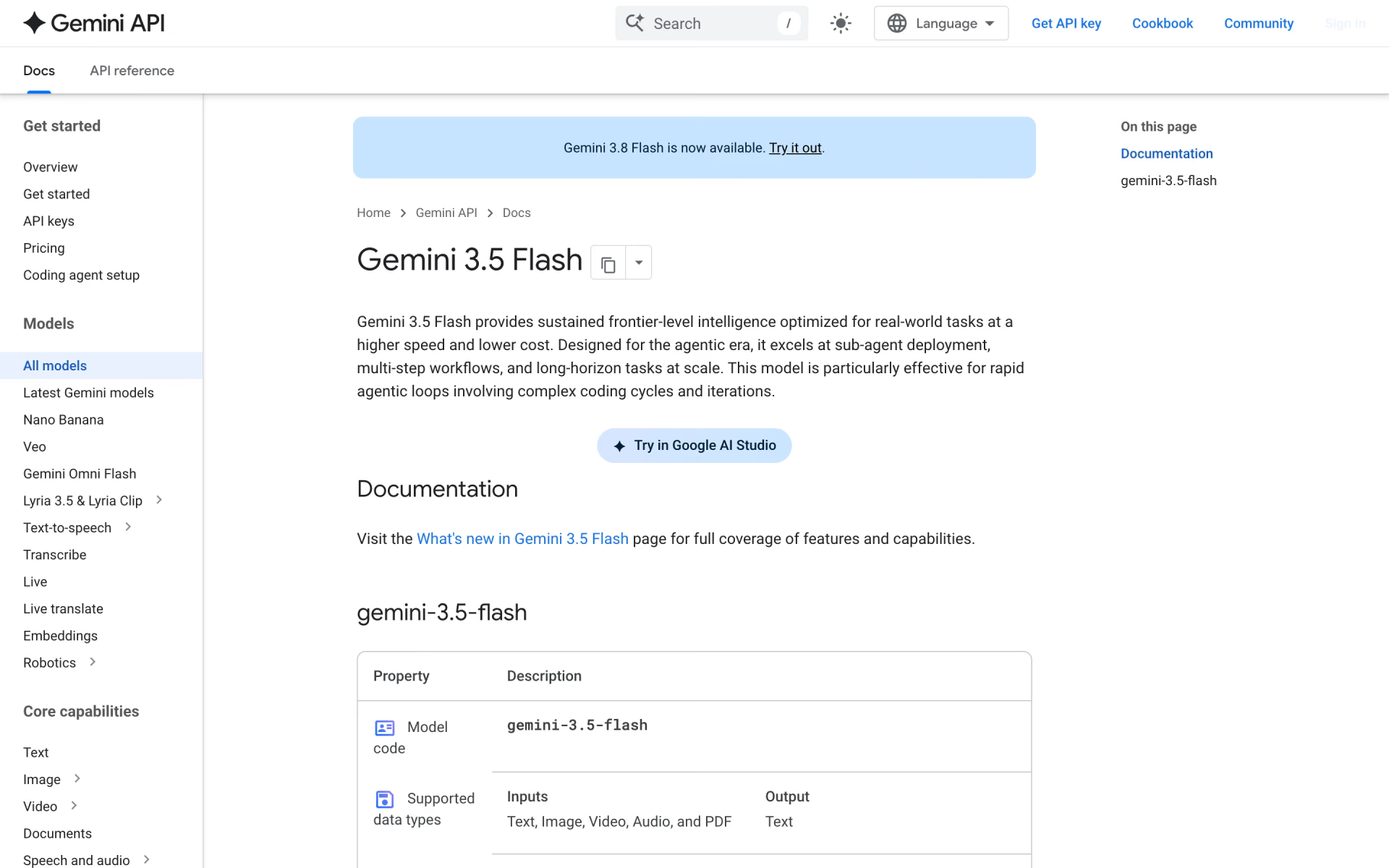
 Gemini 3.5 Flash

 Gemini 3.5 Flash-Lite
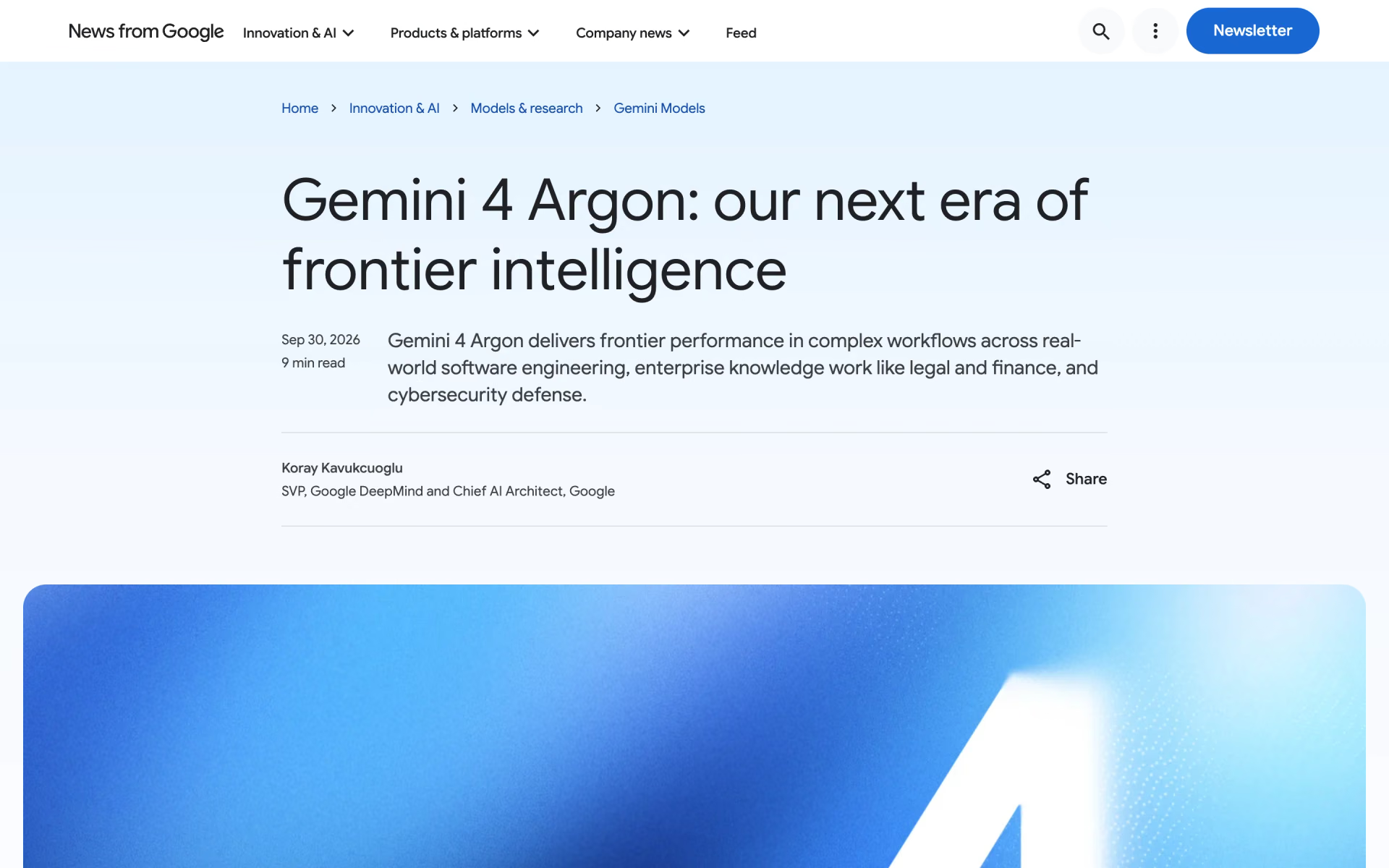
 Gemini 4 Argon
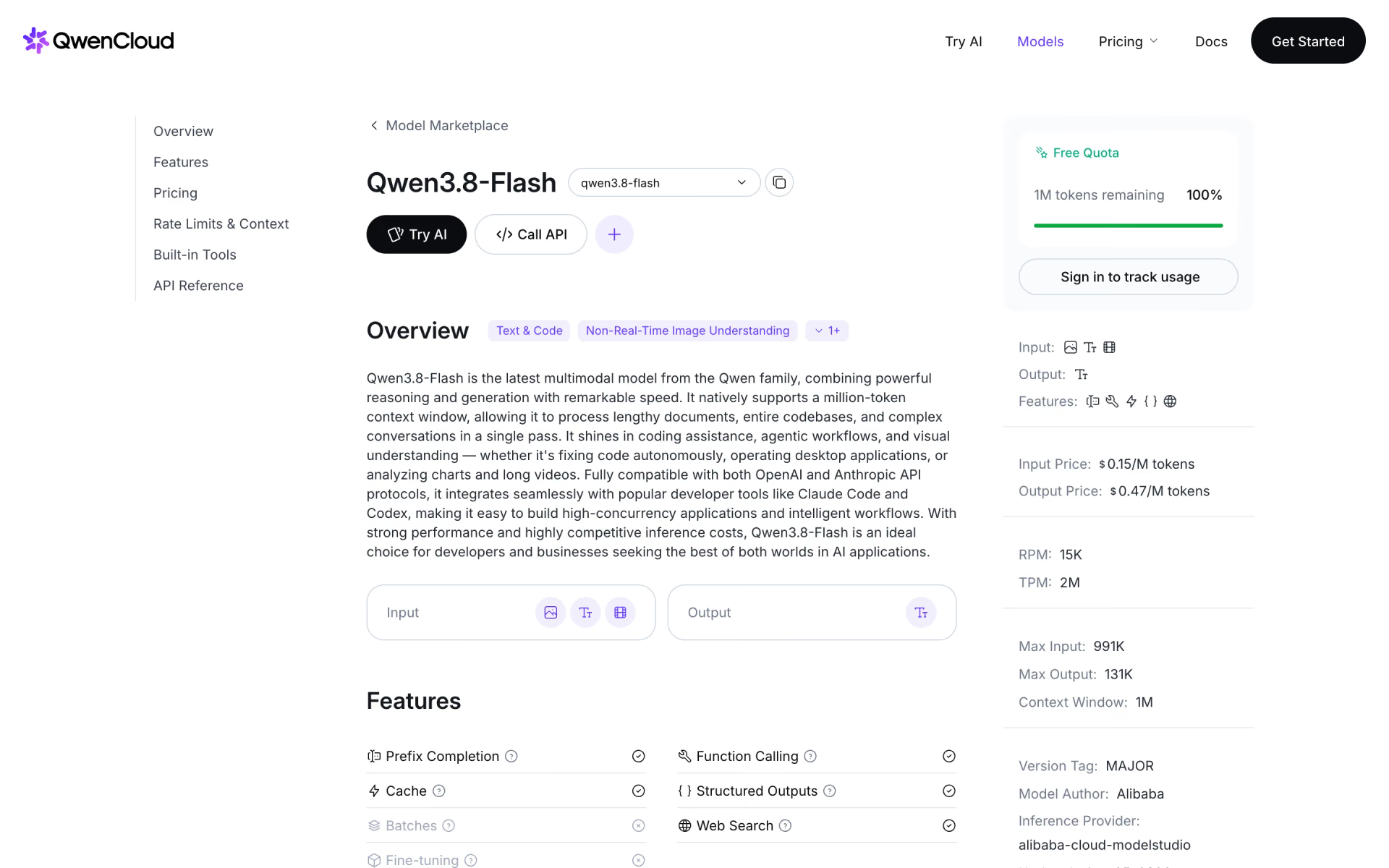
 Qwen3.8-Flash
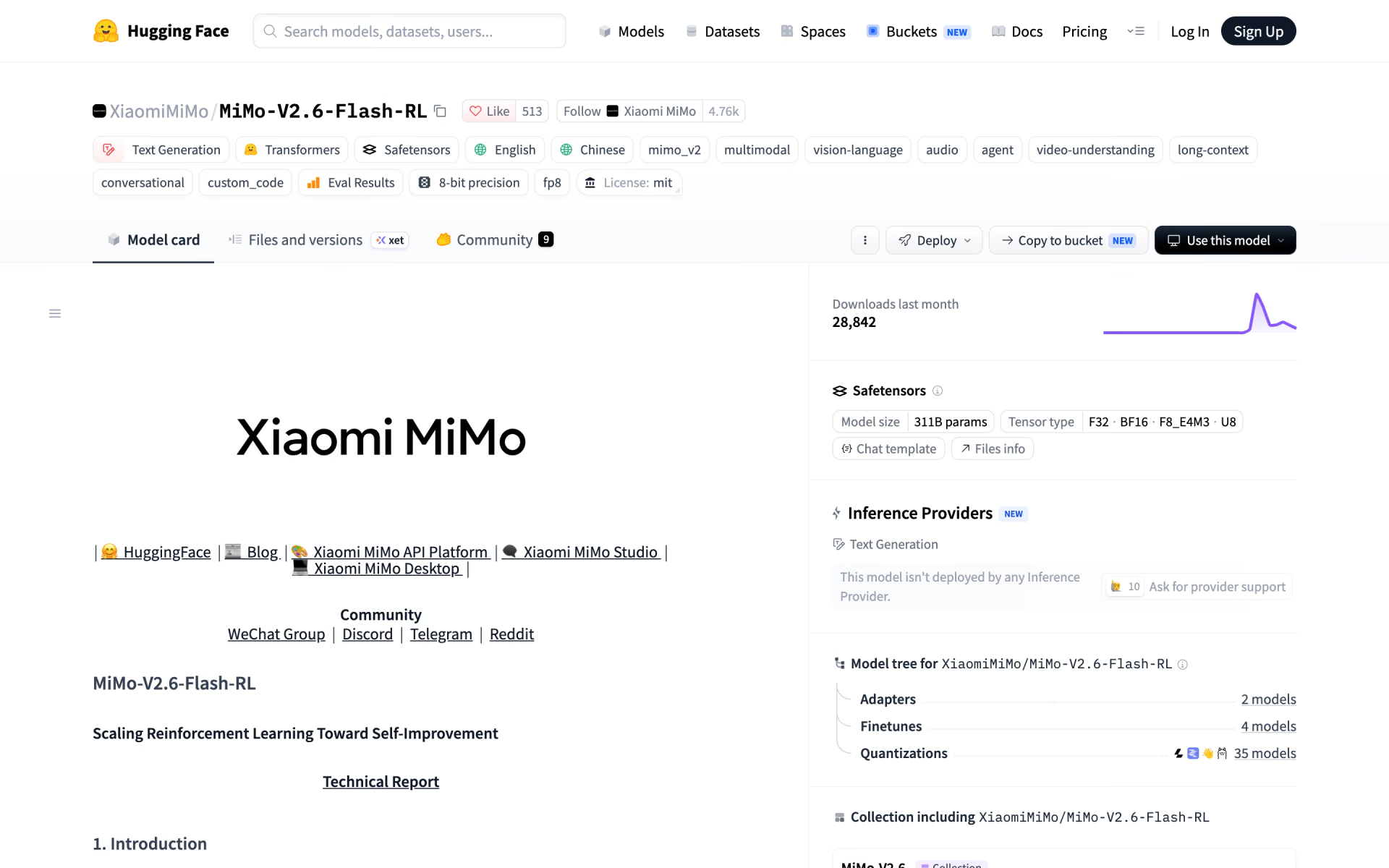
 MiMo-V2.6-Flash