
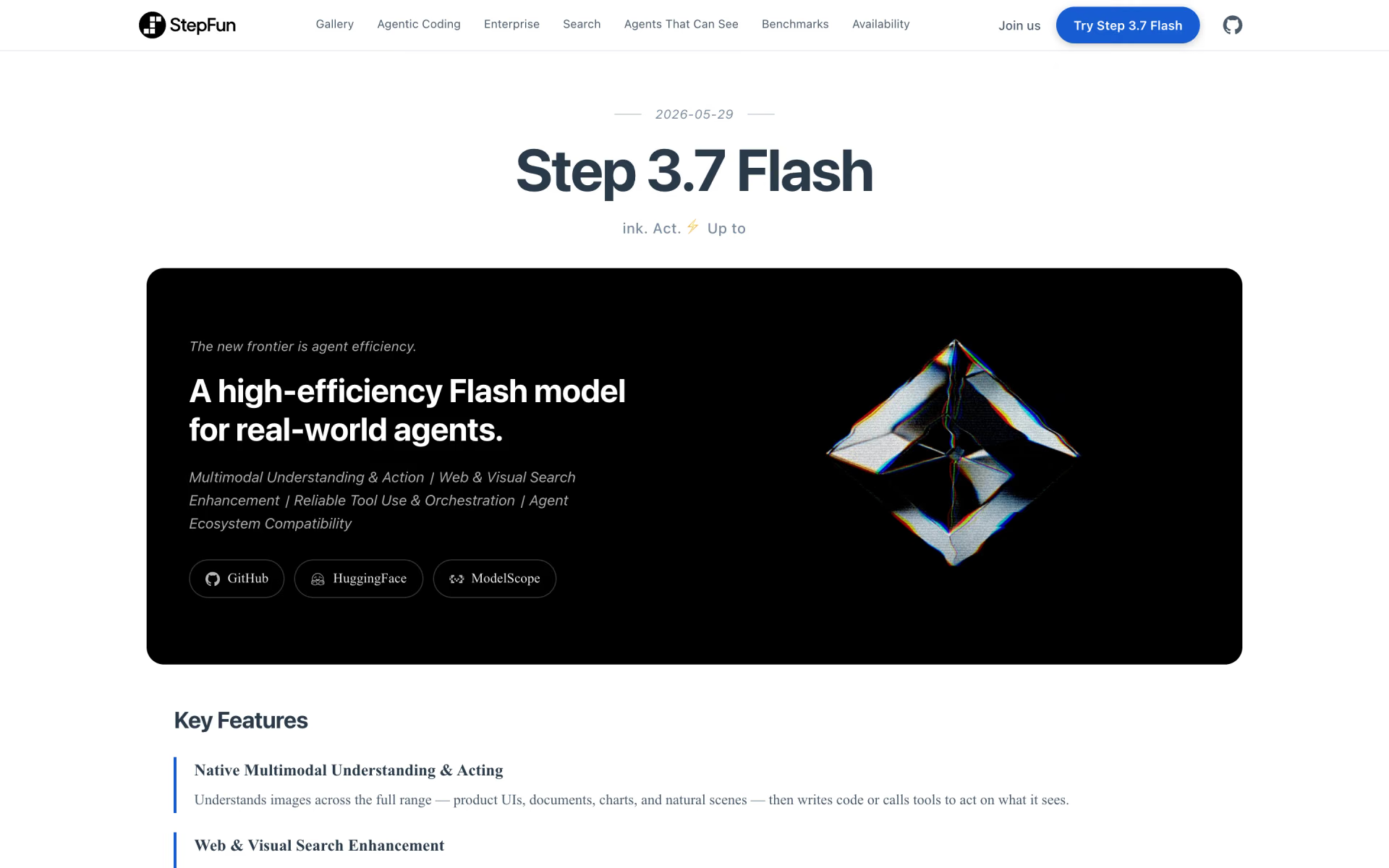
What is Step 3.7 Flash?
Step 3.7 Flash is a mixture-of-experts model with a 196B-parameter language backbone and a 1.8B-parameter vision encoder, and only about 11B parameters work on each token. It reads text, images and short videos, holds 256K tokens of context and calls tools through an OpenAI-compatible API, with low, medium and high reasoning settings.
It builds on text-only Step 3.5 Flash, which StepFun still sells, and costs twice as much for input and nearly four times as much for output. StepFun's larger Step 5 Preview is now its flagship. The weights are free under Apache 2.0.
What changed from Step 3.5 Flash?
Step 3.7 Flash adds image and video input and a choice of reasoning effort, and scores higher on StepFun's coding and agent tests, at a higher token price.
- Input
- A 1.8B-parameter vision encoder adds image and video understanding; Step 3.5 Flash reads text only.
- Reasoning
- Three effort levels, low, medium and high, with medium as the default.
- Scores
- StepFun reports 56.3% on SWE-Bench Pro against 51.3%, and 67.1% on ClawEval-1.1 against 43.6%.
- Price
- $0.20 / $1.15 per million tokens against $0.10 / $0.30, so output costs nearly four times as much.
- Unchanged
- Both activate about 11B parameters per token, hold 256K tokens and ship under Apache 2.0.
Who is Step 3.7 Flash best for?
Step 3.7 Flash is best for developers building agents that read screens, documents or video and call tools at high volume, through StepFun's API or on a 128 GB machine of their own.
Agents that read screens and documents
It takes several images per request plus MP4 video, so an agent can read interfaces, charts and scanned pages, then act on them with tools.
Coding agents in common harnesses
StepFun reports 56.3% on SWE-Bench Pro and documents setups for Claude Code, OpenClaw, Cline, Roo Code and Kilo Code.
Search-heavy research
StepFun trained it to plan searches and check sources rather than rely on memory, and reports 75.8% on BrowseComp.
Running a vision model yourself
The 4-bit build and its vision projector fit a 128 GB Mac Studio, NVIDIA DGX Station or AMD Ryzen AI Max+ 395 machine.
What's included with Step 3.7 Flash?
Image and video input, three reasoning levels, Apache 2.0 weights with FP8, NVFP4 and GGUF builds, support in vLLM, SGLang and llama.cpp, and a Step Plan for coding tools.
- Image and video input
- JPG, PNG, WebP and static GIF images by URL or Base64, several per request, plus a single MP4 under 128 MB by URL.
- Reasoning effort
- Low, medium or high per request through reasoning_effort, with medium as the default.
- Open weights
- Apache 2.0 weights on Hugging Face and ModelScope, with FP8, NVFP4 and GGUF builds.
- Runs on common servers
- StepFun documents vLLM, SGLang, Hugging Face Transformers and llama.cpp, and NVIDIA offers it as a NIM microservice.
- Step Plan for coding tools
- Monthly credits that work in Claude Code, Cursor, OpenClaw and Trae, from $6.99 a month.
- Phone agent guide
- A StepFun guide connects it to a real Android phone, where it plans each action from screenshots.
How much does Step 3.7 Flash cost?
Step 3.7 Flash costs $0.20 per million input tokens and $1.15 per million output tokens on StepFun's API, Step Plan subscriptions start at $6.99 a month, and the weights are free to download.
- Cached input at $0.04 per million tokens
- Web search $0.006 a call, image search $0.02 a call
- Rate limits rise with total top-ups
- 400M Step Plan credits a month
- Use in Claude Code, Cursor, OpenClaw and other tools
- Also covers Step 5 Preview and Step 3.5 Flash
- 1,600M Step Plan credits a month
- Priority API rates
- Priority technical support
- 8,000M Step Plan credits a month
- Priority API rates
- Priority technical support
Flash Max costs $99 a month for 40,000M credits. Paid quarterly, Mini, Plus, Pro and Max cost $18.99, $26.99, $79 and $269; paid yearly, $69.99, $95.99, $289 and $989. StepFun values about 7M credits at $1 of model use; credits arrive monthly, expire at month end, and booster packs cost $6.99 for 400M or $9.99 for 1,600M. The weights are free under the Apache 2.0 licence on Hugging Face and ModelScope. Full pricing on platform.stepfun.ai. We checked these prices on .
How do readers rate Step 3.7 Flash?
No one has rated Step 3.7 Flash yet. Be the first.
Sign in to rate. One rating per account.
Step 3.7 Flash pros and cons
It adds vision to a fast, cheap open model and some users rate it above Qwen 3.6 27B for coding, but it reasons at length, can be uneven and costs more per token than Step 3.5 Flash.
Pros
- Local users say StepFun's own quantised builds run well, at about 35 tokens a second on an M1 Mac Studio in one report and around 120 on a vLLM server in another.
- Some developers who tested it on real codebases say it beats Qwen 3.6 27B on development tasks.
- It reads images and video, which Step 3.5 Flash cannot, and StepFun reports large gains on agent tests such as ClawEval-1.1, 67.1% against 43.6%.
- Commenters call the Step Plan generous: $6.99 a month buys 400M credits, which StepFun values at roughly $57 of model use.
Cons
- It reasons at length: users say local builds can loop or think for a long time before acting, and some went back to Step 3.5 Flash for speed.
- Results are uneven: several testers got broken or inconsistent code where Qwen 3.6 27B succeeded, and StepFun says its small size limits what it knows without search.
- It costs more than Step 3.5 Flash, at $0.20 / $1.15 per million tokens against $0.10 / $0.30.
- Running it yourself takes about 120 GB of memory even at 4-bit, and StepFun now recommends Step 5 Preview for detailed image work.
Is Step 3.7 Flash open source?
Yes. Step 3.7 Flash's code is public under the Apache 2.0 licence, so you can run it on your own server.
On GitHub
348stars
- Last commit
- 1 Jun
- Repository age
- 6 months
- Licence
- Apache 2.0
- Self-hosted
- Yes
- Repository
- stepfun-ai/Step-3.7-Flash
What are the best Step 3.7 Flash alternatives?
Step-3.5-Flash for cheaper text-only work, DeepSeek V4.1 Flash for a 1M context, and Qwen3.8-27B for a vision model that needs far less memory.
 Step-3.5-FlashOpen Source
Choose it when your agents only handle text; it costs $0.10 / $0.30 per million tokens, has the same 256K context and is in the same Step Plan.
 DeepSeek V4.1 FlashOpen Source
Choose it when you need a 1M-token context with image input on the API; it costs $0.30 / $1.20 per million tokens at peak hours and half that off-peak, with MIT-licensed weights.
 Qwen3.8-27BOpen Source
Choose it when you want an open vision model that needs far less memory: a 27B dense model under Apache 2.0 that reads images and video, with a 262K native context.
Questions about Step 3.7 Flash
What is Step 3.7 Flash?
Step 3.7 Flash is StepFun's open-weight model for agents and coding that reads images and video as well as text, with a 256K-token context, low API prices and Apache 2.0 weights.
Who is Step 3.7 Flash for?
Step 3.7 Flash is best for developers building agents that read screens, documents or video and call tools at high volume, through StepFun's API or on a 128 GB machine of their own.
Is Step 3.7 Flash free?
The weights are free: StepFun publishes Step 3.7 Flash under the Apache 2.0 licence on Hugging Face and ModelScope, so you can run it on your own hardware. StepFun's hosted API is paid, at $0.20 per million input tokens and $1.15 per million output tokens.
How much does Step 3.7 Flash cost?
Step 3.7 Flash's paid plans are API, pay as you go at $0.20 / $1.15 per million input / output tokens, Flash Mini at $6.99 per month, Flash Plus at $9.99 per month and Flash Pro at $29 per month.
Is Step 3.7 Flash open source?
Yes. Step 3.7 Flash's code is public under the Apache 2.0 licence, so you can run it on your own server.
What are the best Step 3.7 Flash alternatives?
The closest alternatives on Recaply are Step-3.5-Flash, DeepSeek V4.1 Flash and Qwen3.8-27B.
Where can I try Step 3.7 Flash?
On its official website, static.stepfun.com.
Can I run Step 3.7 Flash on a Mac?
Yes, on a large one. StepFun's 4-bit GGUF is 111.5 GB, plus a 3.97 GB vision projector and about 7 GB of overhead, so it needs at least 120 GB of memory; StepFun recommends 128 GB of unified memory, such as a Mac Studio.
Can Step 3.7 Flash understand video?
Yes. Through StepFun's API it accepts a single MP4 video by URL, under 128 MB, alongside text. For bigger files, StepFun suggests splitting the video into smaller MP4 clips and summarising each one.
Step 3.7 Flash or Step 5 Preview?
Step 5 Preview is StepFun's larger flagship, with a 1M-token context, at $1.00 / $2.70 per million tokens. StepFun now recommends it for detailed image work, while Step 3.7 Flash stays the cheaper, faster option for high-volume multimodal agents.
Can I use Step 3.7 Flash in Claude Code?
Yes. StepFun's Step Plan gives Claude Code its own Anthropic-style base URL, and StepFun documents setups for Claude Code, OpenClaw, Hermes Agent, Cline, Roo Code, Kilo Code and Open Code.
Our verdict
Step 3.7 Flash is a good-value open model for agents that need to see, if you can live with long reasoning.
It adds image and video input to a fast design with 11B active parameters, StepFun reports clear gains over Step 3.5 Flash on coding and agent tests, and the weights are free under Apache 2.0.
- Skip it for
- Text-only work, where Step 3.5 Flash does the job for about a quarter of the output price, or tasks that need short, predictable answers.
- Check first
- Count how many reasoning tokens it spends on your own tasks, since every one is billed at the $1.15 output rate.

 Step3-VL-10B
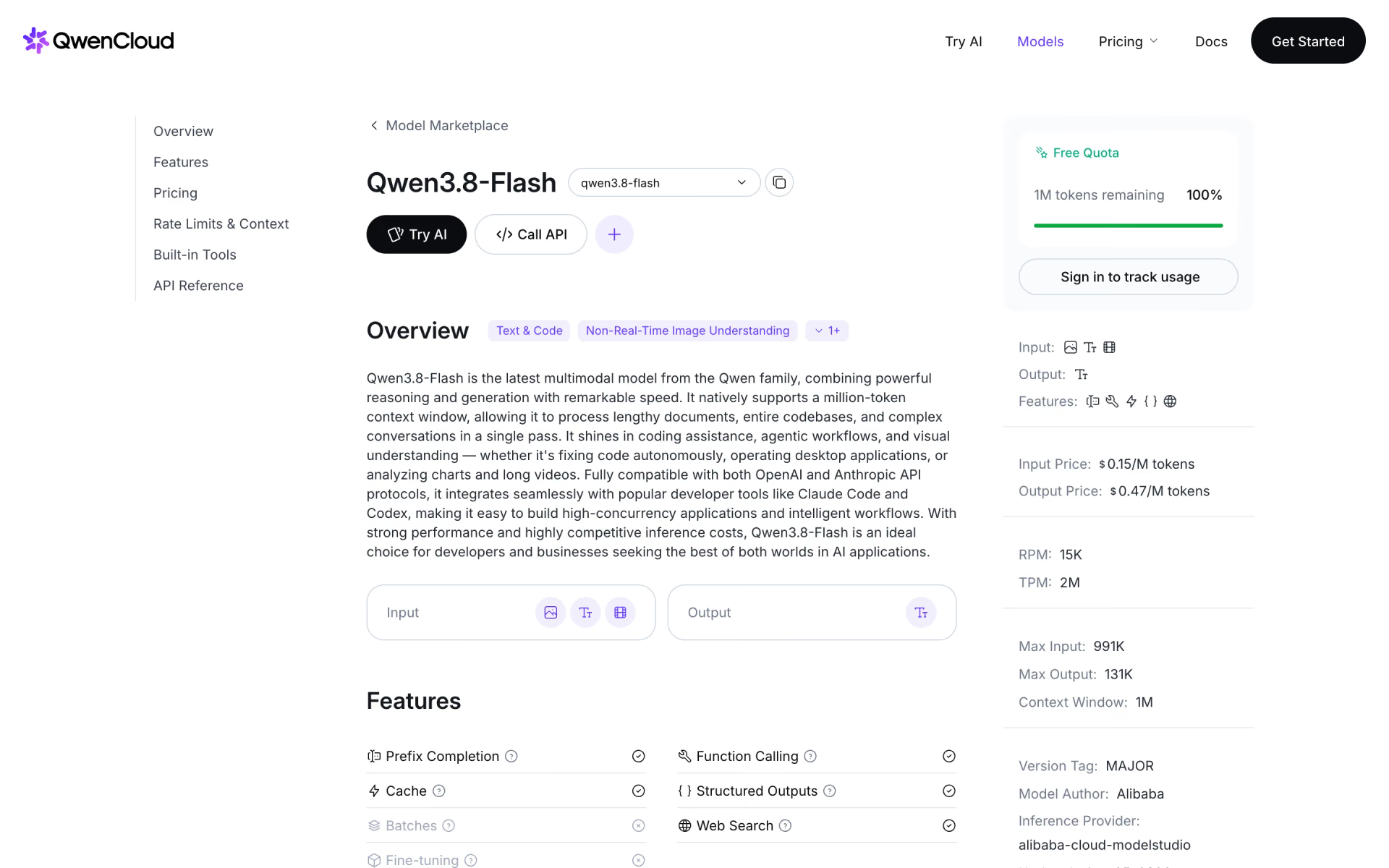
 Qwen3.8-Flash

 Gemini 3.5 Flash-Lite
 GPT-6.1 Terra

 Step 5 Preview
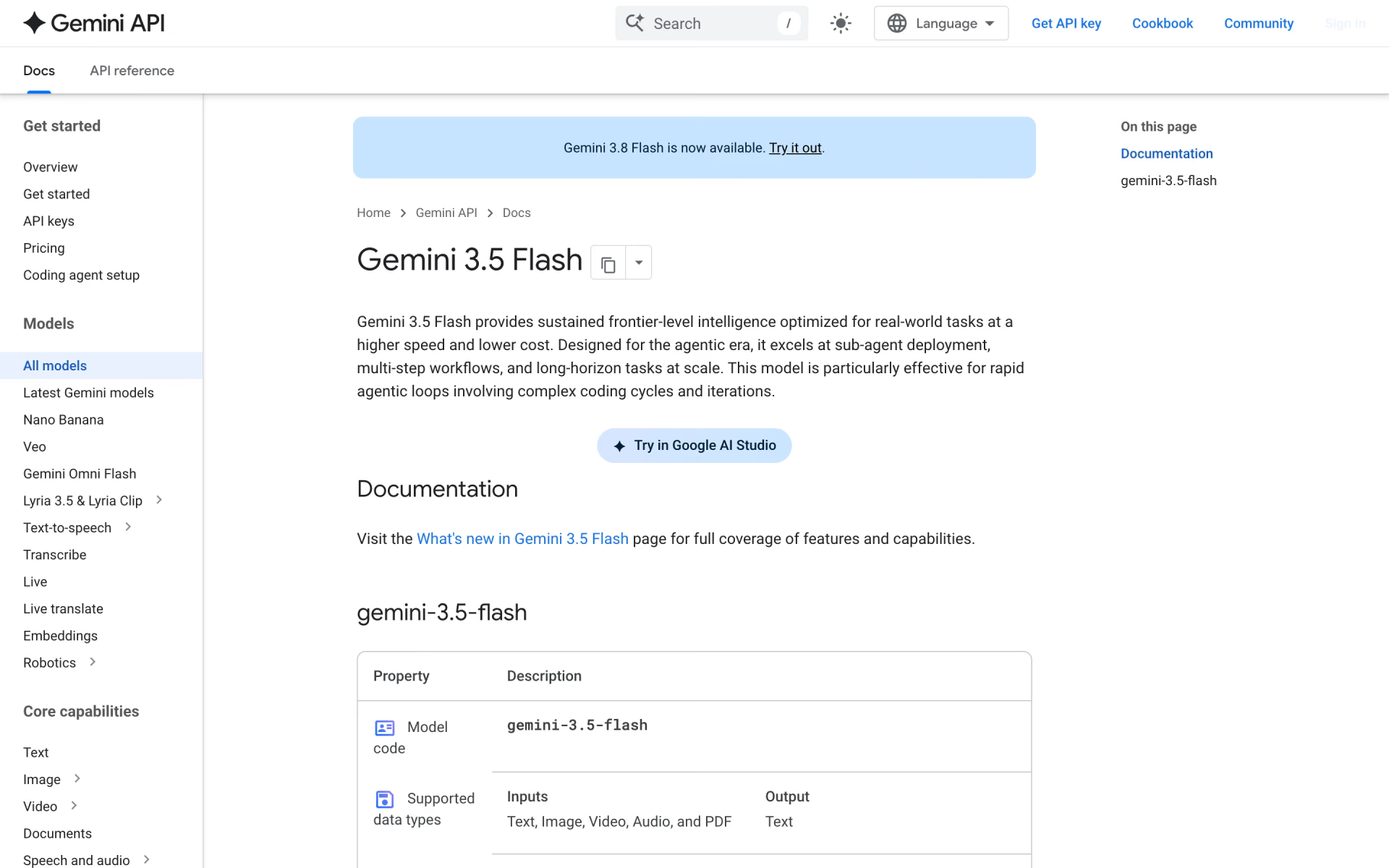
 Gemini 3.5 Flash