

What is MiMo-V2.6-Pro?
MiMo-V2.6-Pro is a mixture-of-experts model with 1.02T parameters, 42B of them active for each token, that reads text, images, video and audio and writes text. Xiaomi trained it in a large reinforcement learning run it streamed live, across coding, agent, visual and security tasks, and says it now matches Claude Opus 5 and GPT-5.6 Sol on most agent benchmarks.
It is Xiaomi's current flagship and replaces MiMo-V2.5-Pro, which is leaving Xiaomi's API, at the same price per token. Soon after launch Xiaomi updated the served model to cut repeated tool calls, keeping the mimo-v2.6-pro name.
What changed from MiMo-V2.5-Pro?
More capability at the same price: it reads images, video and audio, scores far higher on Xiaomi's agent tests, and adds batch and UltraSpeed options.
- Price
- The same $0.435 / $0.87 per million tokens and the same Token Plan credits per token.
- Input
- The open weights now include vision and audio encoders; V2.5-Pro's weights are a text model.
- Agent scores
- DeepSWE v1.1 rose from 19.0 to 71.9 and Terminal Bench 2.1 from 65.2 to 89.9, by Xiaomi's measure.
- New options
- A half-price Batch API and the UltraSpeed mode, up to 20 times faster.
- Availability
- Xiaomi is removing mimo-v2.5-pro from its API with no automatic switch, so calls need the new model name.
Who is MiMo-V2.6-Pro best for?
MiMo-V2.6-Pro suits agentic coding on a budget, work that mixes screens, video and audio, batch jobs, and teams that want MIT-licensed weights to host themselves.
Agentic coding on a budget
It scored 71.9 on DeepSWE v1.1 in Xiaomi's tests, close to Claude Opus 5, at $0.435 / $0.87 per million tokens.
Work that mixes screens, video and audio
It reads all four input types in one model and scored 82.0 on OSWorld-Verified for computer use, by Xiaomi's measure.
Large jobs that can wait
The Batch API halves the price to $0.2175 / $0.435 per million tokens.
Self-hosting under a simple licence
The MIT-licensed weights come with SGLang and vLLM recipes, for teams with a multi-GPU cluster that can hold about 574 GB of weights.
What's included with MiMo-V2.6-Pro?
Four input types, a 1M context, an UltraSpeed mode, half-price batch jobs, tools and web search, and credit plans for coding tools.
- Four input types
- Text, images, video and audio go into one model, with a 1M-token context and up to 128K tokens out.
- UltraSpeed mode
- mimo-v2.6-pro-ultraspeed runs up to 20 times faster at $4.35 / $8.70 per million tokens, on the API and the top MiMo Desktop tiers.
- Batch API
- Half-price input and output for jobs that do not need an instant answer.
- Thinking, tools and web search
- Deep thinking, function calls, structured output, streaming and a web search plugin at $5 per 1,000 calls.
- Token Plan for coding tools
- Monthly credit plans work in Claude Code, Codex, OpenCode and OpenClaw, with no five-hour or weekly caps.
- Open training resources
- Xiaomi published the technical report, more than 7,000 RL task environments and its RL training code alongside the weights.
How much does MiMo-V2.6-Pro cost?
MiMo-V2.6-Pro costs $0.435 per million input tokens and $0.87 per million output tokens on Xiaomi's API, the weights are free, and Token Plans that cover it start at $6 a month.
- MIT licence, commercial use allowed
- About 574 GB of weights on Hugging Face
- SGLang and vLLM deployment recipes
- Cache hits $0.0036 per million input tokens
- Batch API at half price
- UltraSpeed: $4.35 / $8.70
- 4.1 billion credits a month
- Pro uses 300 credits per input token, 600 per output token
- Works in Claude Code, Codex, OpenCode and OpenClaw
- 11 billion credits a month
- No five-hour or weekly caps
- Also sold as team seats at $16 each
Token Plan Pro and Max cost $50 and $100 a month; yearly billing is 12% cheaper, and usage between 16:00 and 24:00 UTC counts at 0.8x. Token Plans do not include UltraSpeed. These are Xiaomi's overseas prices in US dollars; mainland China prices are in yuan. Full pricing on mimo.mi.com. We checked these prices on .
How do readers rate MiMo-V2.6-Pro?
No one has rated MiMo-V2.6-Pro yet. Be the first.
Sign in to rate. One rating per account.
MiMo-V2.6-Pro pros and cons
It is cheap and a clear step up from V2.5-Pro, but it is slow, overthinks, and still trails the best closed models on harder tests.
Pros
- Cheap for its class: early users say price is where it shines, and one found it beat Grok 4.7 for far less.
- A clear step up from MiMo-V2.5-Pro for most early users, who find it smarter and better at following prompts.
- Xiaomi's own table puts it within a few points of Claude Opus 5 on DeepSWE v1.1 (71.9 against 74.0) and ahead of it on Terminal Bench 2.1 and AutomationBench.
- MIT-licensed weights that read four input types, released with Xiaomi's RL environments and training code.
Cons
- Slow and prone to overthinking: users report long reasoning for simple edits, slow builds and output well below the speed of leading closed models.
- Early agent runs could loop on the same tool calls; Xiaomi confirmed it and updated the API model, but self-hosters should use the newer MOPD weights.
- Still behind the best closed models on harder tests: Xiaomi's own table shows 34.9 on Terminal Bench 4.0 against 49.0 for Claude Opus 5, and 47.9 on ExploitBench against 70.0.
- Too large for most teams to host: the weights take about 574 GB, and Xiaomi's SGLang recipe spans two server nodes.
Is MiMo-V2.6-Pro open source?
Yes. MiMo-V2.6-Pro's code is public under the MIT licence, so you can run it on your own server.
What are the best MiMo-V2.6-Pro alternatives?
MiMo-V2.6-Pro is an open source alternative to Kimi K3, Kimi K2.6 and Muse Spark Open. DeepSeek V4 Pro does the same job and is open source too.
 Kimi K3Free
Choose it when you want Moonshot's larger 2.8T model with its Kimi Code agent and apps; it costs $3 / $15 per million tokens, several times more, and takes no audio.
 Kimi K2.6Free
Moonshot AI's open-weights model for long coding jobs and agent swarms of up to 300 sub-agents.
 Muse Spark OpenFree
Meta's 816B open-weight model for coding and long agent tasks, free to download and run yourself.
 DeepSeek V4 ProOpen Source
DeepSeek's 1.6T-parameter open MoE model for coding and agents, with a 1M-token context.
 MiMo-V2.6-FlashOpen Source
Choose it when cost and volume matter more than peak quality; it costs $0.14 / $0.28 per million tokens, about a third of Pro's price, and trails it by four points on DeepSWE v1.1.
 Claude Opus 5.5Paid
Choose it when you need a closed model for the hardest terminal and security work, where Xiaomi's own table still has Claude Opus 5 ahead; Opus 5.5 costs $4 / $20 per million tokens.
Questions about MiMo-V2.6-Pro
What is MiMo-V2.6-Pro UltraSpeed?
A faster serving mode of the same model, called mimo-v2.6-pro-ultraspeed, that Xiaomi says runs up to 20 times faster at the same quality. It costs $4.35 / $8.70 per million tokens, ten times the standard rate, and Token Plans do not include it.
Who is MiMo-V2.6-Pro for?
MiMo-V2.6-Pro suits agentic coding on a budget, work that mixes screens, video and audio, batch jobs, and teams that want MIT-licensed weights to host themselves.
Is MiMo-V2.6-Pro free?
The weights are free to download under the MIT licence. Using it through Xiaomi's API is paid, at $0.435 per million input tokens and $0.87 per million output tokens, or through a Token Plan from $6 a month.
How much does MiMo-V2.6-Pro cost?
MiMo-V2.6-Pro's paid plans are Pay-as-you-go API at $0.435 / $0.87 per million input / output tokens, Token Plan Lite at $6 per month and Token Plan Standard at $16 per month.
Is MiMo-V2.6-Pro open source?
Yes. MiMo-V2.6-Pro's code is public under the MIT licence, so you can run it on your own server.
What are the best MiMo-V2.6-Pro alternatives?
The closest alternatives on Recaply are Kimi K3, Kimi K2.6, Muse Spark Open, DeepSeek V4 Pro, MiMo-V2.6-Flash and Claude Opus 5.5.
Where can I try MiMo-V2.6-Pro?
On its official website, mimo.xiaomi.com.
Can I run MiMo-V2.6-Pro locally?
Only on a server cluster. The weights take about 574 GB, and Xiaomi's SGLang recipe spreads them across two nodes with 16-way tensor parallelism. For most teams the API, or the smaller MiMo-V2.6-Flash, costs far less.
Does MiMo-V2.6-Pro work with Claude Code?
Yes. Xiaomi's Token Plan is built for coding tools and works with Claude Code, Codex, OpenCode and OpenClaw; set the model name to mimo-v2.6-pro. Xiaomi also offers its own MiMo Code agent.
Our verdict
MiMo-V2.6-Pro is the open model to pick when you want near-Opus 5 agent scores at a small fraction of closed-model prices.
Xiaomi's tests put it within a few points of Claude Opus 5 on most agent benchmarks at $0.435 / $0.87 per million tokens, and early users call it a clear step up from V2.5-Pro.
- Skip it for
- Latency-sensitive work unless you pay for UltraSpeed, and the hardest terminal or security tasks, where closed models still lead.
- Check first
- Run it in your own agent harness and watch for long reasoning and repeated tool calls before you move work over.
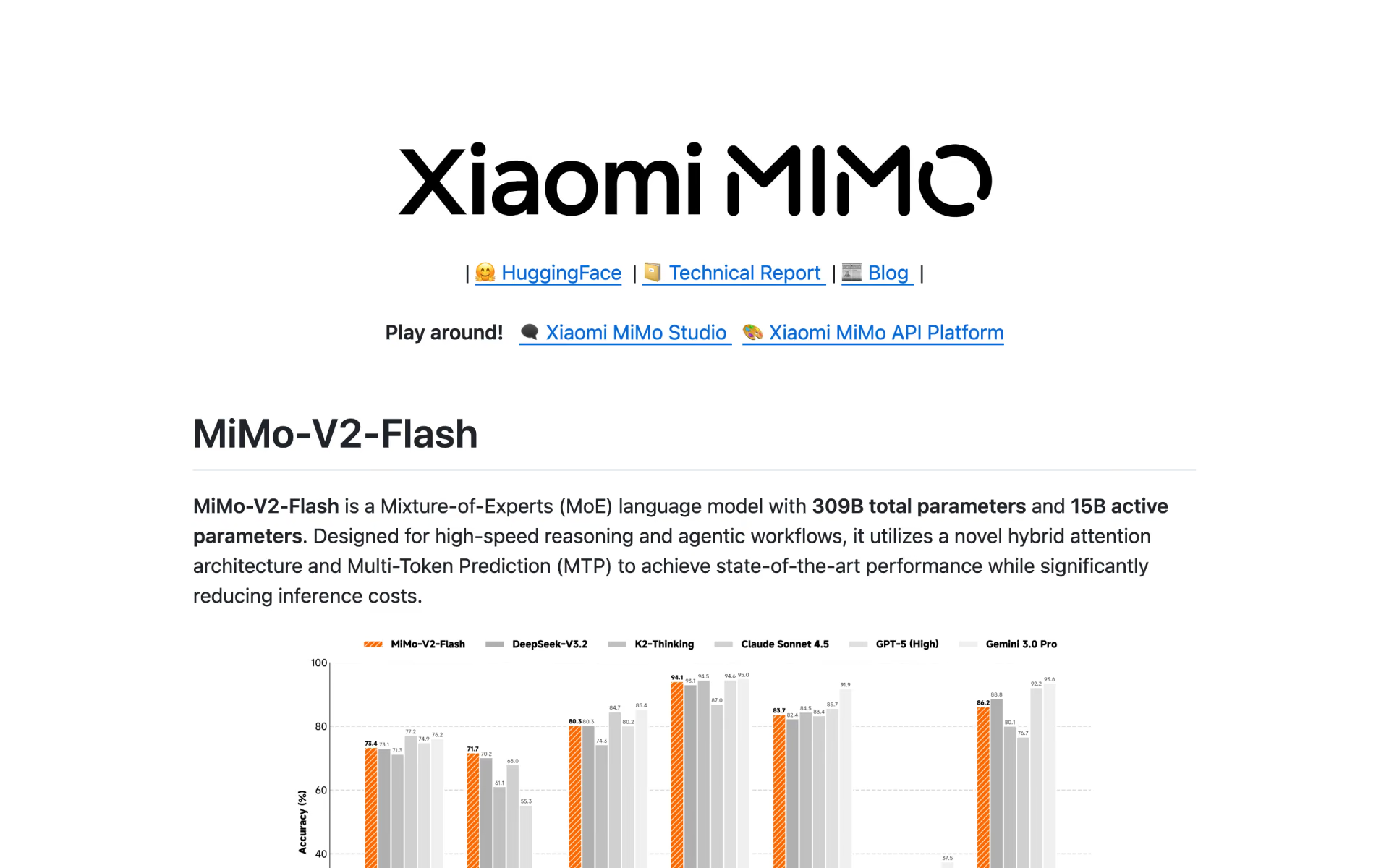
 MiMo-V2-Flash

 Reflection Beam
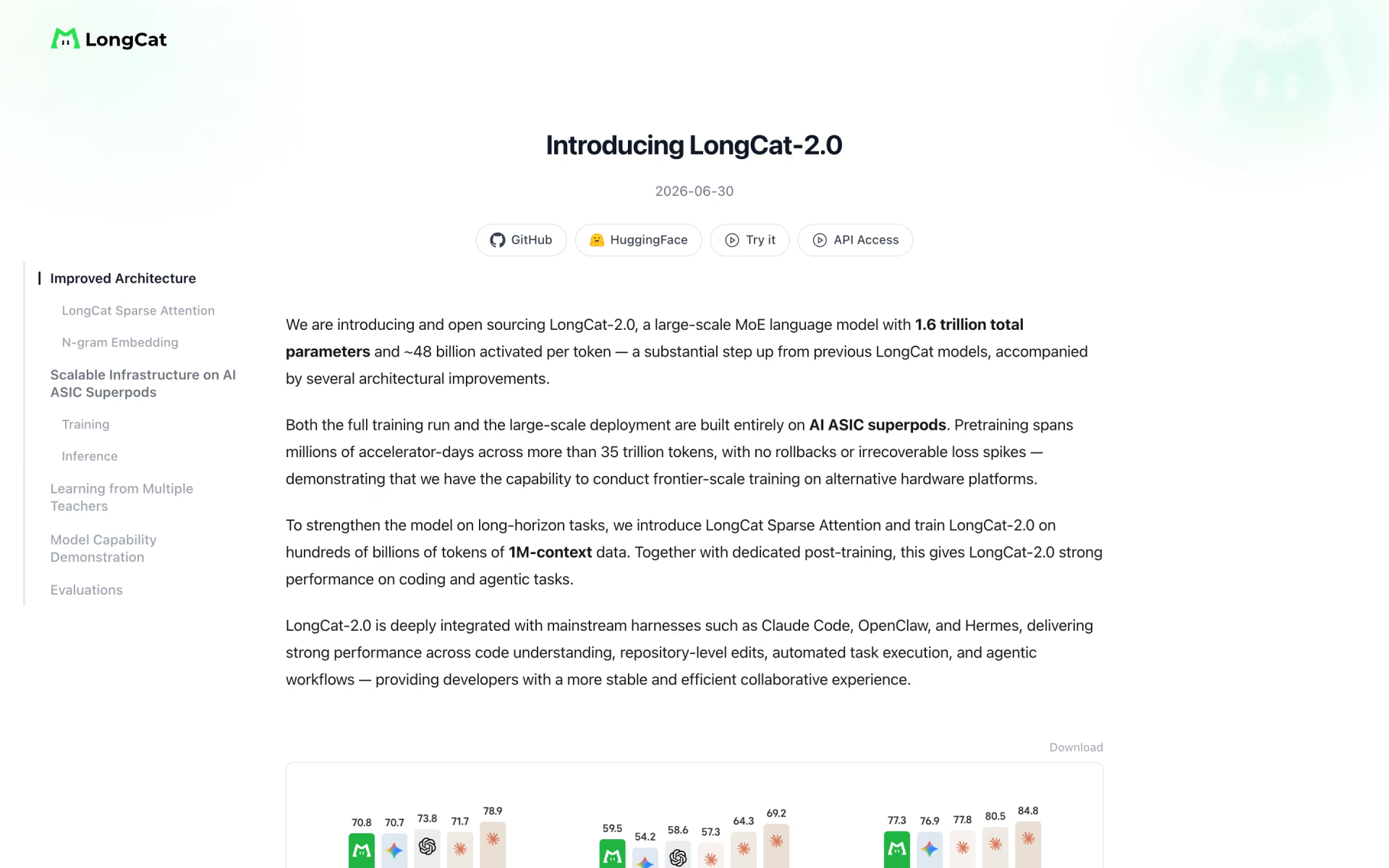
 LongCat-2.0

 Mistral Medium 3.5

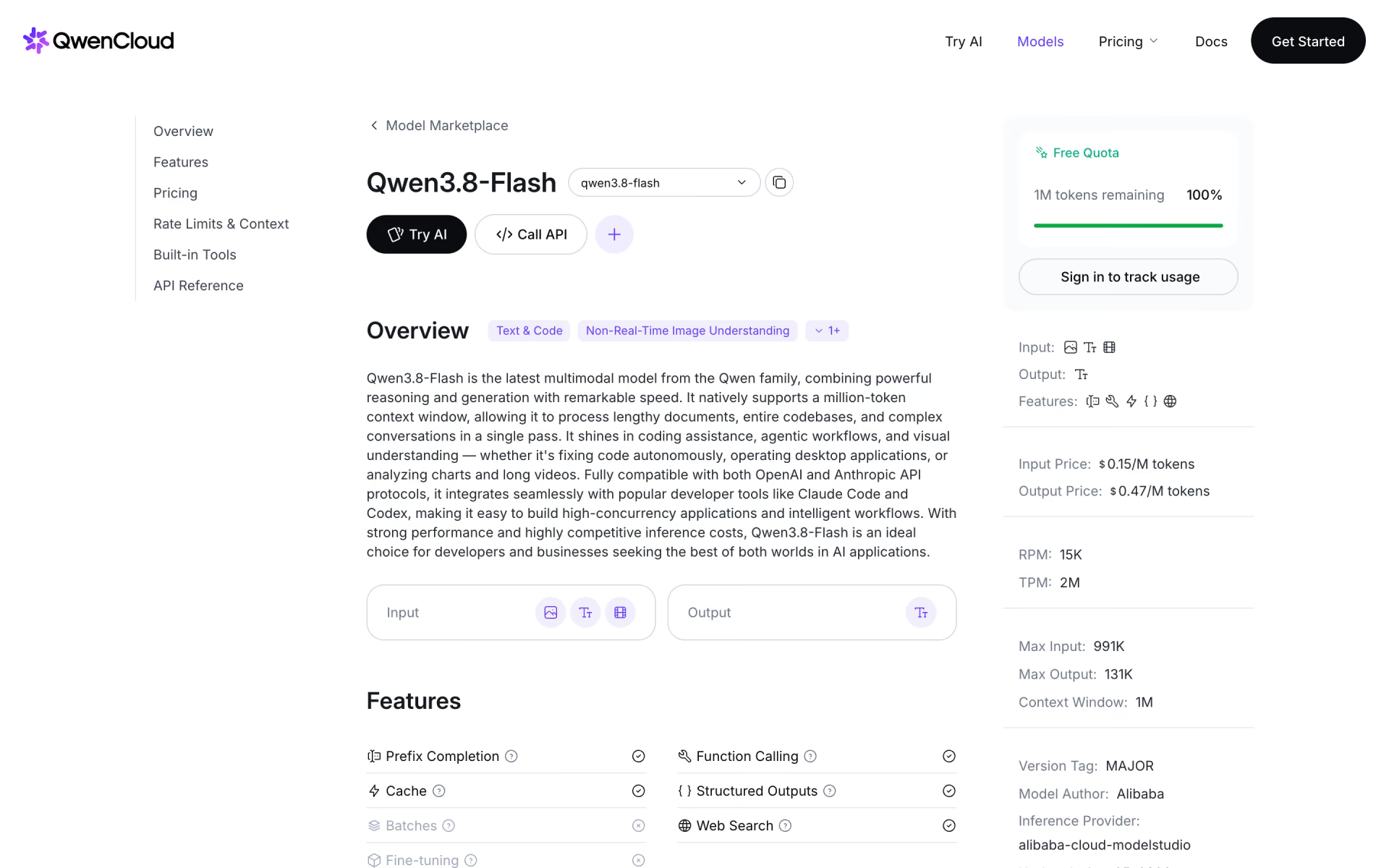
 Qwen3.8-Flash