

What is GPT-5.5?
GPT-5.5 is the model OpenAI built for complex coding, tool-heavy agents and long documents, with a Pro version that spends more compute on each answer. It reads text and images, writes text, and holds 1.05M tokens of context with up to 128K tokens of output; its knowledge stops at December 2025. OpenAI says it reaches strong results with fewer reasoning tokens than earlier models.
It is now a previous-generation model. OpenAI is retiring it from ChatGPT, ChatGPT Work and Codex on every plan and moving people to GPT-6 Sol or GPT-6 Luna, but the API keeps serving it. There, GPT-6 Sol costs $2 / $10 per million tokens against $5 / $30.
Is GPT-5.5 still available?
Yes on the OpenAI API, but OpenAI is retiring it from ChatGPT, ChatGPT Work and Codex on every plan.
- OpenAI API
- Still served at $5 / $30 per million tokens; the retirement does not cover it, and OpenAI has not listed it for shutdown.
- ChatGPT and Codex, paid plans
- Plus, Pro, Business, Enterprise and Edu move to GPT-6 Sol.
- ChatGPT Free and Go
- GPT-6 Luna takes its place in the desktop app.
- Newer API models
- OpenAI now features GPT-6 Astra and the GPT-5.6 family, and GPT-6 Sol costs $2 / $10 per million tokens.
What changed from GPT-5.4?
More careful and more token-efficient, at twice the price per token.
- Price
- Doubled per token, from $2.50 / $15 to $5 / $30 per million tokens.
- Reasoning
- The default effort moved from none to medium, and OpenAI says it needs fewer reasoning tokens at the same effort.
- Images
- Inputs keep their original detail by default, which OpenAI says improves computer use.
- Style and caching
- Answers are more direct by default, and prompt caching works only with extended caching, not in memory.
Who is GPT-5.5 best for?
GPT-5.5 is best for apps already built on it, very large codebases or document sets, tool-heavy agents, and, through GPT-5.5 Pro, hard maths and research questions.
Apps already built on GPT-5.5
The retirement covers ChatGPT and Codex only, so API integrations keep running while you test a newer model.
Large codebases and document sets
A 1.05M-token context and 128K tokens of output fit a whole repository or contract set in one request, at a higher rate past 272K tokens.
Tool-heavy agents
In the Responses API it can use hosted shell, apply patch, skills, MCP, tool search and computer use, and OpenAI says it picks tools more precisely than earlier models.
Hard maths and research questions
GPT-5.5 Pro spends more compute on each answer; some requests take several minutes and cost $30 / $180 per million tokens.
What's included with GPT-5.5?
GPT-5.5 gives you five reasoning levels, OpenAI's built-in tools, full-detail image input, half-price Batch and Flex, a Fast mode and a Pro version.
- Reasoning effort
- Five levels from none to xhigh; medium is the default, and OpenAI suggests trying low before none when tools or planning are involved.
- Built-in tools
- Web search, file search, code interpreter, image generation, hosted shell, apply patch, skills, MCP and computer use in the Responses API.
- Full-detail images
- Images keep their original resolution by default, up to 10.24 million pixels, which OpenAI says helps computer use.
- Batch and Flex
- Half-price processing for jobs that can wait; Flex answers more slowly and does not bill requests it turns away.
- Fast mode
- Faster, steadier responses for user-facing apps at $12.50 / $75 per million tokens.
- GPT-5.5 Pro
- The same model with more compute per answer, on the Responses and Batch APIs only; OpenAI suggests background mode because some requests take minutes.
How much does GPT-5.5 cost?
GPT-5.5 costs $5 per million input tokens and $30 per million output tokens on the OpenAI API, half that through Batch or Flex, and GPT-5.5 Pro costs $30 / $180.
- Cached input $0.25
- Batch returns results within 24 hours
- Flex answers slower and may turn requests away, unbilled
- Cached input $0.50
- 1.05M-token context window, 128K output
- Prompts over 272K tokens: $10 / $45
- Cached input $1.25
- Faster, steadier responses for user-facing apps
- More compute per answer; some requests take minutes
- Batch or Flex: $15 / $90
- No cached-input discount
When a request has more than 272K input tokens, the whole session is billed at twice the input rate and 1.5 times the output rate: $10 / $45 on Standard, $5 / $22.50 on Batch or Flex, and $60 / $270 for GPT-5.5 Pro. Data residency endpoints add 10%. Tools such as web search are billed on top at their own rates. There is no free API tier for GPT-5.5. Full pricing on developers.openai.com. We checked these prices on .
How do readers rate GPT-5.5?
No one has rated GPT-5.5 yet. Be the first.
Sign in to rate. One rating per account.
GPT-5.5 pros and cons
GPT-5.5 writes careful code across large projects on fewer tokens, but it costs more than newer OpenAI models and is leaving ChatGPT and Codex.
Pros
- Developers on Hacker News and Reddit say it makes large changes across big codebases with fewer bugs than Claude Opus 4.7 or 4.8, as long as you spell out what you want.
- OpenAI says it needs fewer reasoning tokens than earlier models at the same effort, and users report it finishes tasks faster and on fewer tokens than GPT-5.4 or Claude.
- GPT-5.5 Pro wins praise on Hacker News and Reddit for hard maths and research problems, though users say it still makes mistakes that need checking.
- In OpenAI's own test on flagged ChatGPT chats, its individual claims were 23% more likely to be correct than GPT-5.4's.
Cons
- At $5 / $30 per million tokens it costs twice GPT-5.4, and OpenAI's newer GPT-6 Sol is cheaper at $2 / $10.
- OpenAI is retiring it from ChatGPT, ChatGPT Work and Codex on every plan, so subscribers lose it there.
- Several users say Claude still has better judgement on UI, design and architecture, and that GPT-5.5 tends to over-engineer, with many small one-use helper functions.
- Codex users reported stretches of uneven quality, with reasoning sometimes cut short on hard prompts and wrong answers as a result.
What are the best GPT-5.5 alternatives?
Six tools on Recaply do GPT-5.5's job. Command A+, DeepSeek-V3.2-Speciale and DeepSeek V4 Pro are open source, so you can run them on your own server.
 Claude Opus 5.5Paid
Choose it when you want a newer model for less: $4 / $20 per million tokens, a 1M-token context, and knowledge that runs to June 2026.
 GPT-6 AstraPaid
Choose it when you want OpenAI's most capable current model for the hardest coding and computer-use work; it costs $10 / $50 per million tokens, twice GPT-5.5.
 Gemini 3.1 ProFree
Choose it when price matters more than output length; it costs $2 / $12 per million tokens for prompts up to 200K, with a 1M-token context but a 65K output cap.
 Command A+Open Source
Choose it when you want an enterprise agent model with image input that you can download and run under Apache 2.0.
 DeepSeek-V3.2-SpecialeOpen Source
Choose it when you want a high-compute reasoning model for competition-level problems that you can run and study yourself.
 DeepSeek V4 ProOpen Source
Choose it when long agentic coding jobs need open weights, or DeepSeek's own API with off-peak rates.
Questions about GPT-5.5
What is GPT-5.5?
GPT-5.5 is OpenAI's previous flagship model for coding and professional work, still sold on the API at $5 / $30 per million tokens but leaving ChatGPT and Codex for newer GPT-6 models.
Can GPT-5.5 be used for security research?
Yes, within limits. OpenAI rates GPT-5.5 as high capability in cybersecurity and runs extra monitors that block dual-use work such as scaled vulnerability research or chained exploit development, unless you are in its Trusted Access for Cyber program.
Is GPT-5.5 free?
No. GPT-5.5 is a paid tool, from $2.50 / $15 per million input / output tokens.
Does GPT-5.5 cost more for long prompts?
Yes. Once a GPT-5.5 request passes 272K input tokens, the whole session is billed at twice the input rate and 1.5 times the output rate: $10 and $45 per million tokens on Standard, or $5 and $22.50 on Batch or Flex.
Is there an open source alternative to GPT-5.5?
Yes. Command A+, DeepSeek-V3.2-Speciale and DeepSeek V4 Pro are open source tools that do the same job, so you can run your own.
What are the best GPT-5.5 alternatives?
The closest alternatives on Recaply are Claude Opus 5.5, GPT-6 Astra, Gemini 3.1 Pro, Command A+, DeepSeek-V3.2-Speciale and DeepSeek V4 Pro.
Where can I use GPT-5.5 after it leaves ChatGPT?
On the OpenAI API. OpenAI is retiring GPT-5.5 from ChatGPT, ChatGPT Work and Codex on every plan and points users to GPT-6 Sol or GPT-6 Luna, but the retirement does not cover the API, where GPT-5.5 stays at $5 / $30 per million tokens.
GPT-5.5 vs GPT-6 Sol: which should I use?
For new work, start with GPT-6 Sol. It costs $2 / $10 per million tokens against GPT-5.5's $5 / $30, has the same 1.05M-token context, its knowledge runs to April 2026, and it is OpenAI's replacement for GPT-5.5 on paid ChatGPT and Codex plans.
Is GPT-5.5 Pro worth the extra cost?
Only for hard problems. GPT-5.5 Pro costs six times as much per token ($30 / $180) and some requests take several minutes, so OpenAI aims it at tough questions that gain from more compute. For everyday coding and writing, standard GPT-5.5 or a newer model costs far less.
Our verdict
GPT-5.5 is still a capable coding model, but new projects should start on GPT-6 Sol.
OpenAI is retiring GPT-5.5 from ChatGPT and Codex, and GPT-6 Sol costs $2 / $10 per million tokens against $5 / $30, with newer knowledge and the same 1.05M context.
- Skip it for
- New projects, and ChatGPT or Codex users, since it is leaving both.
- Check first
- If your app depends on GPT-5.5, rerun your evals on GPT-6 Sol before you commit more spend.
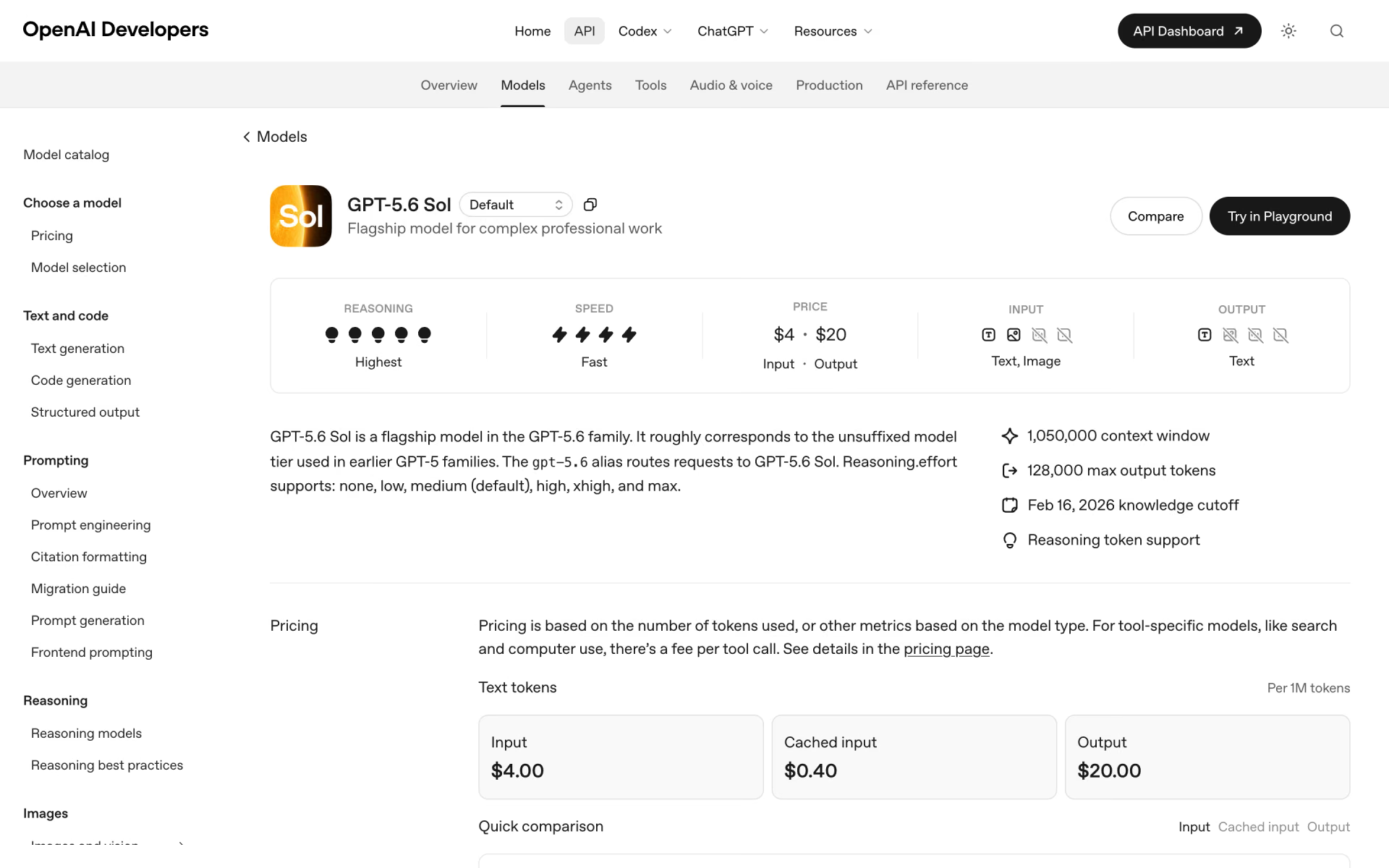
 GPT-5.6

 GPT-6 Sol
 GPT-5.5-Cyber

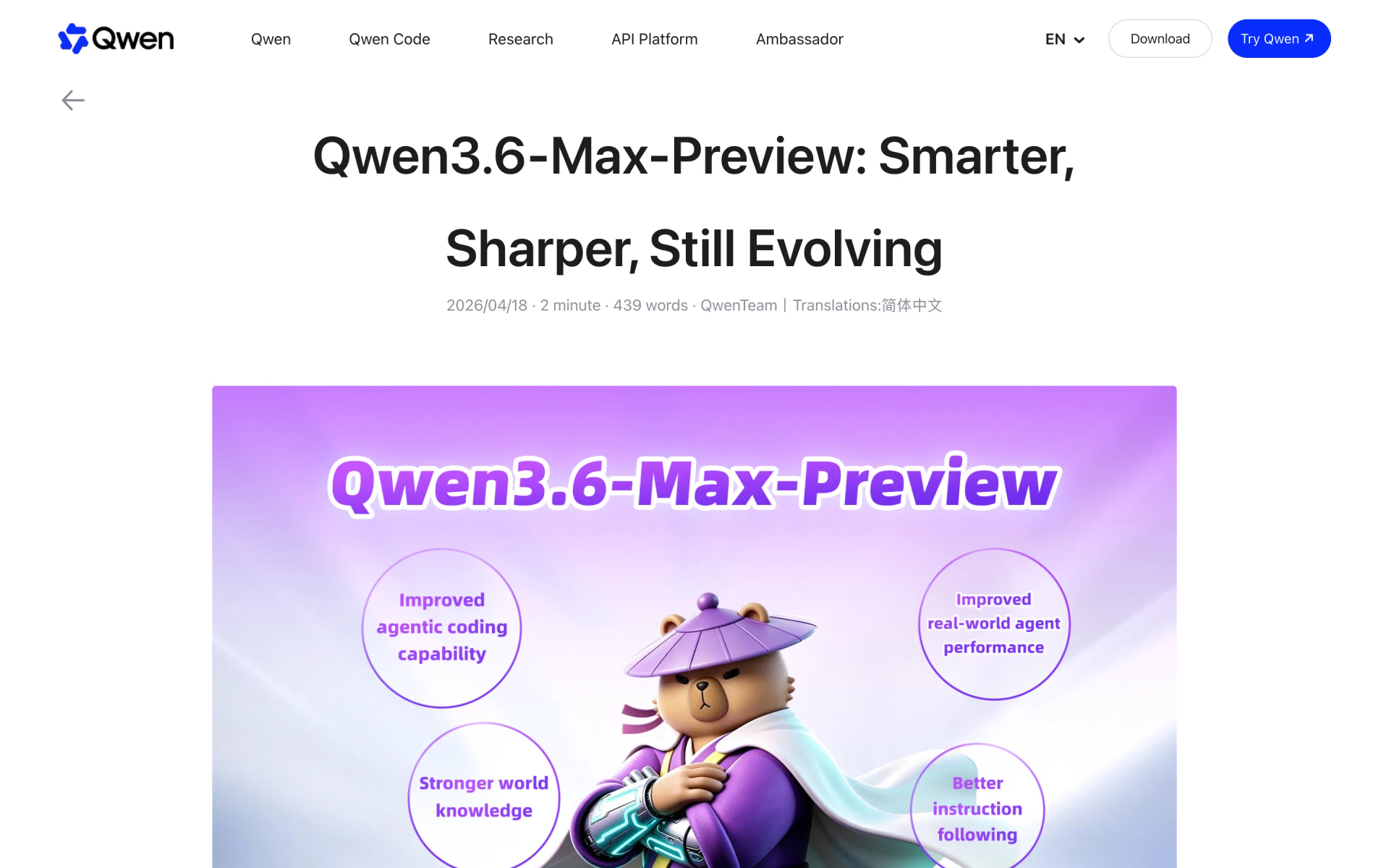
 Qwen3.6-Max-Preview

 Grok 4.7