
What is Mercury 2.5?
Mercury 2.5 comes from Inception, a company that builds diffusion language models. Instead of writing one token after another, it refines whole blocks of text in parallel, which Inception measures at 1,107 tokens per second. It reads and writes text only, holds 260K tokens of context and returns up to 65,536 tokens per reply.
It is no longer Inception's current model. Inception has closed it to new users, customers with earlier usage keep access until November 15, 2026, and enterprise customers stay supported under their agreements. Its replacement, Mercury 3, reads 1M tokens and lists $0.20 / $0.70 per million tokens.
Is Mercury 2.5 still available?
Only to existing customers until November 15, 2026, and to enterprise customers under their agreements; it is closed to new users.
- New users
- Cannot use Mercury 2.5; new Inception API keys start on Mercury 3.
- Existing customers
- Accounts with usage before Mercury 3 launched keep access until November 15, 2026.
- Enterprise customers
- Stay supported under their agreements, with migration help from their Inception representative.
- Moving over
- Mercury 3 runs on the same chat completions endpoint, so switching means changing the model ID to mercury-3 and retesting.
Who is Mercury 2.5 best for?
Mercury 2.5 is best for existing Inception customers whose search, voice or agent pipelines need fast, cheap calls until they move to Mercury 3.
Existing pipelines until the cutoff
Search, voice and agent pipelines already on Mercury 2.5 keep running until November 15, 2026, long enough to compare outputs with Mercury 3.
Enterprise contracts
Inception keeps supporting enterprise customers under their agreements, so a contracted deployment does not stop at the public cutoff.
A baseline for Mercury 3 tests
Mercury 3 uses the same endpoint, tool calling and JSON schema outputs, so recorded calls can be replayed on both models to check quality and speed.
What's included with Mercury 2.5?
Four reasoning effort levels, OpenAI-style tool calling, JSON schema outputs, automatic prompt caching and a streaming mode that shows the diffusion at work.
- Reasoning effort
- Four settings, instant, low, medium and high, trade thinking depth for speed; medium is the default.
- Tool calling
- OpenAI-style function calls, including several in parallel, with strict schemas and a forced-call option.
- Structured outputs
- Replies can be held to a JSON schema, so code receives typed data it can parse.
- Streaming and diffusion view
- Streaming sends finished blocks of text, and an optional diffusion mode shows the answer being denoised.
- Automatic prompt caching
- Repeated prompt prefixes are cached without any setting and billed at $0.02 per million tokens.
- Works with common tools
- Inception documents setups for Claude Code through a LiteLLM bridge, Cursor, Kilo Code, OpenCode, LangChain, ElevenLabs and Vapi.
How much does Mercury 2.5 cost?
Mercury 2.5 costs $0.20 per million input tokens and $0.75 per million output tokens on Inception's API, but it is closed to new users and existing access ends November 15, 2026; Mercury 3 replaces it at $0.20 / $0.70.
- Cached input $0.02 per million tokens
- Closed to new users
- Access ends November 15, 2026
- Supported under enterprise agreements
- Custom rate limits, SLAs and volume pricing
- Migration help to Mercury 3 from Inception
Inception has closed Mercury 2.5 to new users: customers who used it before Mercury 3 launched keep access until November 15, 2026, and enterprise customers stay supported under their agreements. Its replacement, Mercury 3, lists $0.20 per million input tokens, $0.02 cached and $0.70 output, with a 1M-token context, and new API keys come with 100 million free tokens to try it. Full pricing on inceptionlabs.ai. We checked these prices on .
How do readers rate Mercury 2.5?
No one has rated Mercury 2.5 yet. Be the first.
Sign in to rate. One rating per account.
Mercury 2.5 pros and cons
Users describe its replies as close to instant and the price is low, but it is closed to new users, existing access ends November 15, 2026, and it trails larger models on hard reasoning.
Pros
- Replies arrive almost at once: Inception measures 1,107 tokens per second, and users on Hacker News and Reddit say they had not seen a model answer that quickly.
- Cheap to run at $0.75 per million output tokens, with cached input at $0.02.
- Users report good results on short supporting jobs such as reranking search results, judging other models' answers, summarising and running scout subagents.
- Drops into existing code, since the API follows the OpenAI format with tool calling and JSON schema outputs.
Cons
- Closed to new users, and existing access ends November 15, 2026 for everyone outside an enterprise agreement; Mercury 3 is the replacement.
- Testers on Hacker News rate its reasoning well below frontier models, and one evaluation team found it weaker at tool use and agentic coding in its own harness.
- Text only, with no image input, no embeddings endpoint, no self-serve fine-tuning and closed weights.
- Inception's terms let it train on what you send through the API unless you switch that off in your settings.
What are the best Mercury 2.5 alternatives?
Three tools on Recaply do Mercury 2.5's job. DiffusionGemma is open source, so you can run it on your own server.
 Mercury 3Freemium
Choose Mercury 3 for anything you run on Mercury 2.5 today: it is Inception's replacement on the same endpoint, with a 1M-token context instead of 260K, up to 131,072 output tokens and output at $0.70 rather than $0.75 per million tokens.
 Gemini 3.1 Flash-LiteFree
Choose it when you need image, video or audio input or a free tier to start; the paid tier costs $0.25 / $1.50 per million tokens.
 DiffusionGemmaOpen Source
Choose it when you want a diffusion model on your own GPU: Google's Apache 2.0 weights fit in 18GB of VRAM when quantized, and it also reads images and video.
Questions about Mercury 2.5
What is Mercury 2.5?
Mercury 2.5 is Inception's diffusion language model for quick, cheap calls in search, voice and agent pipelines; it is closed to new users, and existing access ends November 15, 2026.
Who is Mercury 2.5 for?
Mercury 2.5 is best for existing Inception customers whose search, voice or agent pipelines need fast, cheap calls until they move to Mercury 3.
Is Mercury 2.5 free?
No. New Inception API keys come with 100 million free tokens, but new accounts cannot use Mercury 2.5 because it is closed to new users. Existing customers pay $0.20 per million input tokens and $0.75 per million output tokens until access ends November 15, 2026.
How much does Mercury 2.5 cost?
Mercury 2.5's paid plans are Developer (existing customers) at $0.20 / $0.75 per million input / output tokens.
Is there an open source alternative to Mercury 2.5?
Yes. DiffusionGemma is an open source tool that does the same job, so you can run your own.
What are the best Mercury 2.5 alternatives?
The closest alternatives on Recaply are Mercury 3, Gemini 3.1 Flash-Lite and DiffusionGemma.
Where can I try Mercury 2.5?
On its official website, inceptionlabs.ai.
Is Mercury 2.5 being shut down?
Yes. Inception has closed Mercury 2.5 to new users, and existing customers keep access only until November 15, 2026; enterprise customers stay supported under their agreements. Inception points everyone else to Mercury 3 and offers migration help through its docs and account team.
How does Mercury 2.5 compare with Mercury 3?
Mercury 3 is Inception's replacement: it reads 1M tokens instead of 260K, returns up to 131,072 tokens instead of 65,536, and costs $0.70 per million output tokens instead of $0.75, with the same $0.20 input price. Inception rates it on par with GPT-6 Luna and Claude Haiku 5.5.
How fast is Mercury 2.5?
Inception measures Mercury 2.5 at 1,107 tokens per second on widely available NVIDIA GPUs. It gets there by refining blocks of text in parallel rather than writing one token at a time, and its instant reasoning setting cuts waiting further.
Does Inception train on my Mercury 2.5 API data?
It can. Inception's terms allow it to use what you send to train its models unless you turn off 'Improve the model for everyone' under User Settings in the API Platform. Zero-retention setups for regulated work are arranged case by case with support.
Our verdict
Mercury 2.5 was a good pick for fast, repeated calls inside a pipeline, but it is closed to new users and existing access ends November 15, 2026.
Mercury 3 replaces it on the same endpoint with nearly four times the context and a lower output price, and only enterprise agreements keep Mercury 2.5 running past the cutoff.
- Skip it for
- Any new project, since new accounts cannot use it, and hard reasoning or image input.
- Check first
- Move your calls to Mercury 3 and rerun your own evaluations before November 15, 2026.

 Mercury 2
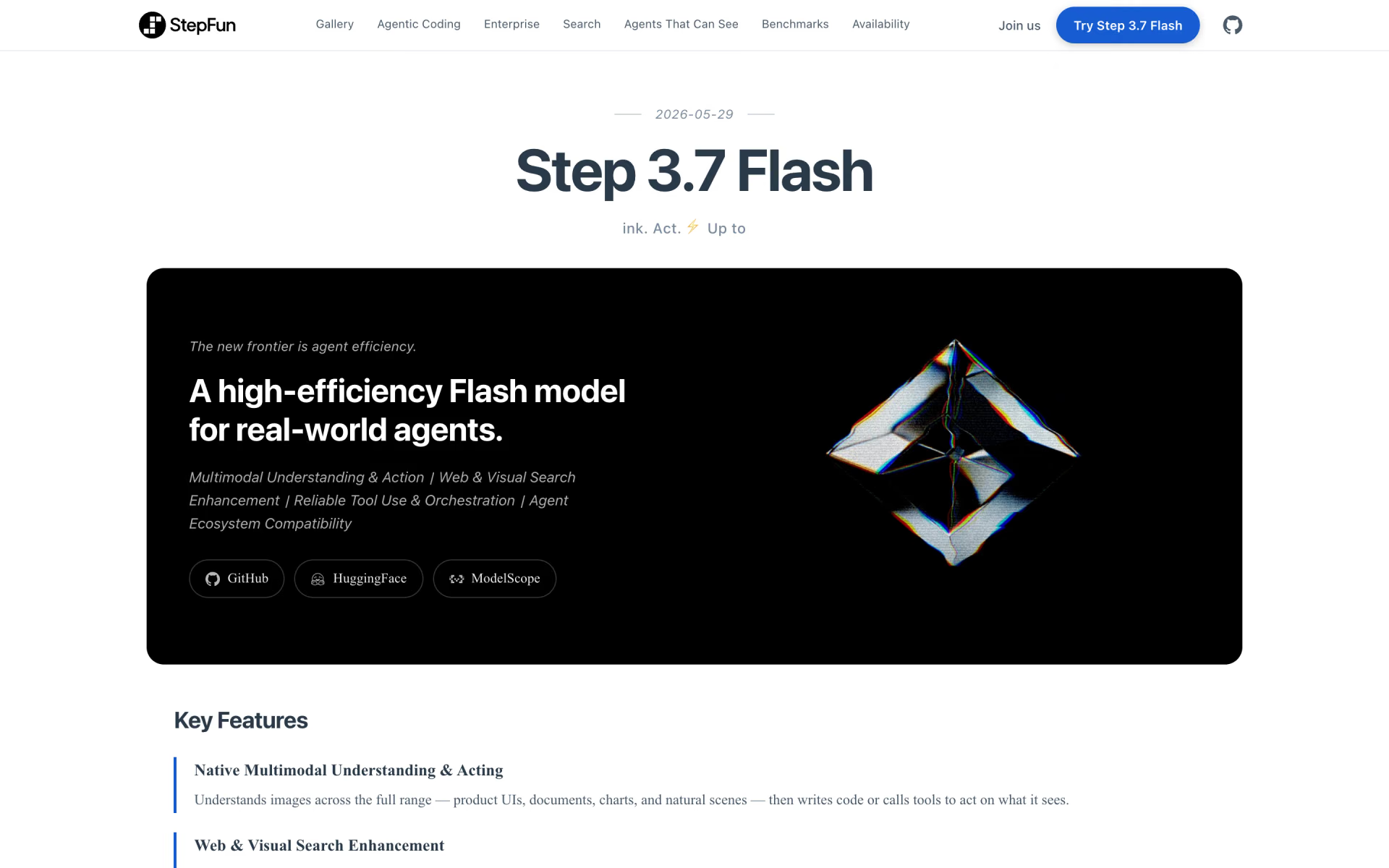
 Step 3.7 Flash

 Grok 4.3
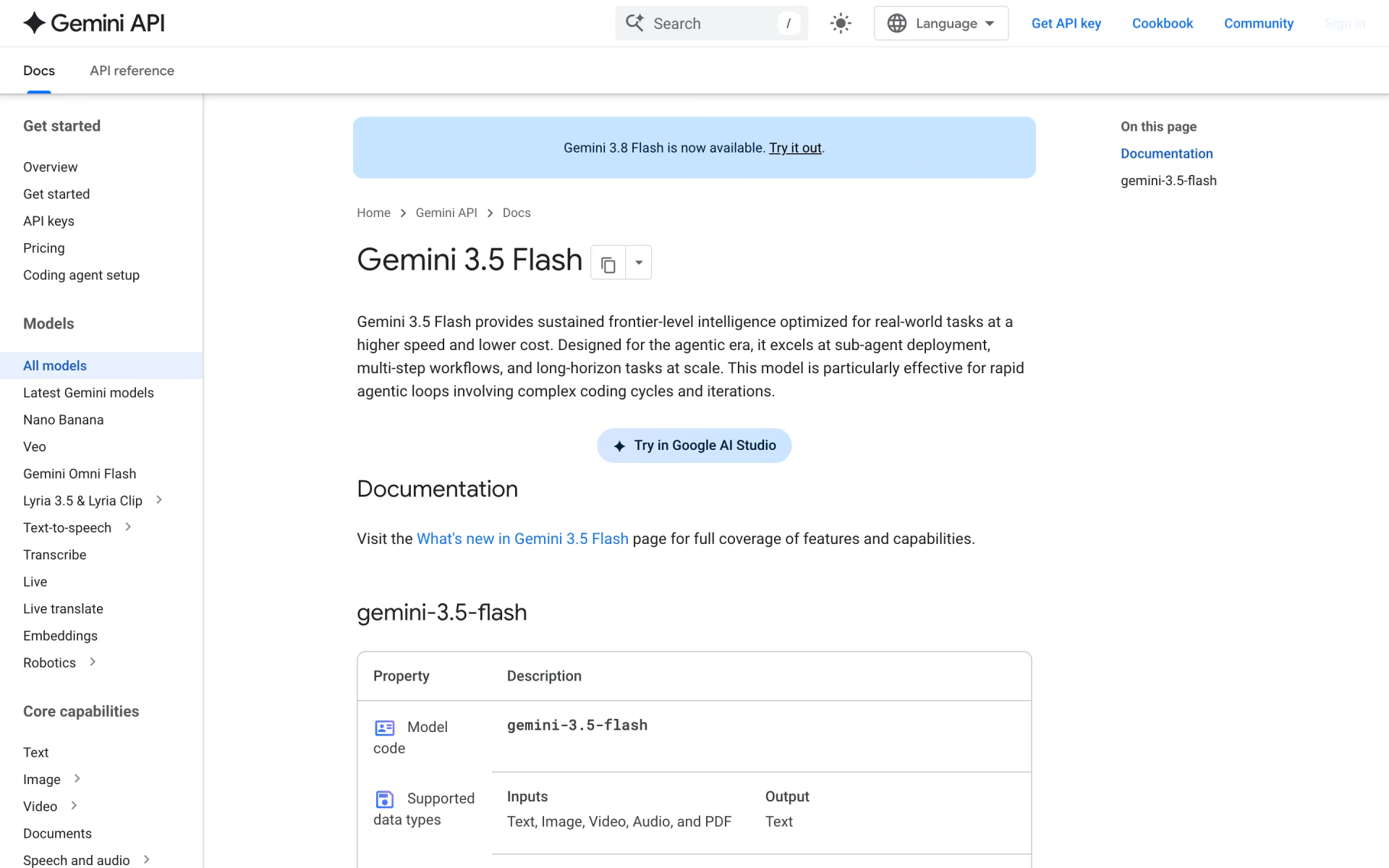
 Gemini 3.5 Flash
 Claude Sonnet 5.5

 Grok 4.20