

What is LTX-2.3?
LTX-2.3 is a 22-billion-parameter model from Lightricks that turns text, an image or an audio track into video with matching sound, in landscape or native portrait up to 4K at 50 frames a second. The weights are on Hugging Face under the LTX-2 Community License, so you can run and fine-tune it in ComfyUI or Lightricks' own code, or pay per second on the LTX API.
It is no longer Lightricks' newest model: LTX-2.5 adds multi-shot scenes and automatic clip length and is now the recommended start for new projects. LTX-2.3 stays fully supported, costs a third as much for 720p on the API, and still runs the API's retake, extend and reframe edits.
Is LTX-2.3 still available?
Yes. Lightricks still fully supports LTX-2.3, though it now points new projects to LTX-2.5.
- LTX API
- ltx-2-3-fast and ltx-2-3-pro stay live, and retake and extend run only on ltx-2-3-pro.
- Weights
- The 22B checkpoints, the fp8 build and Lightricks' LTX-2.3 adapters remain on Hugging Face.
- LTX Studio
- LTX-2.3 is listed on every Studio plan, from the free one up, next to LTX-2.5.
- Local workflows
- Lightricks' Foley, Dub-It and Relight workflows are validated on LTX-2.3 and not yet on LTX-2.5.
What changed from LTX-2?
Sharper detail, closer prompt following, native portrait and cleaner audio, from a slightly larger model.
- Size
- 22 billion parameters, up from 19 billion.
- Detail
- A redesigned VAE keeps hair, fabric, text and edges sharper.
- Prompts
- A text connector four times larger follows prompts with several subjects and actions more closely.
- Portrait and audio
- Native 9:16 video, and cleaner audio from filtered training data and a new vocoder.
Who is LTX-2.3 best for?
LTX-2.3 is best for low-cost API video, vertical social clips, self-hosted pipelines with custom LoRAs, and editing existing footage with retake, extend and reframe.
Low-cost video through an API
At $0.03 a second for 720p on Fast, a 10-second draft costs $0.30, a third of the LTX-2.5 Fast price.
Vertical social video
It was trained on portrait footage and makes native 9:16 video, up to 2160×3840 on the API, instead of cropping a landscape frame.
Self-hosted, customised pipelines
Public weights, ComfyUI nodes and Lightricks' trainer let teams add their own style or character LoRAs and keep footage on their own hardware.
Fixing and reshaping existing clips
The API's Pro tier can redo part of a clip, extend it, reframe it to a new aspect ratio or convert SDR footage to HDR, which the LTX-2.5 endpoints do not offer.
What's included with LTX-2.3?
Video with synced sound, Fast and Pro API tiers, editing endpoints, native portrait, first-and-last-frame control and LoRA training.
- Video with sound in one pass
- Dialogue, effects and ambient sound come out with the picture, as stereo audio at 24 kHz.
- Fast and Pro API tiers
- Fast makes clips of 6 to 20 seconds at 720p or 1080p for drafts; Pro makes 6, 8 or 10 second clips with steadier motion.
- Editing endpoints
- Retake, extend, reframe and SDR-to-HDR conversion work on footage you already have, billed per second of the input video.
- Native portrait
- 9:16 output at every resolution from 720p to 4K, from a model trained on vertical footage.
- First and last frame
- Give the image-to-video endpoint a start frame and an end frame and it generates the motion in between.
- LoRA and IC-LoRA support
- Train style or character LoRAs with LTX Trainer, or add Lightricks' adapters for depth and pose control, motion tracks, dubbing, relighting and more.
How much does LTX-2.3 cost?
LTX-2.3 is free to download and run for companies under $10 million in yearly revenue; on the LTX API it costs $0.03 to $0.24 a second on Fast and $0.04 to $0.32 on Pro, depending on resolution.
- Free for companies under $10 million in yearly revenue, commercial use included
- 22B dev and distilled checkpoints, an fp8 build and upscalers on Hugging Face
- Runs in ComfyUI or the LTX-2 codebase
- $0.06 at 1080p, $0.12 at 1440p, $0.24 at 4K
- Text-to-video and image-to-video
- Clips up to 20 seconds at 720p and 1080p
- $0.08 at 1080p, $0.16 at 1440p, $0.32 at 4K
- Needed for audio-to-video, retake, extend and reframe
- Clips of 6, 8 or 10 seconds
Text-to-video and image-to-video bill the length of the finished clip, with no request fees, and portrait costs the same as landscape. On Pro, audio-to-video costs $0.06 to $0.34 a second of input audio, retake and extend $0.10 a second at 1080p, SDR-to-HDR conversion $0.20 to $0.80 a second, and reframing $0.10 (720p) or $0.20 (1080p) a second. Companies above $10 million in yearly revenue need a commercial license from Lightricks, priced on request. LTX-2.3 also runs in the LTX Studio app: a free plan with 800 one-time credits for personal use, then Lite $15, Standard $35 or Pro $125 a month, or 20% less billed yearly; commercial use starts on Standard. The newer LTX-2.5 costs $0.09 to $0.39 a second on the same API. Prices are in US dollars. Full pricing on ltx.io. We checked these prices on .
How do readers rate LTX-2.3?
No one has rated LTX-2.3 yet. Be the first.
Sign in to rate. One rating per account.
LTX-2.3 pros and cons
It is fast, cheap and open, with a large library of adapters, but users say it ignores camera directions and its generated audio is often unusable.
Pros
- Users moving from Wan 2.2 say it renders far faster, and one benchmark had the distilled model finish a 10-second clip in about a minute.
- Sound and longer clips come from one model: users like prompting dialogue and effects with the picture, and clips run up to 20 seconds.
- Runs on ordinary gaming GPUs: several users report quantized builds working on 8 to 16GB cards, at lower resolution and speed.
- The cheapest way into the LTX API at $0.03 a second, and the only LTX model there with retake, extend and reframe.
Cons
- Prompt adherence is the most common complaint: users say it ignores camera directions, zooming out when asked to zoom in or refusing to hold a static shot.
- Its generated audio is uneven; several users keep it for simple effects like footsteps and supply their own dialogue track instead.
- Faces can distort in fast motion, and some users rate its image quality below Wan 2.2 unless they add LoRAs and multi-stage workflows.
- No longer Lightricks' lead model: LTX-2.5 adds multi-shot scenes, automatic clip length and a new decoder, and gets the new work.
What are the best LTX-2.3 alternatives?
LTX-2.5 for new projects and multi-shot scenes, MiniMax H3 Max for free daily tests, and Veo 3.1 Lite for a Google-hosted model with audio.
 LTX-2.5Free
Choose it when you start a new project or need multi-shot scenes, automatic clip length or native EXR output; it costs $0.09 to $0.39 a second on the API.
 MiniMax H3 MaxFree
Choose it when you want to test before paying: fal gives signed-in users five free videos a day of up to 15 seconds with audio, then $0.05 to $0.16 a second.
 Veo 3.1 LiteFree
Choose it when you already build on Google's Gemini API and want hosted video with audio at $0.05 a second for 720p or $0.08 for 1080p, with no weights to manage.
Questions about LTX-2.3
What is the difference between LTX-2.3 and LTX-2.5?
LTX-2.5 is Lightricks' newer model, adding multi-shot scenes, automatic clip length, a new decoder and native EXR output, at $0.09 to $0.39 a second on the LTX API. LTX-2.3 costs $0.03 to $0.32 a second and is the model behind the API's retake, extend and reframe edits.
Who is LTX-2.3 for?
LTX-2.3 is best for low-cost API video, vertical social clips, self-hosted pipelines with custom LoRAs, and editing existing footage with retake, extend and reframe.
Can I use LTX-2.3 commercially for free?
Yes, if your company earns under $10 million a year. The LTX community license lets smaller companies self-host, fine-tune and use LTX-2.3 commercially at no cost, with no usage caps. Above that revenue, counted across the whole company, Lightricks requires a paid commercial license.
How much does LTX-2.3 cost?
LTX-2.3's paid plans are LTX API Fast at $0.03 per second of 720p video and LTX API Pro at $0.04 per second of 720p video.
What are the best LTX-2.3 alternatives?
The closest alternatives on Recaply are LTX-2.5, MiniMax H3 Max and Veo 3.1 Lite.
Where can I try LTX-2.3?
On its official website, ltx.io.
Can LTX-2.3 edit a video I already have?
Yes, through the LTX API's Pro tier. Retake regenerates a chosen stretch of a clip, extend adds frames at the start or end, reframe widens a video to a new aspect ratio, and a beta endpoint turns SDR footage into HDR. Each is billed per second of the input video, from $0.10.
Do LTX-2 LoRAs work with LTX-2.3?
Lightricks says custom LoRAs trained on LTX-2 need retraining for LTX-2.3's new latent space before you switch. LoRAs trained on LTX-2.3 mostly run on LTX-2.5 unchanged, though Lightricks advises testing each one before production use.
Our verdict
LTX-2.3 is still worth using when price or editing matters, but new projects should start on LTX-2.5.
It costs a third of LTX-2.5 at 720p on the API, runs free on your own GPUs for companies under $10 million in revenue, and still powers the API's retake, extend and reframe edits.
- Skip it for
- Anyone who needs reliable camera control or usable dialogue audio straight out of the model, since users report both need workarounds.
- Check first
- Run your own shot list through the Fast tier first; camera moves are where users most often see it go wrong.
 LTX-2
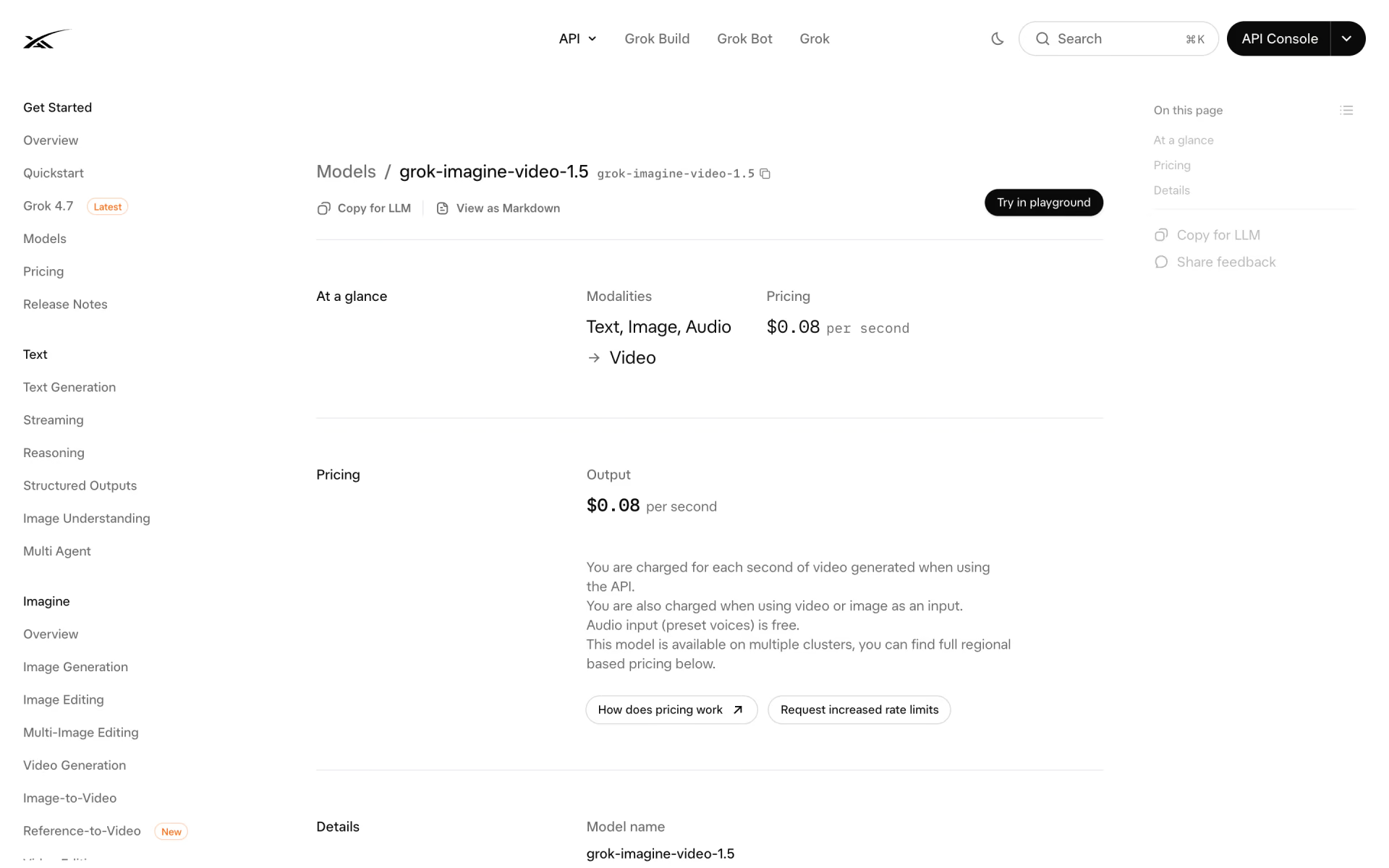
 Grok Imagine Video 1.5
 Kling 2.6
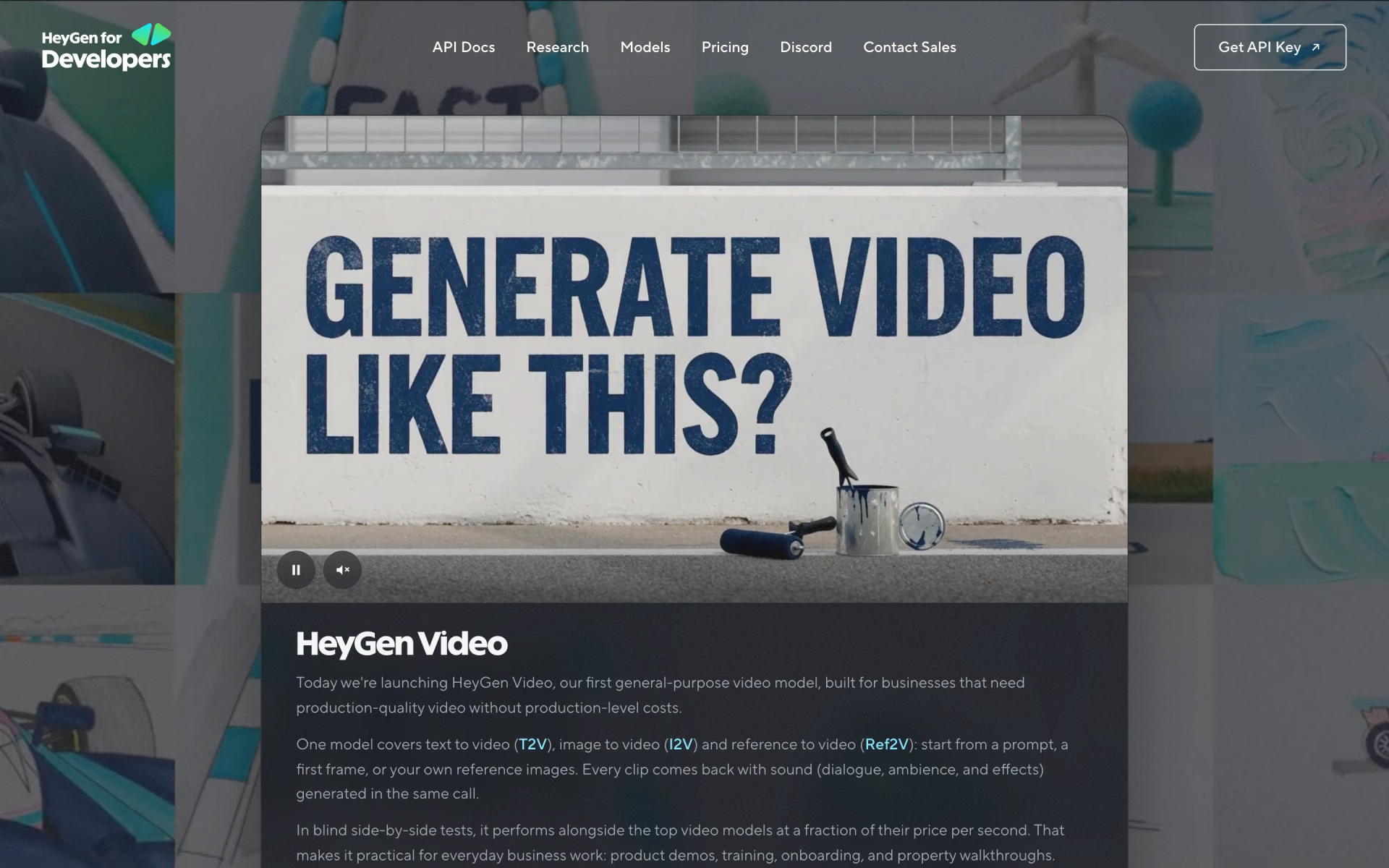
 HeyGen Video

 Seedance 2.0

 Pika H3 Flex