

What is Lyra 2.0?
Lyra 2.0 comes from NVIDIA's Spatial Intelligence Lab and is the newest release in its Project Lyra series. You give it one image, a camera path and short captions. It generates a long walkthrough video chunk by chunk, keeping a 3D memory of what it has already shown so revisited areas stay the same, then lifts the video into Gaussian splats or meshes that load into simulators such as Isaac Sim.
Unlike World Labs Marble or Echo-2, there is no hosted app or API: you download the weights, run them on your own NVIDIA GPUs, and use the results for internal research only.
What changed from Lyra 1.0?
Much longer, explorable scenes and a new base model, but a stricter licence.
- Scale
- Lyra 1.0 lifted short generated clips to 3D; Lyra 2.0 builds long walkthroughs you can extend and revisit, using a 3D memory of past frames.
- Base model
- It moves from NVIDIA's Cosmos and GEN3C to a 14B model built on Wan 2.1.
- Tools
- It adds an interactive GUI for planning camera paths, a fast 4-step mode and public training code.
- Licence
- Lyra 1.0 weights allow commercial use under the NVIDIA Open Model License; Lyra 2.0 weights are for internal research only.
Who is Lyra 2.0 best for?
Lyra 2.0 is best for robotics, simulation and 3D vision researchers with data-centre NVIDIA GPUs who want to turn single images into consistent, explorable 3D scenes.
Robot simulation research
It turns single photos into 3D scenes that NVIDIA shows exported to Isaac Sim for robot navigation and interaction.
3D world model research
The weights, inference code, GUI, training code and paper benchmarks are all public, so labs can build on it or compare against it.
Labs with data-centre GPUs
NVIDIA tested it on H100 80GB cards under Linux, where a full-quality 80-frame chunk takes about 9 minutes.
Internal scene prototyping
Teams can explore how a room or street might extend beyond one photo, as long as the work stays internal and non-production.
What's included with Lyra 2.0?
Spatial memory for consistent revisits, camera-path control, an interactive GUI, a fast 4-step mode, 3D export and full training code.
- Spatial memory
- It keeps per-frame 3D geometry and pulls back the past frames that best match each new view, so revisited areas stay consistent.
- Camera-path control
- Use a preset zoom path, load your own camera trajectory, or record one by moving through a 3D viewer.
- Interactive GUI
- Seed a scene from one image, plan camera moves, generate chunk by chunk and revert any chunk you dislike.
- Fast 4-step mode
- An optional distilled LoRA runs about 15 times faster, at some cost to prompt following.
- 3D export
- Walkthrough videos become Gaussian splat files or meshes that physics engines such as Isaac Sim can load.
- Training code
- Fine-tune from the public Wan 2.1 checkpoint on your own long videos of static scenes, with sample data included.
How does Lyra 2.0 work?
Download the weights
Install the Linux and CUDA stack from the repo and pull the checkpoints from Hugging Face.
Generate a walkthrough
Give it a starting image, a camera path and captions, from the command line or the GUI.
Reconstruct in 3D
Run the reconstruction step to turn the video into a Gaussian splat scene and a rendered flythrough.
How much does Lyra 2.0 cost?
Lyra 2.0 is free to download: the code is Apache 2.0 and the weights are free for internal, non-production research, with no paid plan, hosted demo or API.
- Code under Apache 2.0; weights under NVIDIA's research-only licence
- Internal, non-production research only; no products or works for sale
- No hosted demo or API; you supply the NVIDIA GPUs
NVIDIA does not sell Lyra 2.0 or run it as a service, and Hugging Face lists no inference provider for it. Commercial use needs a custom licence through NVIDIA's research licensing form, with no public price. The real cost is compute: NVIDIA's timings are for one H100 80GB GPU, and the checkpoints come close to 100 GB. Full pricing on github.com. We checked these prices on .
How do readers rate Lyra 2.0?
No one has rated Lyra 2.0 yet. Be the first.
Sign in to rate. One rating per account.
Lyra 2.0 pros and cons
It is free and keeps long 3D walkthroughs consistent, but the licence rules out products and it needs H100-class GPUs and patience.
Pros
- Free to download, with weights, inference code, a GUI and full training code all public.
- Keeps long walkthroughs consistent: in NVIDIA's paper its 3D scenes beat five baselines on every metric on DL3DV and Tanks and Temples, with an FID of 72.47 against 94.02 for the next best on Tanks and Temples.
- Produces real 3D output, Gaussian splats and meshes, which Reddit users see as a practical source of synthetic scenes for robot training.
- The fast 4-step mode cuts an 80-frame chunk from about 9 minutes to about 35 seconds on an H100.
Cons
- The licence allows internal, non-production research only: no products, no deployment and no works for sale, unlike Lyra 1.0, which NVIDIA released for commercial use.
- Needs data-centre hardware: NVIDIA tested it only on H100 80GB GPUs under Linux, the checkpoints come close to 100 GB, and several Reddit users say they cannot run it at home.
- Slow at full quality: about 9 minutes per 80 frames on an H100, and one tester said a full scene took about 40 minutes on a cloud H100.
- There is no hosted demo, which people on Hacker News and Reddit asked for, and early testers found the splats softer than they hoped.
What are the best Lyra 2.0 alternatives?
World Labs Marble for a hosted app, HY-World 2.0 for open weights you can use commercially, and Echo-2 for a pay-per-world API.
 World Labs MarbleFree
Choose it when you want worlds without owning GPUs; its free plan makes up to 4 worlds a month in the browser, and Pro at $35 a month adds textured mesh export and commercial rights.
 HY-World 2.0Free
Choose it when you need open weights you can use in a product; Tencent's licence is royalty-free outside the EU, UK and South Korea for companies under 1 million monthly users, and it exports to Unity and Unreal.
 Echo-2Freemium
Choose it when you want a developer API instead of a research repo; a Standard world costs 160 credits ($1.60) and takes about 8 minutes, and new accounts get 1,600 free credits.
Questions about Lyra 2.0
What is Lyra 2.0?
Lyra 2.0 is NVIDIA's free research model that turns one image and a camera path into a long walkthrough video, then into 3D Gaussian splats or meshes, for 3D vision and robotics researchers.
Who is Lyra 2.0 for?
Lyra 2.0 is best for robotics, simulation and 3D vision researchers with data-centre NVIDIA GPUs who want to turn single images into consistent, explorable 3D scenes.
Is Lyra 2.0 free?
Yes. Lyra 2.0 has a free Research licence plan: code under Apache 2.0; weights under NVIDIA's research-only licence.
What are the best Lyra 2.0 alternatives?
The closest alternatives on Recaply are World Labs Marble, HY-World 2.0 and Echo-2.
Where can I try Lyra 2.0?
On its official website, github.com.
Can I use Lyra 2.0 commercially?
No. NVIDIA's research licence allows only internal, non-production research and bars deploying the model or making works for sale. Commercial use needs a custom licence from NVIDIA. The older Lyra 1.0 came out under the NVIDIA Open Model License, which does allow commercial use.
What hardware do I need to run Lyra 2.0?
NVIDIA tested it on Linux with one H100 80GB GPU, where an 80-frame chunk takes about 9 minutes. The model card lists Ampere, Hopper and Blackwell GPUs, and the checkpoints come close to 100 GB. NVIDIA does not publish a smaller tested setup.
Is there an online demo of Lyra 2.0?
No. NVIDIA publishes only the code and weights, and Hugging Face shows no inference provider for it. You run it on your own GPUs, though the GUI can connect to a Lyra server on a remote machine over an SSH tunnel.
Can Lyra 2.0 work from a text prompt?
Only alongside an image. Every scene starts from one picture, but each chunk of the walkthrough takes a short caption, and in the GUI a vision-language model rewrites your prompt or invents content for newly revealed areas when you leave it blank.
How does Lyra 2.0 compare with World Labs Marble?
Marble is a hosted app with a free plan and commercial rights from $35 a month; Lyra 2.0 is research code you run on your own GPUs under a non-commercial licence. Lyra suits labs that want to study or retrain the model; Marble suits people who want finished worlds.
Our verdict
Lyra 2.0 is worth downloading if you research 3D world generation or robot simulation and have H100-class GPUs.
It keeps long walkthroughs consistent where earlier video models drift, exports real 3D, and NVIDIA ships the weights, GUI and training code for free.
- Skip it for
- Anyone building a product or doing client work, since the licence forbids it, and anyone without data-centre GPUs.
- Check first
- Read the licence and confirm your GPUs before you download the checkpoints.
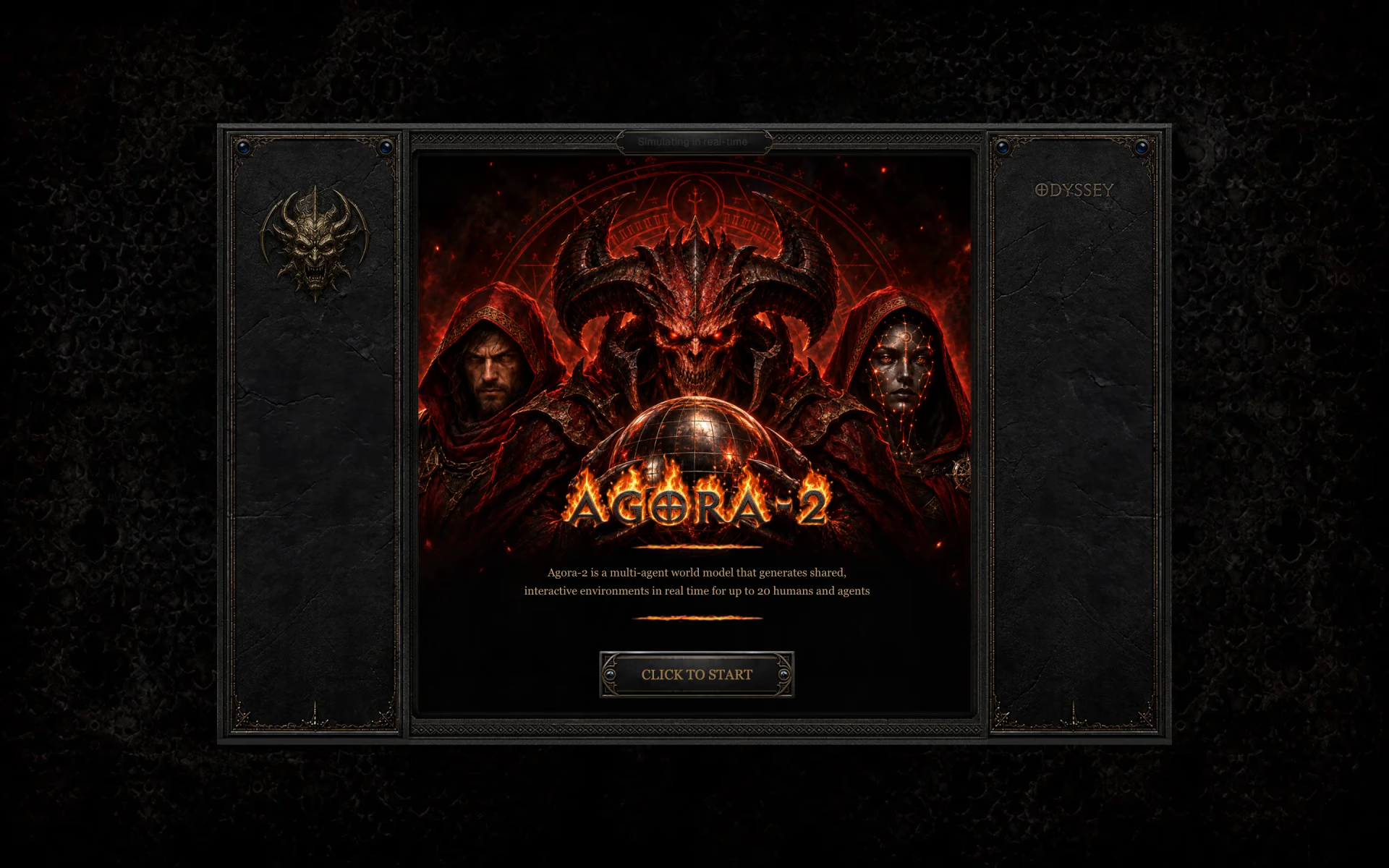
 Agora-2

 Seed3D 2.0
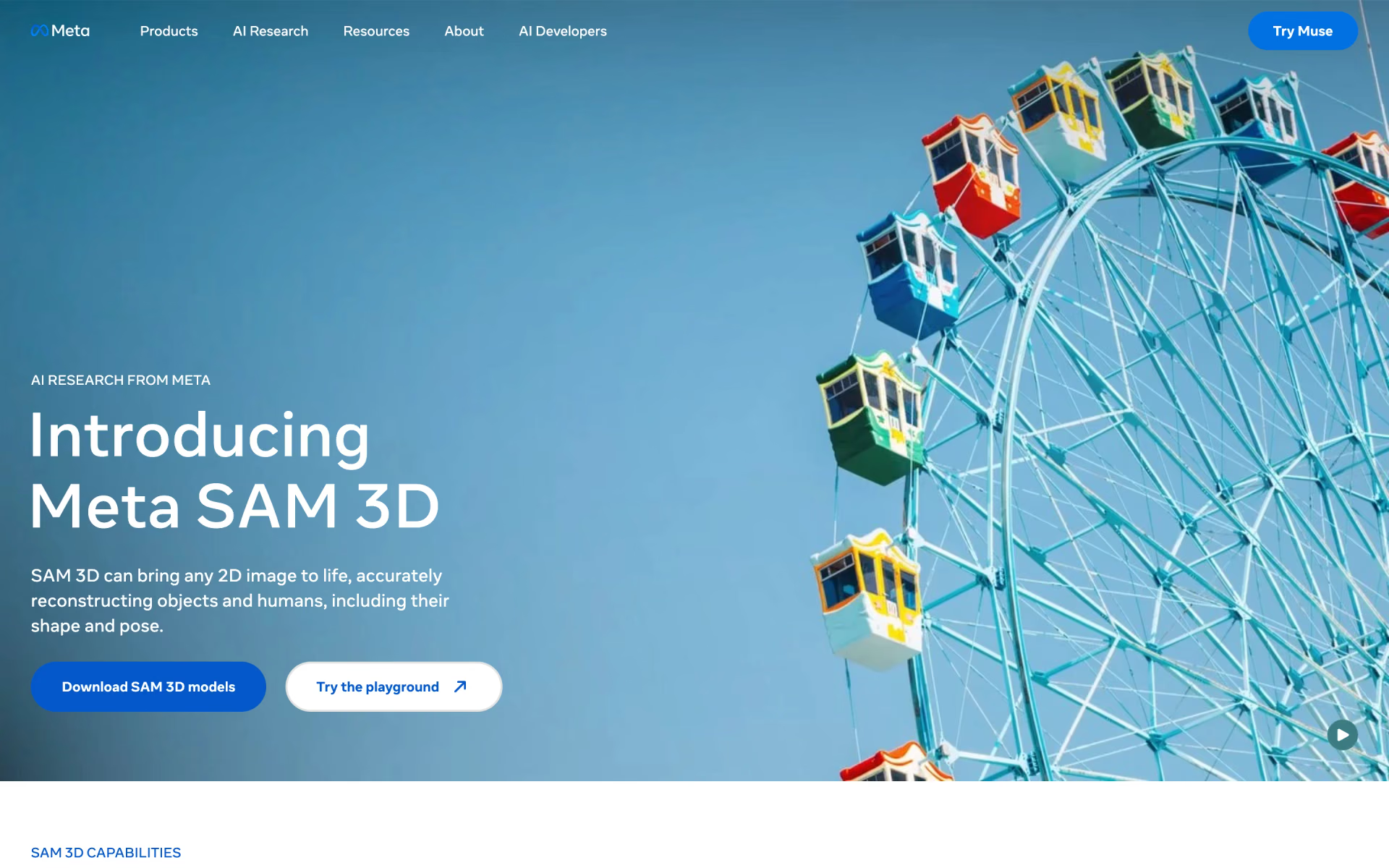
 SAM 3D

 WildDet3D
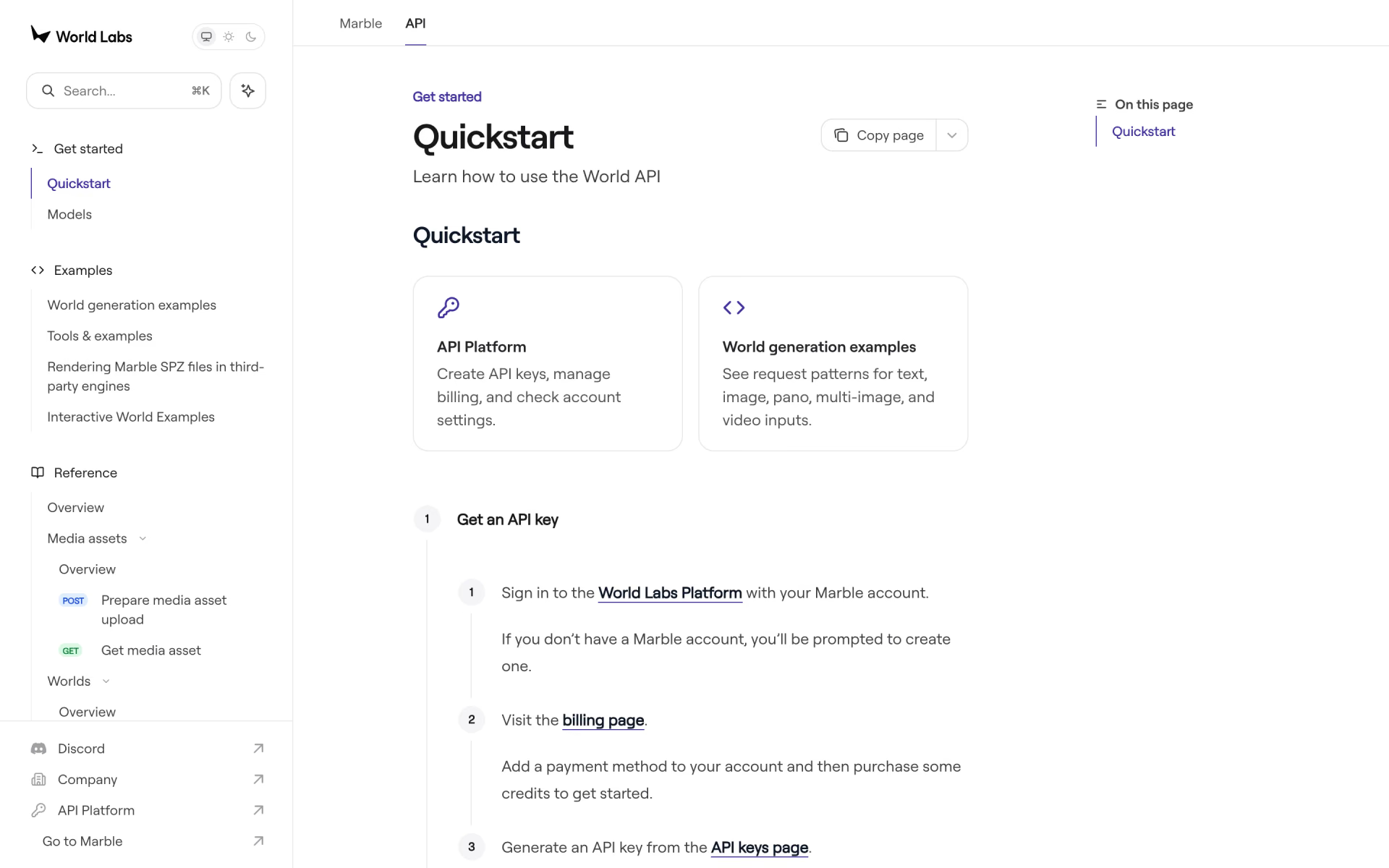
 World API
 NVIDIA RTX Remix