

What is Kimi K2?
Kimi K2 is a mixture-of-experts model from Moonshot AI with 1 trillion parameters in total and 32 billion active for each token. It reads and writes text only and was trained for tool calls and agent work rather than long step-by-step thinking. Moonshot released a Base model for fine-tuning and an Instruct model for chat and agents, then an Instruct-0905 update with a 256K context.
It is no longer a current Moonshot product. Moonshot's API lists every kimi-k2 model name as discontinued and points users to Kimi K3, and the Kimi app offers newer models. The weights remain free on Hugging Face, so running it yourself is the way left to use it.
Is Kimi K2 still available?
Only as open weights: Moonshot's API has discontinued every Kimi K2 model name, and the Kimi app now offers newer models.
- API
- kimi-k2-0711-preview, kimi-k2-0905-preview, kimi-k2-turbo-preview and the two thinking versions are listed as deprecated, and Moonshot points users to Kimi K3.
- Kimi app
- The model menu lists K3, a K2.8 preview and an Instant mode, not Kimi K2.
- Weights
- Kimi-K2-Base, Kimi-K2-Instruct and Kimi-K2-Instruct-0905 are still free to download on Hugging Face.
- What Moonshot sells now
- Kimi K2.6, Kimi K2.7 Code and Kimi K3, from $0.95 / $4.00 per million input / output tokens.
Who is Kimi K2 best for?
Kimi K2 is best for teams that can run a trillion-parameter model on their own GPUs and want free, permissive weights for coding agents, tool use or fine-tuning.
Self-hosted coding agents
Teams with a GPU cluster can run it privately; Moonshot trained it for tool calls and reports 65.8% on SWE-bench Verified in agentic mode.
Fine-tuning from a base model
Moonshot published the Base model alongside the Instruct model for researchers who want to train their own version.
Products that need permissive weights
The licence allows commercial use and only asks products above 100 million monthly users or $20 million monthly revenue to show "Kimi K2".
Teams already running it
Existing self-hosted Kimi K2 setups keep working on your own hardware; only Moonshot's hosted version was retired.
What's included with Kimi K2?
Built-in tool calling, Base and Instruct weights, a 256K-context update, guides for four inference engines, and direct answers without long thinking.
- Built-in tool calling
- The Instruct model decides on its own when to call the tools you pass in, and vLLM and SGLang ship a kimi_k2 parser for it.
- Base and Instruct weights
- A Base model for fine-tuning and a post-trained Instruct model for chat and agents, both stored in FP8.
- 256K-context update
- Kimi-K2-Instruct-0905 doubled the context to 256K tokens and raised Moonshot's SWE-bench Verified score from 65.8% to 69.2%.
- Four supported inference engines
- Moonshot publishes deployment guides for vLLM, SGLang, KTransformers and TensorRT-LLM.
- Answers without long thinking
- Moonshot calls the Instruct model a reflex-grade model: it replies directly instead of running a long reasoning phase first.
How much does Kimi K2 cost?
Kimi K2 is free to download and run yourself under a modified MIT licence; Moonshot no longer sells it through its API, where Kimi K2.6 costs $0.95 per million input tokens and $4.00 per million output tokens.
- Kimi-K2-Base, Kimi-K2-Instruct and Kimi-K2-Instruct-0905 on Hugging Face
- Modified MIT licence, commercial use allowed
- You pay only for the hardware you run it on
Moonshot's API no longer sells Kimi K2: every kimi-k2 model name is listed as discontinued. Its current models are Kimi K2.6 and Kimi K2.7 Code at $0.95 per million input tokens and $4.00 per million output tokens, and Kimi K3 at $3.00 / $15.00 per million input / output tokens. API prices are in US dollars and exclude tax. Full pricing on platform.kimi.ai. We checked these prices on .
How do readers rate Kimi K2?
No one has rated Kimi K2 yet. Be the first.
Sign in to rate. One rating per account.
Kimi K2 pros and cons
Kimi K2 has free, permissive weights that coded well for early users, but it needs a GPU cluster, reads text only, and Moonshot's API has retired it.
Pros
- Free, permissive weights: the modified MIT licence allows commercial use and adds only a "Kimi K2" display rule for products with over 100 million monthly users or $20 million monthly revenue.
- Early users on Hacker News and Reddit found it strong at coding and refactoring, and one said it wrote simpler, more readable code than Claude, though it missed a few edge cases.
- Built for tool use: developers ran it in Cline's agent loop and built their own agents on it, and some suggested it as a cheaper stand-in for Claude Sonnet in Claude Code.
- Moonshot's own tests put it ahead of the other open models in its table on agentic coding: 65.8% on SWE-bench Verified against 38.8% for DeepSeek-V3-0324.
Cons
- Moonshot's API has discontinued it and the Kimi app has moved to newer models, so there is no official hosted version left.
- Very heavy to self-host: Moonshot's smallest suggested setup is 16 H200 or H20 GPUs, and users on Hacker News called it far too big to run at home.
- Text only, with a 128K context on the original Instruct model; users in Cline hit the missing image input and found the context short for large codebases.
- Moonshot says it can produce too many tokens on hard reasoning or unclear tool definitions, which can cut off answers or tool calls, and it has no thinking mode.
What are the best Kimi K2 alternatives?
Three tools on Recaply do Kimi K2's job. DeepSeek V4.1 Flash and Qwen3-Coder-Next are open source, so you can run them on your own server.
 Kimi K2.7 CodeFree
Choose it when you want Moonshot's current open coding model: the same 1T size with a 256K context, image and video input, and API access at $0.95 / $4.00 per million input / output tokens.
 DeepSeek V4.1 FlashOpen Source
Choose it when you want a hosted API instead of your own GPUs: $0.30 / $1.20 per million input / output tokens at peak, a 1M context, image input and MIT-licensed weights.
 Qwen3-Coder-NextOpen Source
Choose it when you need to self-host on far less hardware: 80B parameters with 3B active, a 256K context and an Apache 2.0 licence.
Questions about Kimi K2
What is Kimi K2?
Kimi K2 is Moonshot AI's trillion-parameter open-weight model for coding and tool-using agents; the weights are still free to download, but Moonshot's own API and app have retired it.
Who is Kimi K2 for?
Kimi K2 is best for teams that can run a trillion-parameter model on their own GPUs and want free, permissive weights for coding agents, tool use or fine-tuning.
Is Kimi K2 free?
Yes. Kimi K2's weights are free to download from Hugging Face under a modified MIT licence, including for commercial use. There is no paid Kimi K2 plan any more, because Moonshot's API has discontinued the model; you pay only for the hardware you run it on.
Is there an open source alternative to Kimi K2?
Yes. DeepSeek V4.1 Flash and Qwen3-Coder-Next are open source tools that do the same job, so you can run your own.
What are the best Kimi K2 alternatives?
The closest alternatives on Recaply are Kimi K2.7 Code, DeepSeek V4.1 Flash and Qwen3-Coder-Next.
Where can I try Kimi K2?
On its official website, huggingface.co.
What hardware do I need to run Kimi K2?
Moonshot's deployment guide says the smallest unit for the FP8 weights at a 128K context is a cluster of 16 H200 or H20 GPUs, run with vLLM or SGLang. KTransformers and TensorRT-LLM are also supported.
Can I use Kimi K2 in a commercial product?
Yes. Kimi K2 uses a modified MIT licence that allows commercial use. The one extra rule: if your product has more than 100 million monthly active users or more than $20 million in monthly revenue, it must show "Kimi K2" prominently in its interface.
Kimi K2 or Kimi K2.7 Code: which should I use?
Start new work on Kimi K2.7 Code. It is the same 1T size but adds a 256K context and image and video input, and Moonshot still sells it on its API. Keep Kimi K2 only if you already run it and it does the job.
Our verdict
Kimi K2 is now a model to self-host or study, not one to start a new project on.
Its free, permissive weights coded well for early users, but Moonshot's API and app have moved on to K2.6, K2.7 Code and K3, which add image input and a longer context.
- Skip it for
- Anyone without a multi-GPU server, and anyone who needs image input or a hosted API.
- Check first
- Make sure your hardware can hold it before you download; Moonshot's smallest suggested setup is 16 H200 or H20 GPUs.
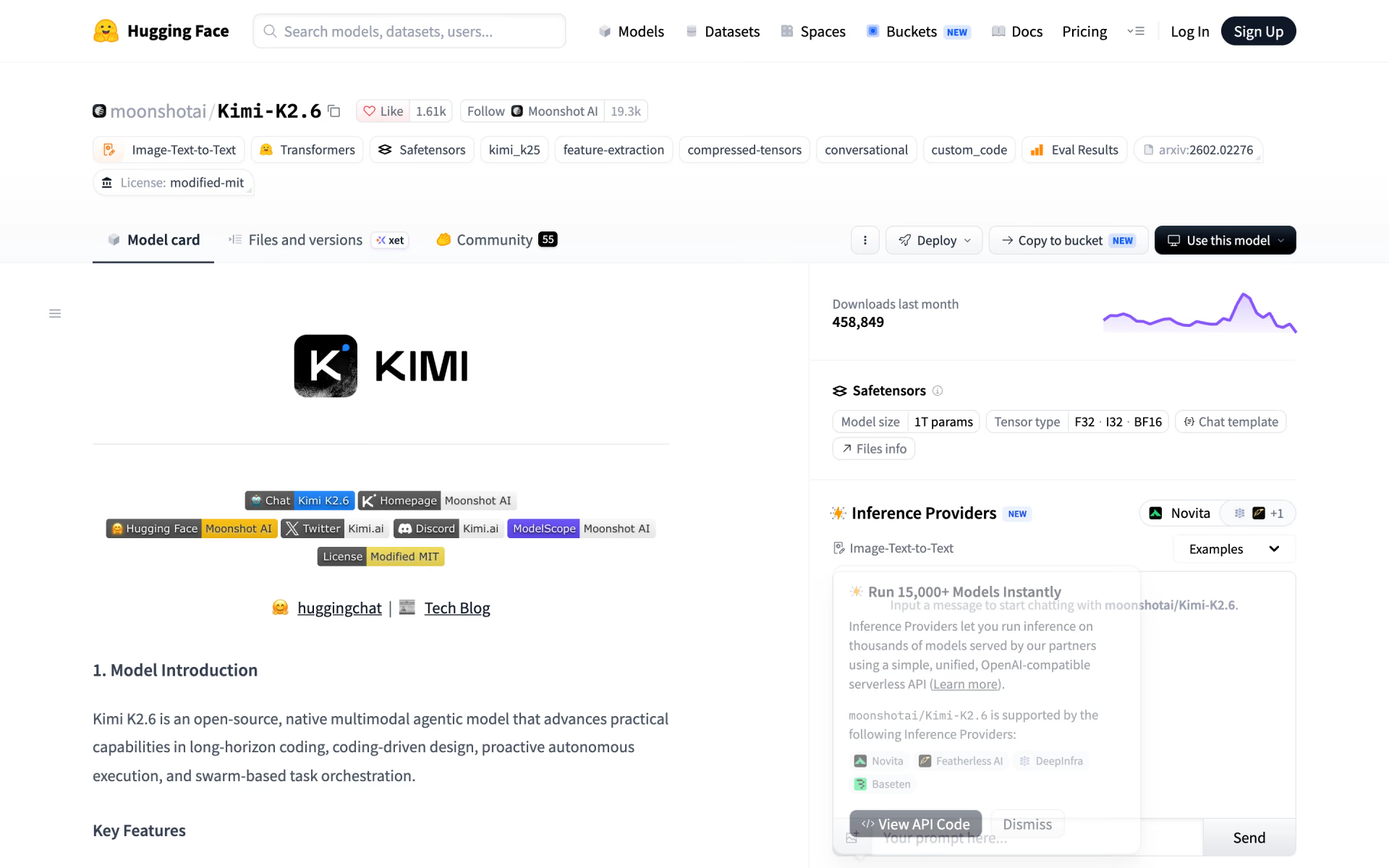
 Kimi K2.6

 Kimi K3


 Kimi K2.5

 Reflection Beam
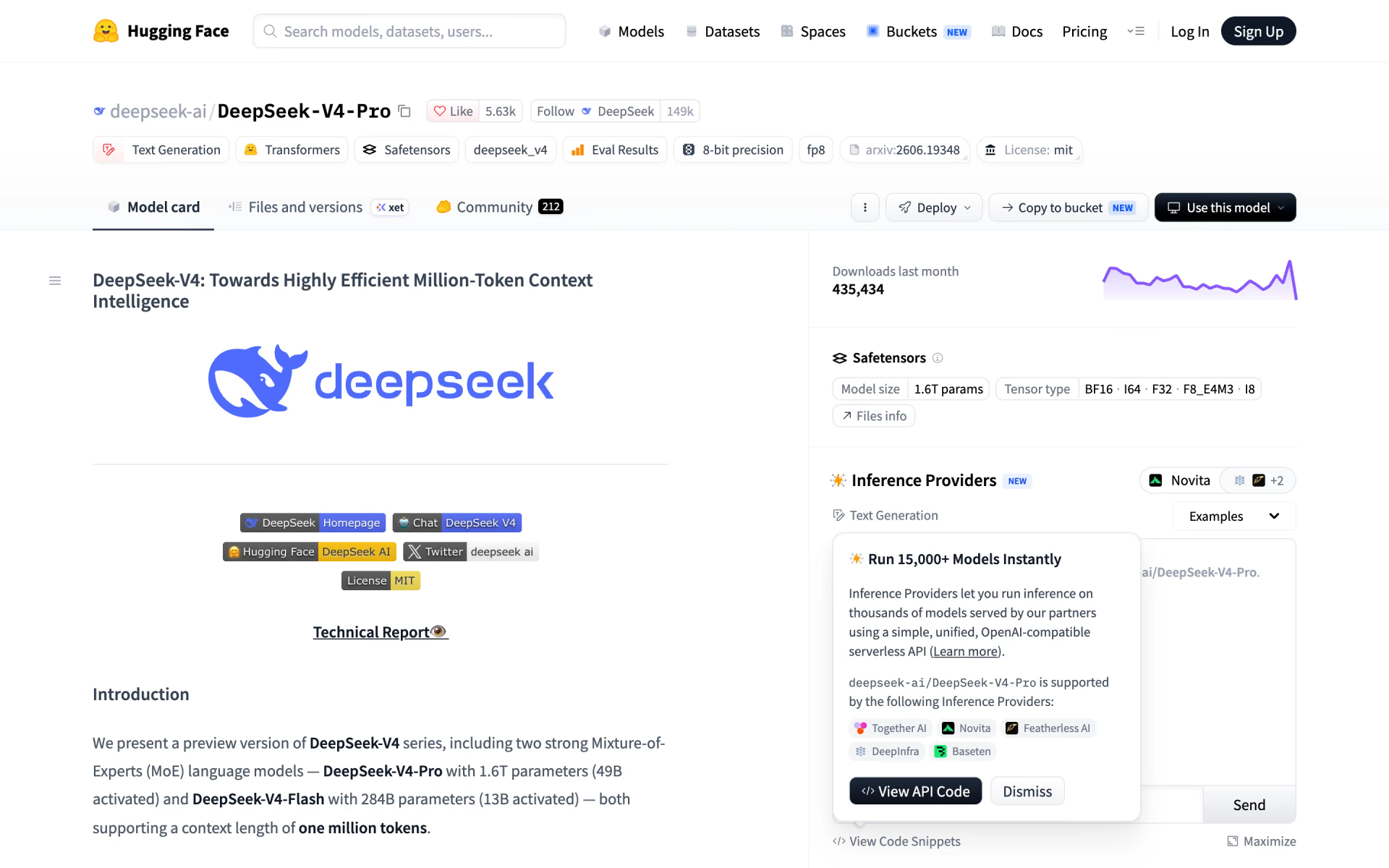
 DeepSeek V4 Pro