Claude Code vs Codex: pricing, usage limits and which is better
Claude Code vs Codex: Codex is the better buy for most developers, at the same $20 and $100 prices with more included. Plans, limits and models compared.

Codex is the better buy for most developers: it matches Claude Code's prices at $20 and $100 a month, yet includes more. There is a limited free version, the $20 Plus plan reviews pull requests on GitHub, and Pro plans currently have no five-hour limit. Choose Claude Code if you already subscribe to Claude, or want Opus 5.5 on every paid plan and Fable for projects that run for hours.





What Claude Code and Codex are
Claude Code and Codex are AI coding agents for software developers. You describe a change, and the agent reads your repository, edits files, runs tests and can open a pull request while you approve each step.
Claude Code is made by Anthropic and uses its Claude models, while Codex is made by OpenAI and uses its GPT models. Neither is sold separately: a Claude subscription includes Claude Code, and a ChatGPT subscription includes Codex.
Claude Code vs Codex at a glance
Prices are the normal monthly price in US dollars, taken from each company's official pages on Nov 8, 2026.
| Tool | Free use | Paid from | Bigger plans | Five-hour limit | Main model | GitHub PR reviews |
|---|---|---|---|---|---|---|
 Claude Code | No | $20 (Pro) | $100 Max, $200 Ultra | On Pro and Max | Opus 5.5 | Team and up, or its GitHub Action |
 Codex | Light use in the desktop app | $8 (Go), $20 for the full set | Pro at $100, $200 or $500 | On Plus, none on Pro for now | GPT-6.1 Sol | Plus and up |
How much do Claude Code and Codex cost?
At the entry level, the two cost exactly the same, since Claude Pro and ChatGPT Plus are both $20 a month. The differences appear in the cheaper and more expensive plans.
- Claude Code has no free version. Pro costs $20 a month, or $17 a month billed yearly, and the larger Max and Ultra plans cost $100 and $200, billed monthly.
- Codex comes with ChatGPT's Free plan and with Go, at $8 a month, but OpenAI lists both for limited desktop app use only. Plus costs $20, and Pro is available at $100, $200 or $500 a month.
Pricing for organizations is identical as well. Claude Team and ChatGPT Business both cost $25 per seat each month, or $20 billed yearly, for organizations with at least 2 people.
Claude also offers a Premium seat with 5 times the standard usage, at $125 a month or $100 billed yearly. Claude Enterprise lists a $20 seat, billed yearly, plus usage at API rates, with a 20-seat minimum. ChatGPT Enterprise is priced by OpenAI's sales team.
How do the usage limits compare?
Both companies limit usage, saying the limit depends on the model, the complexity of the task and how much code the agent reads. Each tool also shares its allowance with the related chat product: Claude Code with Claude, and Codex with ChatGPT Work.
- Claude Pro and Max have one limit that resets every five hours and another that resets weekly. Max provides 5 times Pro's usage, and Ultra removes the five-hour limit for verified accounts while providing 10 times Pro's weekly usage.
- ChatGPT Plus also uses a five-hour usage window, similar to Claude's. OpenAI estimates 15 to 160 local messages per five hours on GPT-6.1 Sol, and weekly limits may also apply. Pro plans currently have no five-hour limit, and each larger Pro plan includes more usage.
Anthropic publishes no message estimates for its plans, while OpenAI publishes ranges and calls them estimates rather than fixed limits. When you run out, both let you continue for a charge, through usage credits on Claude and purchased credits on ChatGPT Plus and Pro.
The models behind them
Claude Code starts every paid plan on Opus 5.5, which Anthropic calls its daily driver for agentic coding. It has a context window of 1 million tokens. For lighter tasks, you can switch to Sonnet 5.5 or Haiku 5.5.
Fable 5.1 is the most capable model available in Claude Code, designed for projects too large for a single sitting. It is never selected by default. Subscribers on Pro pay for it with usage credits, while Max and Ultra include it up to half the weekly limit.
For Codex on paid plans, OpenAI recommends GPT-6.1 Sol, which it describes as nearly matching its top model at a lower cost. Sol reads 500,000 tokens by default in Codex, and GPT-6 Astra is the top model, intended for the most demanding work.
The $100 and $200 Pro plans can spend their entire allowance on Astra, while Plus includes only limited Astra usage. GPT-6.1 Terra and GPT-6 Luna are lighter, more efficient models, and Luna is the one available on Free and Go.
Where each one runs
Both agents operate in the same places: a terminal application, an editor extension, a desktop app, the web and your phone, though the details differ.
- Claude Code runs in the terminal on macOS, Linux and Windows, and has extensions for VS Code, Cursor and JetBrains IDEs. The Claude desktop app includes a Code tab, web sessions run in the cloud, and the iPhone and Android apps let you monitor them. You can also start tasks from Slack, or mention @claude on GitHub through its GitHub Action.
- Codex runs in the terminal and has an extension for VS Code, Cursor and Windsurf. Xcode and JetBrains IDEs offer it inside their own AI assistants. The ChatGPT desktop app has a separate Codex view. Codex Cloud runs tasks on OpenAI's computers, and you can start them from the web, the desktop app or the phone app. It also connects to Slack, Linear and GitHub, where you mention @codex.
The cloud features require a paid subscription. Claude Code's cloud sessions start at Pro, and Codex Cloud starts at Plus.
What each one is better at
This section relies on what each company says about its own product, not on our own testing.
Anthropic positions Claude Code for large projects: learning an unfamiliar codebase, turning issues into pull requests, and refactors or migrations lasting hours or days. In the terminal, it runs on your computer and communicates directly with the model, without a separate server or a remote code index.
For organizations, Claude's Code Review sends several agents over each pull request and verifies their findings before posting comments. It is available only on Team and Enterprise plans, and it is billed by usage on top of the seat price.
OpenAI positions Codex for hard bugs, complex refactors and new features, with many agents running in parallel. Each agent can verify its work using browser and computer tools. Cloud tasks continue after you close your laptop, and OpenAI says Codex delivers results using fewer tokens. Automatic GitHub reviews are included from Plus upward.
Claude Code and Codex, one by one
1. Codex: best value
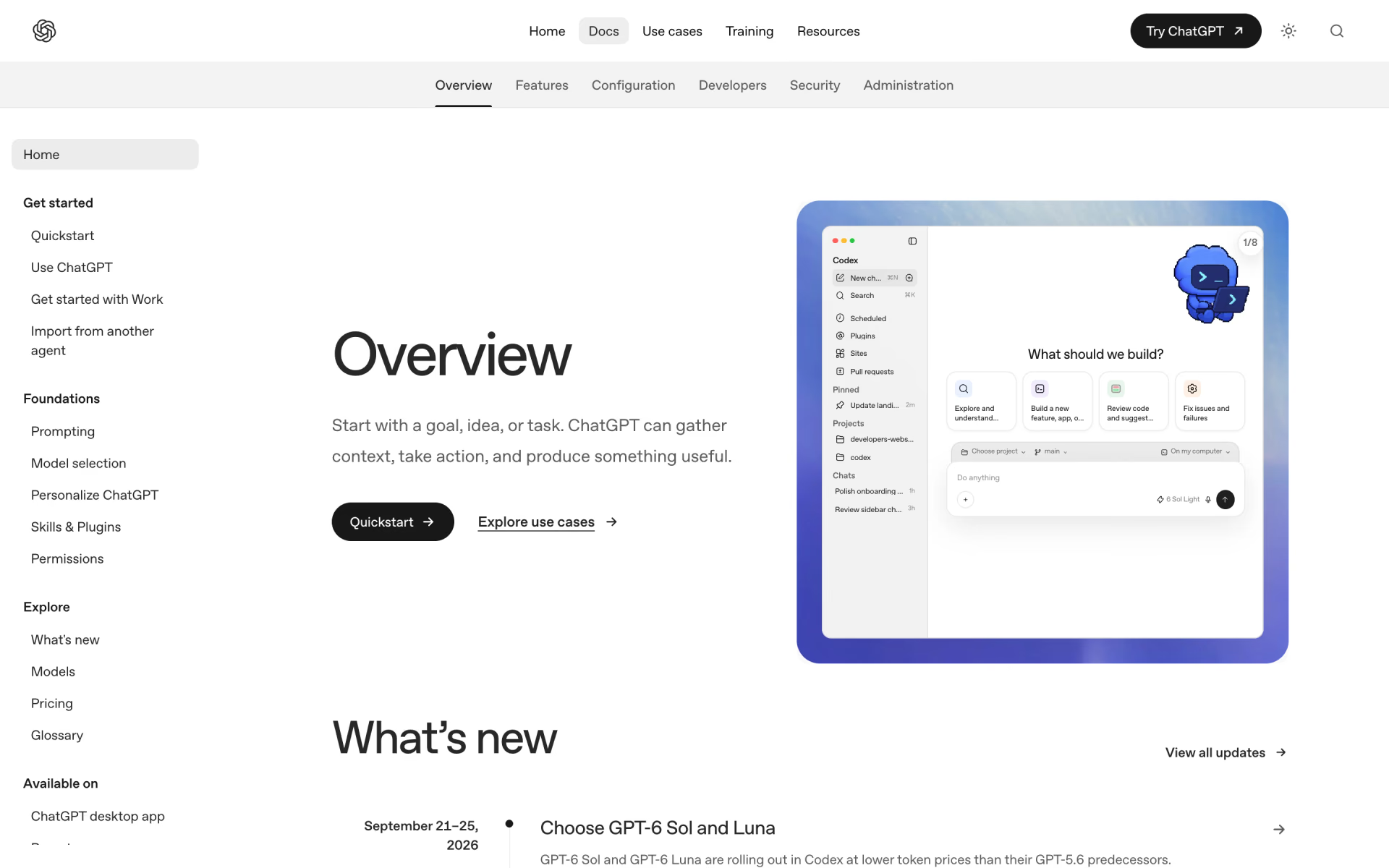
Codex is included with every ChatGPT plan, but Free and Go, at $8 a month, offer limited use in the desktop app on GPT-6 Luna. Plus, at $20, adds the terminal, the editor extension, the web and the iPhone app, along with Codex Cloud and automatic GitHub reviews.
Pro is available at $100, $200 or $500 a month, and Pro plans currently have no five-hour limit. The $100 and $200 plans can spend their entire allowance on Astra, and only the $500 plan includes Ultrafast mode.
Good
- A limited free version to try it
- Automatic GitHub reviews from $20
- No five-hour limit on Pro plans for now
Watch for
- Free and Go are listed for the desktop app only
- Plus includes only limited GPT-6 Astra usage
2. Claude Code: best for Claude's models
Claude Code is included with every paid Claude plan, starting with Pro at $20 a month. It begins on Opus 5.5, and you can switch to Sonnet, Haiku or Fable at any time. It works in the terminal, VS Code, JetBrains, the desktop application, the web and the mobile apps. The same allowance covers your Claude conversations.
Max, at $100, provides 5 times Pro's usage and includes Fable up to half the weekly limit. Ultra, at $200, removes the five-hour limit for verified accounts. Organizations can add Claude Code Review, which is billed by usage on top of the seat price.
Good
- Opus 5.5 by default on every paid plan
- Fable included on Max and Ultra
- Dedicated extensions for VS Code and JetBrains
Watch for
- No free version: Pro is the cheapest option
- Pro and Max limits reset every five hours
- Managed Code Review requires Team or Enterprise
Which one should you pick?
- You want to try a coding agent for freeCodex
- You want GitHub pull request reviews on a $20 planCodex
- You code all day on a $100 budget and hate the five-hour resetCodex
- You already pay for Claude and want one billClaude Code
- You want Opus 5.5 by default, and Fable for jobs that run for hoursClaude Code
- Your team wants several agents to check each pull requestClaude Code
How we picked
We compared Claude Code and Codex using only what Anthropic and OpenAI publish. That means pricing pages, product pages, documentation and help centres, all read on Nov 8, 2026. Where a company gives a usage number, we quote it, and where it only says "more", so do we.
We have not tested the two side by side, so everything here comes from the companies' own pages. Neither company paid to appear in this comparison or saw it before publication. Plans and models change frequently, so we update this page and its date whenever they do.
Questions people ask
Is Claude Code free?
No, Claude Code requires a paid Claude subscription, starting with Pro at $20 a month, or a Claude Console account billed at API rates. Claude's Free plan does not include it.
Is Codex free?
Partly: ChatGPT's Free plan and Go, at $8 a month, include limited Codex use in the desktop app on GPT-6 Luna. OpenAI's pricing page lists the terminal, the editor extension, the web and Codex Cloud from Plus at $20.
Which has higher usage limits, Claude Code or Codex?
Neither company publishes a fixed number, but at $100, ChatGPT Pro currently has no five-hour limit, while Claude Max provides 5 times Pro's usage with five-hour and weekly limits. At $200, both remove the five-hour limit: Claude Ultra for verified accounts, and ChatGPT Pro.
Do Claude Code and Codex work with an API key?
Yes: Claude Code works with a Claude Console account, billed at standard API rates. Codex works with an OpenAI API key in the terminal, the editor extension and its SDK. Its cloud features, such as GitHub reviews, need a ChatGPT plan.
Do Claude Code and Codex train on your code?
Claude's pricing page lets you opt out of training on personal plans, and Team plans are excluded from training by default. OpenAI's Codex pricing page lists no training by default for Business, Enterprise and API key use, but not for Plus or Pro.
Can you use Claude Code and Codex together?
Yes: Claude Code reads project instructions from a CLAUDE.md file, and Codex reads them from AGENTS.md, so both can live in the same repository. Each subscription is billed separately.