
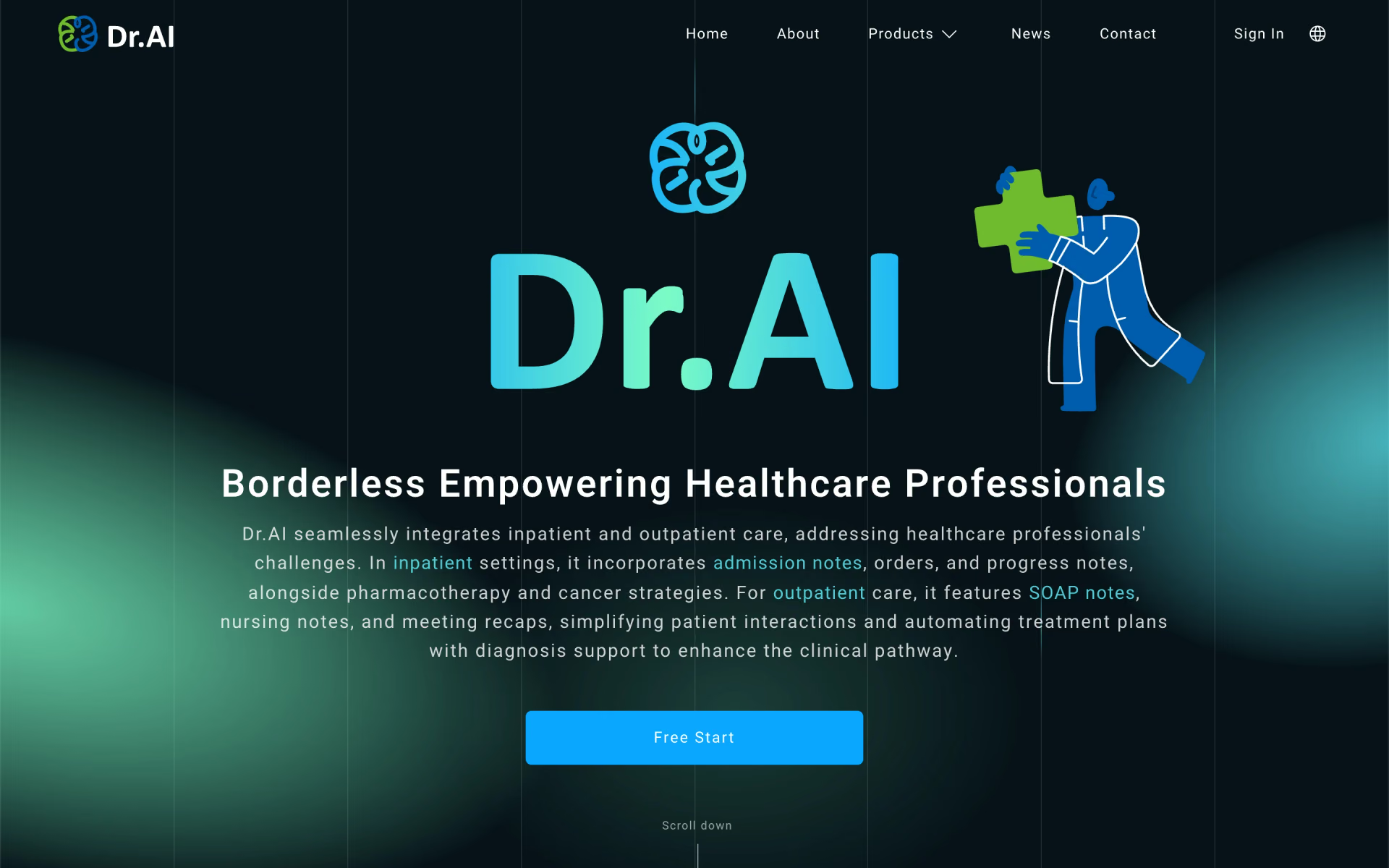
What is Dr.AI?
Clinical documentation and treatment plans across specialties.
Who is Dr.AI best for?
Dr.AI is best for physicians and nurses who want admission, progress and SOAP notes drafted from patient data.
Hospital doctors
It drafts admission notes, orders and progress notes from the complaints, history and lab results typed into its dialogue box.
Outpatient clinics
SOAP notes, nursing notes, meeting recaps and a medical scribe cover the paperwork around a clinic visit.
Medication and cancer plans
Its pharmacotherapy and cancer strategy tools suggest medication and treatment plans, with side effects and monitoring points, for a clinician to review.
Multilingual care teams
It works in 38 languages and covers 12 medical subspecialties.
How much does Dr.AI cost?
Dr.AI does not publish prices: clinicians can start free by signing up, and hospitals, clinics and companies request a customised trial through a form.
Dr.AI's site offers a Free Start sign-up for individual professionals and a trial request form for hospitals, clinics and companies, covering its professional suite, SOAP QuickNote, MedPA, Physician Avatar and MedExam Pro. No plan names or prices appear before you sign in. Plans and current prices are on draiai.com.
How do readers rate Dr.AI?
No one has rated Dr.AI yet. Be the first.
Sign in to rate. One rating per account.
What are the best Dr.AI alternatives?
Three tools on Recaply do Dr.AI's job.



Questions about Dr.AI
What is Dr.AI?
Clinical documentation and treatment plans across specialties.
Who is Dr.AI for?
Dr.AI is best for physicians and nurses who want admission, progress and SOAP notes drafted from patient data.
Is Dr.AI free?
You can try Dr.AI free before paying.
What are the best Dr.AI alternatives?
The closest alternatives on Recaply are Heidi, Glass Health and Knowtex.
Where can I try Dr.AI?
On its official website, draiai.com.
Can patients use Dr.AI to diagnose themselves?
No. Dr.AI is made for healthcare professionals such as physicians, nurse practitioners, physician assistants and clinical trainees, and its disclaimer says it is not meant for the general public to diagnose themselves or to replace a clinician's judgement.

 Piction Health
 ArteraAI
 Lyrebird Health

 Triomics
 Everbility
 Hippocratic AI