

What is Sonic 3.6?
Sonic 3.6 is the current version of Cartesia's Sonic text-to-speech model and the one Cartesia recommends for new projects; Sonic 3.5 and older models stay available for existing code. It streams speech in 44 languages over a WebSocket, server-sent events or a single HTTP request, and reads the mood of the script to set pacing and emotion without markup.
Compared with ElevenLabs' Eleven v3, it covers fewer languages, 44 against more than 70, but it is tuned for live calls rather than acted narration, and enterprise customers can run it on their own servers or cloud.
What changed from Sonic 3.5?
Mostly naturalness and languages; requests, voices and controls stay the same, so the only change is the model ID.
- Naturalness
- Listeners preferred it to Sonic 3.5 nearly two to one in Cartesia's blind tests on English scripts.
- Languages
- Adds Odia and Urdu for 44 in total, and follows Hindi written in Latin script more closely.
- Codes and tricky words
- Spells out letters and IDs with native letter names in every language, and reads English words like "read" and "live" correctly more often.
- Voice clones
- Existing clones keep their voice IDs, and new instant clones can learn from up to 60 seconds of audio instead of 10, keeping more of the accent.
Who is Sonic 3.6 best for?
Sonic 3.6 is best for developers building voice agents, phone bots and apps that need fast, natural speech in many languages.
Voice agents and phone bots
Cartesia quotes model latency under 90 ms, and speech, transcription and agent calls each get their own concurrency limits.
Products in many languages
It speaks 44 languages, including Odia, Urdu and Hindi written in Latin script.
Brand voices
Instant cloning needs about 10 seconds of audio, and a cloned voice can be localised into other languages and accents.
Codes, names and jargon
It reads confirmation codes and words that change with context without text cleanup, and custom pronunciation dictionaries handle the rest.
What's included with Sonic 3.6?
Sonic 3.6 streams over a WebSocket, server-sent events or HTTP, with speed, volume and emotion controls, instant and pro voice cloning, localization and pronunciation dictionaries.
- Three ways to stream
- A WebSocket for live sessions fed by an LLM, server-sent events with word and phoneme timestamps, or one HTTP request that returns WAV or MP3.
- Speed, volume and emotion
- Speed from 0.6x to 1.5x and volume from 0.5x to 2x on each request; emotion guidance is in beta and works in English only.
- Voice cloning
- Instant clones from 10 to 60 seconds of audio on Pro and up, and pro clones trained on 30 minutes or more on Startup and up.
- Localization
- Make a voice speak other languages and accents natively, at 225 credits per added accent.
- Pronunciation control
- Custom pronunciation dictionaries for names and terms, plus tags that spell out codes, add pauses and insert laughter.
- Phone-ready audio
- μ-law and A-law output at 8 kHz for phone lines, and sample rates up to 48 kHz for apps and browsers.
How much does Sonic 3.6 cost?
Sonic 3.6 is free for about 27 minutes of speech a month on Cartesia's Free plan, and paid plans cost $5, $49 or $299 a month, with speech billed at about 1 credit per character.
- 20,000 credits a month, about 27 minutes of speech
- 2 requests at once
- No commercial licence or voice cloning
- 100,000 credits a month, about 133 minutes of speech
- Commercial use licence
- Instant voice cloning
- 1.25M credits a month, about 1,667 minutes of speech
- Pro voice cloning with 2 clone slots
- 5 requests at once
- 8M credits a month, about 10,667 minutes of speech
- 4 pro voice clone slots, 15 requests at once
- Priority support
Enterprise plans with custom credits, volume pricing and compliance terms are priced on request. One credit covers about one character, and a minute of speech uses 750 to 800 credits. Paid plans can switch on overage billing at $65 per million credits on Pro, $45 on Startup and $38 on Scale, and unused credits roll over up to twice the monthly amount. The same credits also pay for Cartesia's Ink speech-to-text, and every plan adds prepaid dollars for its managed voice agents ($1 on Free up to $299 on Scale). Every plan has unlimited seats, and the page lists monthly prices only. Full pricing on cartesia.ai. We checked these prices on .
How do readers rate Sonic 3.6?
No one has rated Sonic 3.6 yet. Be the first.
Sign in to rate. One rating per account.
Sonic 3.6 pros and cons
Sonic 3.6 is cheap to start, quick and a drop-in upgrade from Sonic 3.5, but emotion control is an English-only beta and the best clones need the $49 Startup plan.
Pros
- Cheap to start: $5 a month buys a commercial licence, instant cloning and about 133 minutes of speech, and the Free plan covers about 27 minutes.
- Swaps in for Sonic 3.5 by changing only the model ID; voice IDs and clones carry over, and a dated snapshot keeps production output fixed.
- Cartesia quotes model latency under 90 ms, with separate concurrency pools for speech, transcription and agents.
- Enterprise customers can run it on-prem, including air-gapped sites, or in their own AWS, Google Cloud or Azure account.
Cons
- Emotion control is still in beta and English only, and Cartesia calls emotion changes inside one generation highly experimental.
- Pro voice clones need at least 30 minutes of studio-quality audio and the $49 Startup plan, and they ignore per-request speed changes.
- Its 44 languages are fewer than Eleven v3 (more than 70) or Inworld's Realtime TTS-2 (more than 100).
- No commercial use on the Free plan, and zero data retention, regional endpoints and on-prem deployment are for Enterprise customers only.
What are the best Sonic 3.6 alternatives?
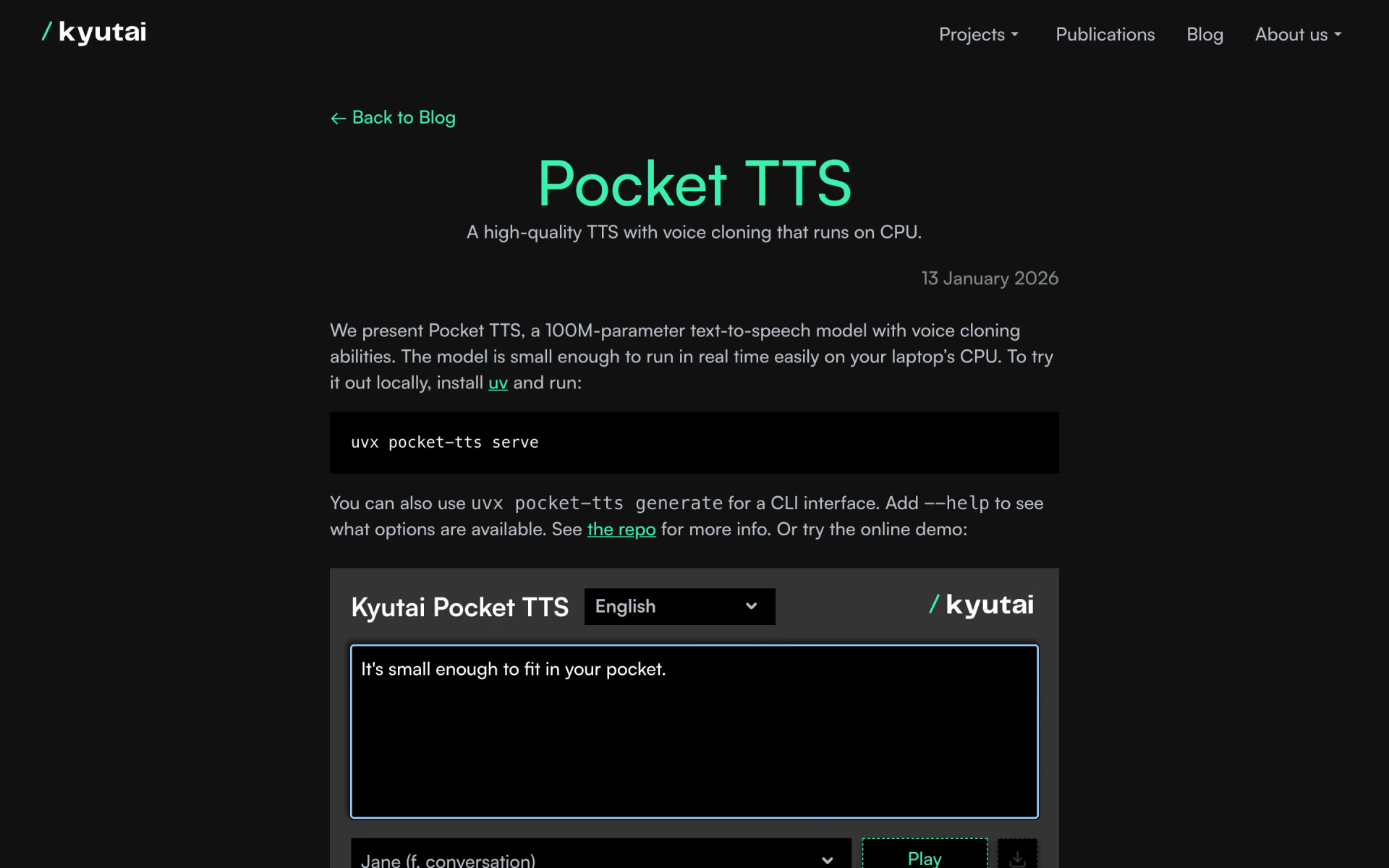
Four tools on Recaply do Sonic 3.6's job. ZONOS2 is open source, so you can run it on your own server.
 Realtime TTS-2Freemium
Choose it when you want pay-as-you-go pricing and more languages: Inworld charges $25 per million characters with no monthly plan and keeps one voice across more than 100 languages.
 Eleven v3Free
Choose it when acted, expressive delivery matters more than speed; it adds audio tags and multi-speaker dialogue in more than 70 languages, at $0.08 per 1,000 characters on the API.
 Voxtral TTSFree
Choose it when cost per character comes first and 9 languages are enough; Mistral charges $0.016 per 1,000 characters and also publishes open weights for non-commercial use.
 ZONOS2Open Source
Choose it when you want zero-shot voice cloning for real-time apps from Apache-licensed weights you host.
Articles about Sonic 3.6
One of our articles covers Sonic 3.6, with every price checked on the makers' own pages.
Questions about Sonic 3.6
What is Sonic 3.6?
Sonic 3.6 is Cartesia's current text-to-speech model for voice agents and phone bots, streaming natural speech in 44 languages with under 90 ms of model latency and cloning voices from 10 seconds of audio.
Who is Sonic 3.6 for?
Sonic 3.6 is best for developers building voice agents, phone bots and apps that need fast, natural speech in many languages.
Is Sonic 3.6 free?
Yes. Sonic 3.6 has a free plan: 20,000 credits a month, about 27 minutes of speech.
How much does Sonic 3.6 cost?
Sonic 3.6's paid plans are Pro at $5 per month, Startup at $49 per month and Scale at $299 per month.
Is there an open source alternative to Sonic 3.6?
Yes. ZONOS2 is an open source tool that does the same job, so you can run your own.
What are the best Sonic 3.6 alternatives?
The closest alternatives on Recaply are Realtime TTS-2, Eleven v3, Voxtral TTS and ZONOS2.
Where can I try Sonic 3.6?
On its official website, cartesia.ai.
How many minutes of speech does a Cartesia plan give with Sonic 3.6?
Cartesia's pricing page counts about 27 minutes of Sonic 3.6 speech a month on Free, 133 on Pro, 1,667 on Startup and 10,667 on Scale. A minute of audio uses 750 to 800 credits, at roughly one credit per character of text.
Can I use Sonic 3.6 for commercial work?
Not on the Free plan. Cartesia's commercial use licence starts with the Pro plan at $5 a month, which also adds instant voice cloning. Professional voice cloning starts with the Startup plan at $49 a month, which includes 2 clone slots.
Can Sonic 3.6 run on my own servers?
Yes, under an enterprise contract. Cartesia says Sonic 3.6 can run on-prem, including air-gapped sites, in your own cloud account on AWS, Google Cloud or Azure, or embedded in your product through OEM licensing. The self-serve plans use Cartesia's hosted API.
Sonic 3.6 vs ElevenLabs: which is faster?
By each maker's own figures, Sonic 3.6 has model latency under 90 ms, ElevenLabs Flash v2.5 about 75 ms and Eleven v3 Conversational about 280 ms, before network time. Sonic 3.6 covers 44 languages, against 32 for Flash v2.5, so test both on your own calls.
Our verdict
Sonic 3.6 is a sound pick for voice agents and phone bots that need quick, natural speech in many languages without a big bill.
It is Cartesia's current model, quotes model latency under 90 ms, covers 44 languages, and starts at $5 a month with a commercial licence and instant cloning.
- Skip it for
- Acted narration or character work that needs emotion control outside English, or products that need more than 44 languages.
- Check first
- Run your own scripts in your target languages on the Free plan, then pin a dated snapshot before you go live.

 Sonic 3.5
 Pocket TTS

 Eleven v4

 MAI-Transcribe-2-Streaming
 Ink-2
 MAI-Voice-2