

What is Qventus?
AI teammates that cut surgery cancellations for hospitals.
Who is Qventus best for?
Qventus is best for hospitals and health systems that want AI to take over admin in surgery scheduling and discharge planning.
Pre-admission testing teams
AI assistants handle the paperwork and follow-ups that get patients ready for surgery, which the maker says cuts surgery cancellations by up to 40%.
Growing a surgical program
It helps fill operating rooms with the cases a hospital wants most, including robotic surgery and other priority service lines.
Inpatient discharge planning
Working inside the EHR, it sets expected discharge dates and dispositions by the morning after admission and chases the steps that keep patients in hospital longer.
Hospital leaders tackling burnout
Its assistants make and take phone calls, track down follow-up items and update the EHR, so frontline staff spend less time on admin.
How much does Qventus cost?
Qventus does not publish prices: it is sold to hospitals and health systems through a demo request, and the maker states no free plan or trial.
Qventus has no pricing page and shows no plans; every button leads to a demo request form, and a Qventus teammate follows up within 1 to 2 business days. Each solution is set up for the hospital, with models trained on its own data and linked to its EHR. Plans and current prices are on qventus.com.
How do readers rate Qventus?
No one has rated Qventus yet. Be the first.
Sign in to rate. One rating per account.
Questions about Qventus
What is Qventus?
AI teammates that cut surgery cancellations for hospitals.
Who is Qventus for?
Qventus is best for hospitals and health systems that want AI to take over admin in surgery scheduling and discharge planning.
Is Qventus free?
No. Qventus is a paid tool.
Where can I try Qventus?
On its official website, qventus.com:443.
Does Qventus work inside our EHR?
Yes. Qventus connects both ways with the hospital's EHR in real time, so staff see its predictions and automations inside their usual workflow. Its models are trained on the hospital's own data and tuned to its processes rather than using one generic model for every site.
 The Path
 ChatGPT for Clinicians
 Health in ChatGPT

 CompliantChatGPT
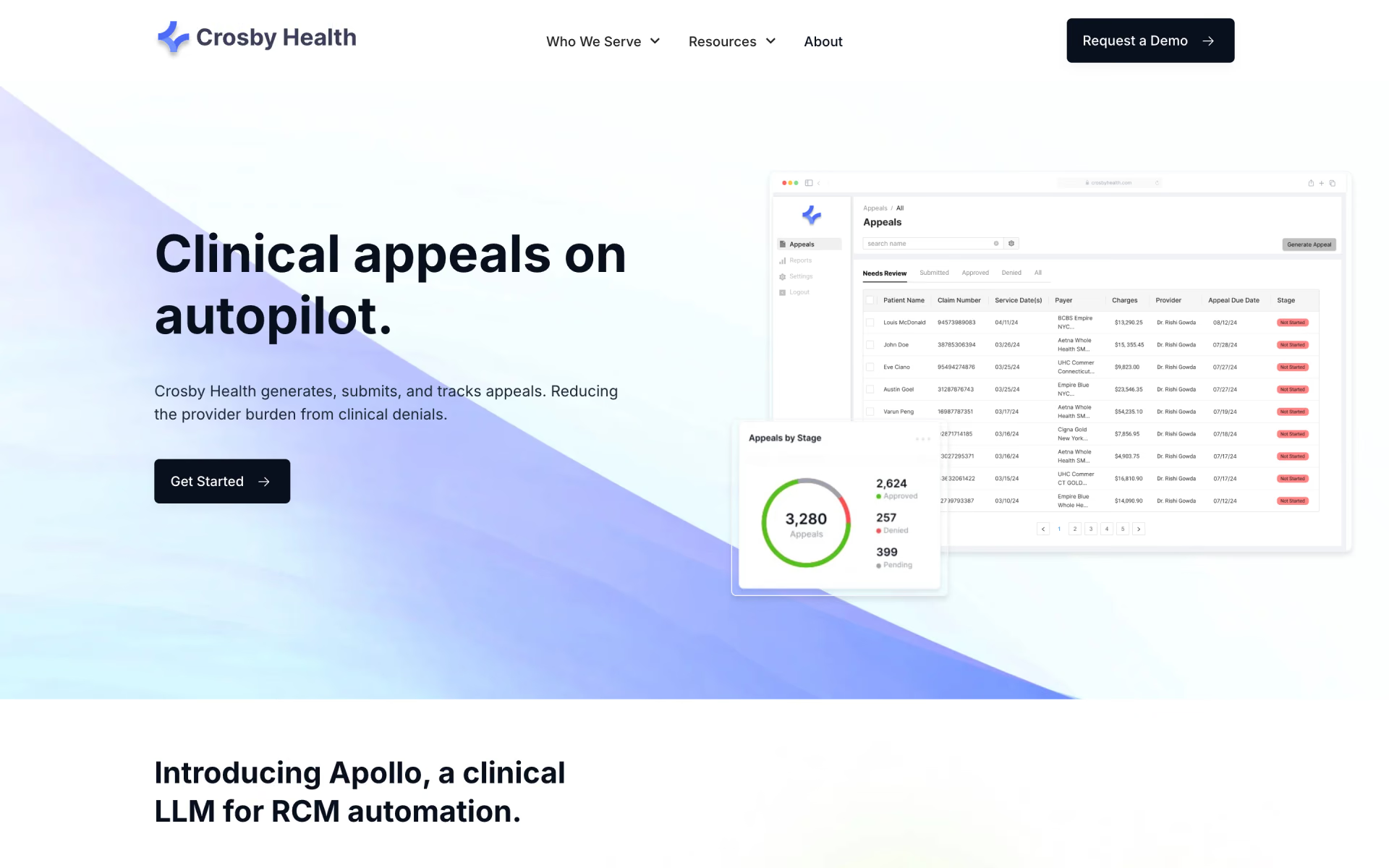
 Crosby Health
 Empirical Health