
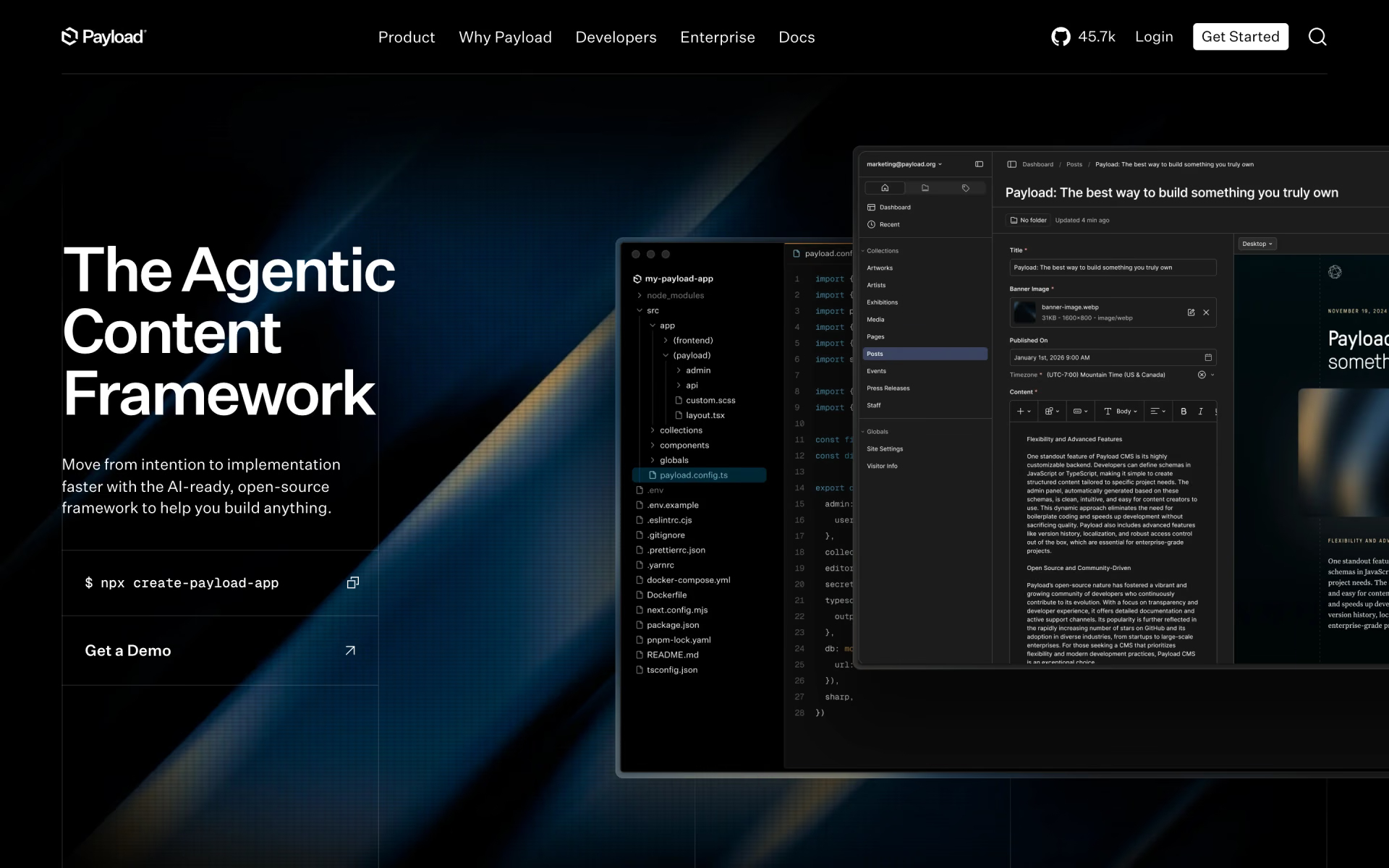
What is Payload?
Headless CMS and app framework that runs inside your Next.js app, with an admin panel and APIs.
Who is Payload best for?
Payload is best for Next.js developers and agencies who want a code-first CMS and admin panel inside their own app.
Next.js sites
Payload installs into the existing /app folder, so the site and its CMS ship as one app and server components can query content directly.
Developers who model content in code
Collections, fields, hooks and access rules live in TypeScript, and Payload generates types for your data.
Agencies with many clients
Localization, multi-tenancy, white labelling and field-level access control cover multi-brand and multi-language sites.
Apps beyond a website
Built-in auth, versions, drafts and a customizable React admin let it back an internal tool or a headless store.
How much does Payload cost?
Payload is free and open source under the MIT licence, and you host it yourself on any Node.js host; an Enterprise plan with SSO, visual editing and dedicated support is priced on request.
- MIT licence, every core feature
- Any Node.js host, or one-click Vercel and Cloudflare templates
- Community support
Enterprise has no public price: Payload quotes it after a demo. It can run self-hosted or hosted by Payload and adds SSO, visual editing, publishing workflows, unlimited custom domains and dedicated support. The Vercel and Cloudflare templates are billed by those hosts, not by Payload. Full pricing on payloadcms.com. We checked these prices on .
How do readers rate Payload?
No one has rated Payload yet. Be the first.
Sign in to rate. One rating per account.
Is Payload open source?
Yes. Payload's code is public under the MIT licence, so you can run it on your own server.
On GitHub
45,792stars
+573 (+1.3%) in the last 30 days
- Last commit
- 12 Nov
- Repository age
- 5 years
- Latest release
- 4 Nov
- Licence
- MIT
- Self-hosted
- Yes
- Repository
- payloadcms/payload
How do I connect Payload CMS to my AI agent?
Payload CMS MCP is Payload CMS's official MCP server. Add it to your agent once, then ask it to read and edit Payload collections within rules you set.
A Payload plugin that puts a server on your own app, so your agent can find, create, update or delete entries in the collections you allow, plus any custom tools you add.
Payload CMS gives each account its own server address. Open the setup guide, copy your address, then add it to Claude Code like any other server.
Use the address from Payload CMS's setup guide.
Make an API key in your Payload CMS account and add it where the guide says.
Then ask your agent
- Runs
- On the web
- Sign-in
- API key
- Maker
- Payload CMS
- Guide
- payloadcms.com
What are the best Payload alternatives?
Payload is an open source alternative to Contentful. Strapi does the same job and is open source too.


Questions about Payload
What is Payload?
Headless CMS and app framework that runs inside your Next.js app, with an admin panel and APIs.
Who is Payload for?
Payload is best for Next.js developers and agencies who want a code-first CMS and admin panel inside their own app.
Is Payload free?
Yes. Payload has a free Self-hosted plan: MIT licence, every core feature.
Is Payload open source?
Yes. Payload's code is public under the MIT licence, so you can run it on your own server.
Does Payload CMS have an MCP server?
Yes. Payload CMS MCP is Payload CMS's official MCP server, so agents such as Claude Code, Cursor, Codex and GitHub Copilot can read and edit Payload collections within rules you set. Payload CMS runs it on the web and it signs in with an API key from your Payload CMS account.
What are the best Payload alternatives?
The closest alternatives on Recaply are Contentful and Strapi.
Where can I try Payload?
On its official website, payloadcms.com.
Is Payload still open source after joining Figma?
Yes. Payload joined Figma, and the maker says Figma will keep maintaining and investing in the open source core under the MIT licence. You can still host your Payload app with any provider you like.
What database does Payload need?
Payload runs on Node.js and connects to MongoDB, Postgres or SQLite through its database adapters. The Cloudflare template uses D1 and R2, and the Vercel template uses a Neon database with Vercel Blob for media.
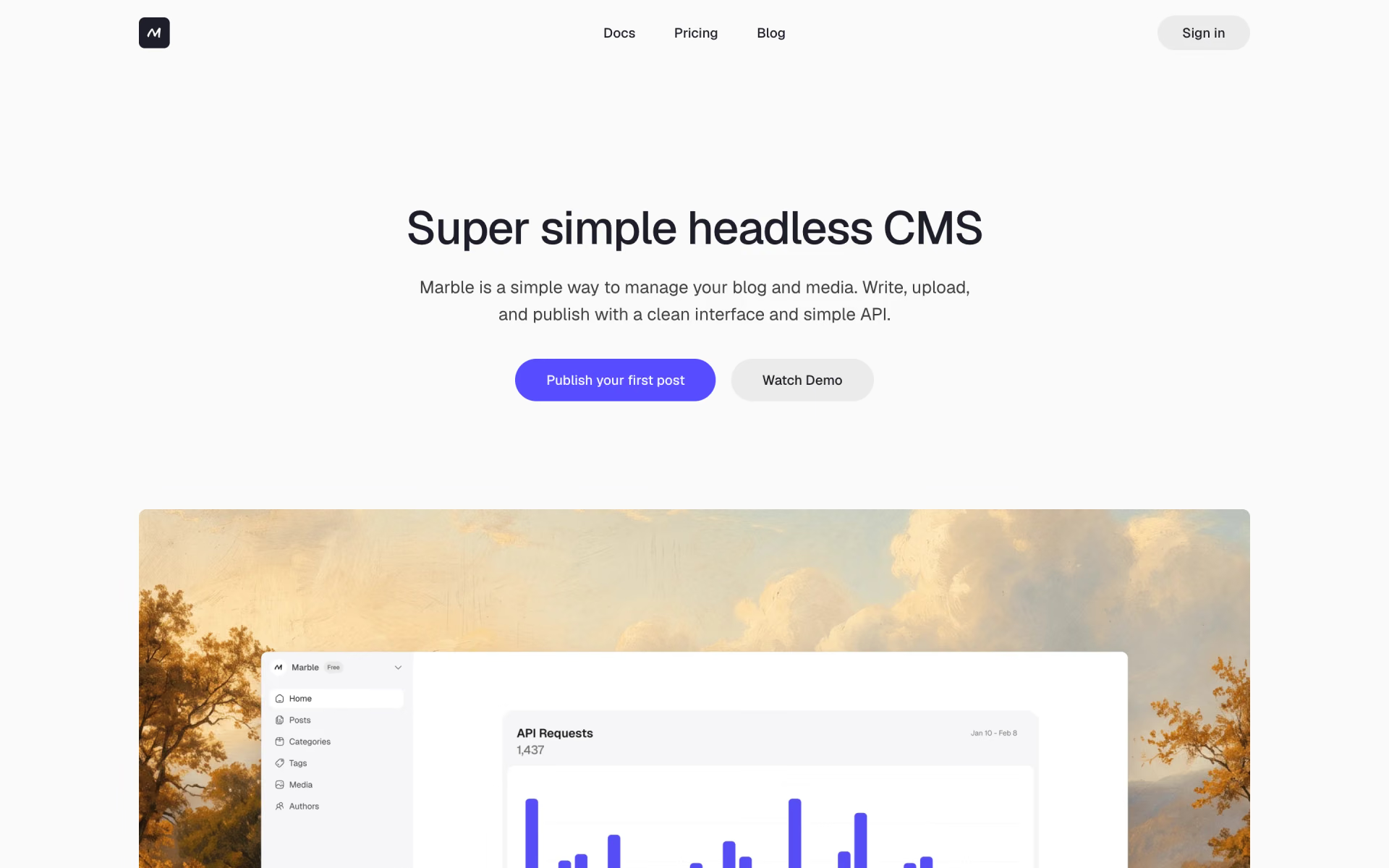
 Marble CMS

 Wisp CMS
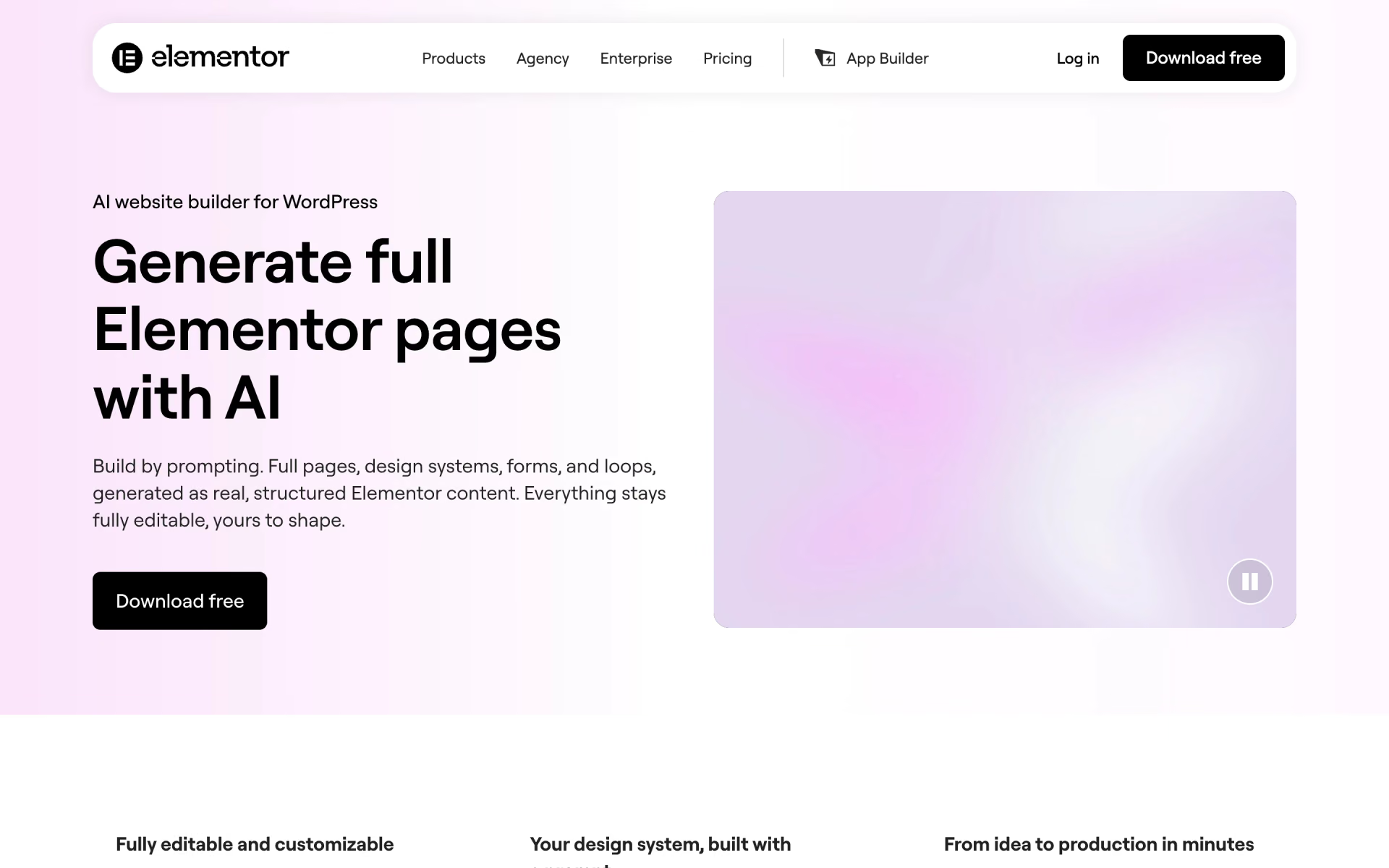
 Elementor AI
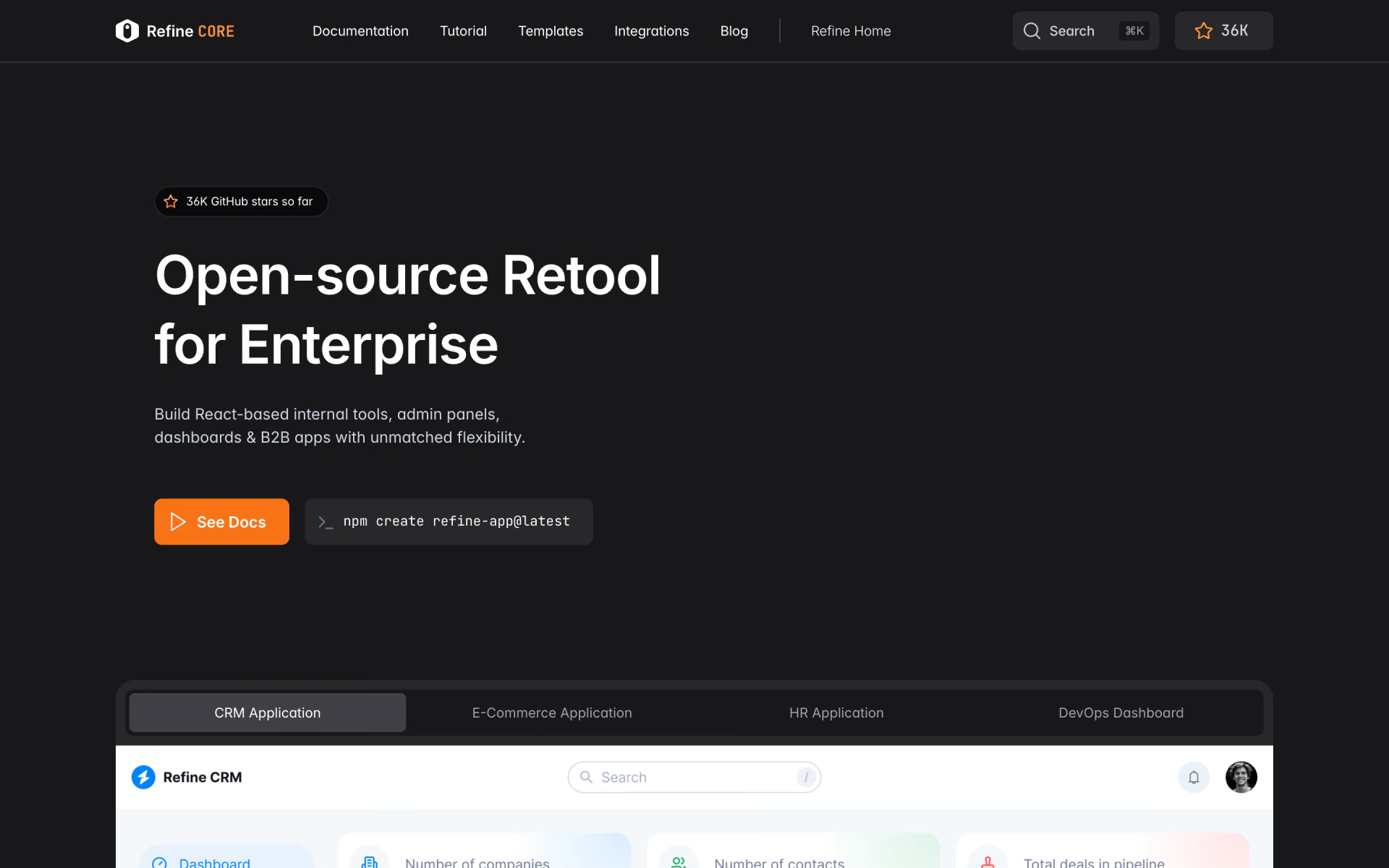
 Refine

 Appsmith
 Hyperbrowser